BY THE OPTIMIST DAILY EDITORIAL TEAM
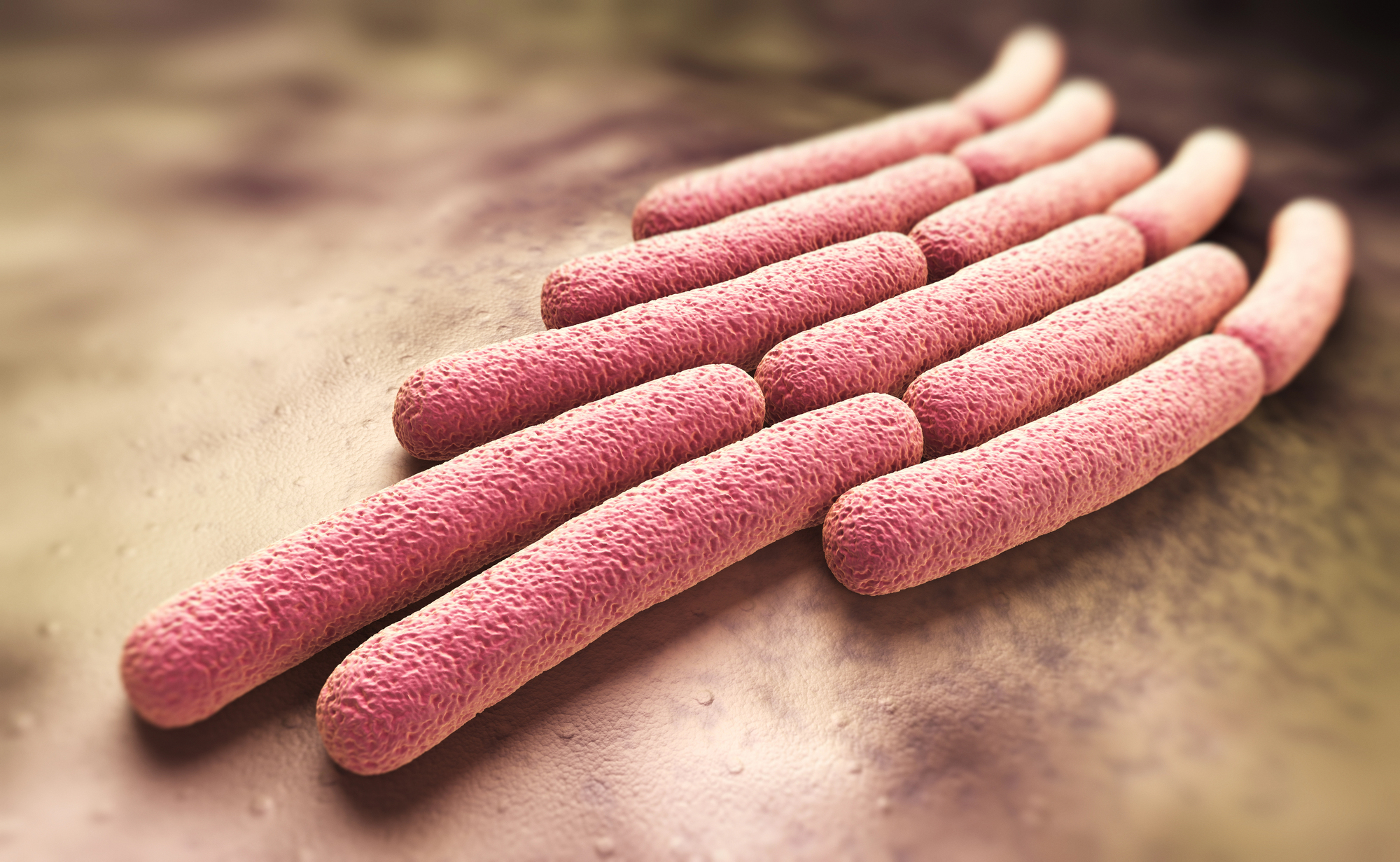
There is a disease that kills more than one million people a year, nearly half of them children under five, and it rarely breaks through in global health coverage. Researchers have a name for that gap: the “poo taboo.” People, including journalists and policymakers, are less comfortable engaging with diarrheal disease than with other killers of comparable scale. That discomfort has shaped research funding and attention for decades, which is part of why no vaccine against shigellosis has ever been licensed, despite more than a hundred years of trying.
A trial published this summer in The Lancet Infectious Diseases may be changing that. The vaccine candidate, WRSs2, showed 89 percent efficacy against Shigella sonnei, the best result the field has ever seen. “It’s the best efficacy we’ve ever seen,” said Dr. Kawsar Talaat, an infectious disease physician and vaccine scientist at the Johns Hopkins Bloomberg School of Public Health.
What shigellosis does to children
Shigella spreads through contaminated food and water, causing bloody diarrhea, fever, and severe abdominal pain. It’s among the leading bacterial causes of fatal diarrheal disease globally. In Chad, roughly one in 140 children under five dies from diarrheal illness every year. In much of West Africa and South Asia, diagnostic labs are scarce, families travel hours to reach a clinic, and the antibiotics that do exist don’t always work.
Dr. Jahangir Hossain has spent three decades in that reality, first at the International Centre for Diarrhoeal Disease Research in Dhaka, Bangladesh, where sometimes 800 diarrheal patients would arrive in a single day, and now with the Gambia Medical Research Council Unit at the London School of Hygiene and Tropical Medicine. “A Shigella patient comes with bloody diarrhea. They develop fever, and abdominal pain,” he said. “Definitely it is emotional for every doctor facing a patient coming with Shigella and malnutrition.”
Children who survive don’t always recover. The infection is associated with prolonged diarrhea, repeated hospitalizations, malnutrition, and cognitive impairment. Children slip off their growth curves and often don’t catch up.
The trial that changed the picture
WRSs2 was developed at the Walter Reed Army Institute of Research and tested jointly at Cincinnati Children’s Hospital and the Emory Vaccine Center’s Hope Clinic in Atlanta. The trial enrolled 108 adults. Half received two doses a month apart, a weakened form of the Shigella bacteria suspended in liquid and swallowed rather than injected. The other half got salt water.
The design made the result hard to dismiss. Rather than waiting for participants to naturally encounter the bacteria, researchers exposed them to it directly in a human challenge trial. Under those conditions, 81 percent of the placebo group got sick. Against that baseline, 89 percent efficacy is not a modest finding.
Side effects were real: more than half of recipients reported headaches, and about 45 percent had some diarrhea from the dose itself. But no one was hospitalized. The previous best result for a Shigella vaccine candidate was 74 percent efficacy in young adults, with no protection at all in young children. One candidate managed 28 percent overall.
Antibiotic resistance is closing another door
Treatment for shigellosis has always depended on antibiotics, and that’s becoming a shakier foundation. Resistance exceeds 80 percent for some drugs in some regions. In parts of South Asia, ceftriaxone, a last-resort option, no longer reliably works. Patients infected with resistant strains get sicker for longer and are more likely to die.
“As these organisms become harder and harder to treat, the need for a vaccine also increases,” Talaat said. “We saw it with typhoid — there’s some typhoid that’s almost impossible to treat with antibiotics now.” A vaccine that prevents infection also reduces antibiotic use, and less antibiotic use tends to slow the development of new resistant strains. The incentives point in the same direction.
What comes next
The trial’s limits are real, and Hossain was direct about them. It was small, and it tested healthy adults in US clinical settings, not children in low-income countries with poor sanitation and stretched health systems. “It is a small trial, and it is only the adult age group,” he said.
WRSs2 also only covers Shigella sonnei, one species in a broader family of disease-causing bacteria. Dr. Robert Frenck, who co-led the trial at Cincinnati Children’s, described a longer goal: “The holy grail would be a vaccine that would control enterotoxigenic E. coli, Campylobacter, and Shigella — then you’d be able to prevent all these with one or two administrations.” Hossain is more cautious about whether combining multiple pathogens is practically achievable, but not about the underlying need. “We cannot delay,” he said. “We need something immediately.”
The next trials need to happen in young children, in the countries where this disease is still a daily reality. “The most important population for a potential Shigella vaccine would be children under five,” Talaat said. “We want a vaccine that’s safe and effective in children as young as one year of age, or even younger.” That’s where the century of failed attempts has to go next.
Did this solution stand out? Share it with a friend or support our mission by becoming an Emissary.