
Episode Description:
Arielle and Karissa cover ten solutions this week, including 20,000 octopuses hiding in well-studied waters off the California coast, what Indonesian mosque loudspeakers have to do with earthquake survival, and a garden chore you now have a very good reason to skip.
If you have questions, comments, feedback, suggestions, or just want to say hi, send a message to: podcast@optimistdaily.com.
Want to be part of the Optimism Movement? Become an Emissary.
Subscribe to our FREE Daily/Weekly Newsletter and follow us on Instagram, X, and Blue Sky.
The Optimist Daily is a project of the World Business Academy.
Donate link: https://www.optimistdaily.com/donate-to-support-the-optimist-daily/?lsc=41ef528d
Theme and all original music by Marvin Lanes
Transcript:
Intro
Karissa:
Hello everyone, I’m Karissa.
Arielle:
And I’m Arielle.
Karissa:
And welcome back to The Optimist Daily’s weekly roundup.
Arielle:
Yes, welcome back. Karissa and I have had a week off because last week we had a wonderful guest episode with #CreateConnectCare. If you missed it, then definitely go check it out.
Karissa:
Yeah, it was a great episode.
I missed sharing the solutions, though, last week. Mm-hmm. And I’m glad to be back with you today, Arielle.
Arielle:
Yeah, there’s a lot of seasonal solutions and, uh, just some, some fun discoveries that happened this week. But before that, how are you, Karissa?
Karissa:
Doing well over here. The weather has been so strange all across the globe.
We’re already in the middle of October, but you would not know it, at least in California.
Arielle:
Yeah, it’s been really weird here in the Netherlands as well. Every time I think autumn has arrived, and it’s, like, rainy and gloomy, and I’m kind of getting into my cozy vibe, the next few days are, like, sunny and warm again.
Not that I’m complaining. I would not complain about that, but it’s just, it’s a bit hard to get into the seasonal rhythm… I don’t know if our listeners and fellow Optimists are feeling similarly, but I know that I’m just feeling a bit weird. Other than that, nothing to report on my end.
Karissa:
Yeah. I feel similarly. I guess I’m enjoying a little bit of stillness between the busy summer months and the festive season. We’re gonna go full force into the holidays here, and then this year will be over, so um-
Arielle:
Yeah. It definitely went by quickly, but there’s still a lot of positive news out there to share before the end of the year.
And if you want all of those positive solutions straight to your inbox, then you should consider signing up for our daily or weekly newsletter. You can do that on our website, or the link is in the show notes.
Karissa:
And if you want these solutions and more on your social media feeds, we’re @optimistdaily on everything except X, where we’re @OdeToOptimism.
Arielle:
You can also reach me and Karissa directly at podcast@optimistdaily.com. We would love to get any suggestions, comments, questions, feedback, so feel free to shoot us an email.
Karissa:
Before we go any further, we’d love to thank our Optimist Daily Emissaries who financially support us. If you would like to become an Emissary, the link to do that is in the show notes.
If financially supporting us isn’t in your budget right now, we thank our Optimists who share these solutions and follow us on socials.
Arielle:
Yeah, there are a lot of free ways to support us, and we appreciate everyone who does that.
Karissa:
And without further ado, Arielle, I think we should dive into this week’s new solutions.
Australia’s renewable energy record
Karissa:
The first one that we had to share this week is “Australia sets a new renewable energy record, with rooftop solar leading the way”. So Australia just hit a new record. Solar- and wind-powered 80% of the entire national grid on a single Saturday. And the wild part about that is that more than half of that came not from massive solar farms, but from panels on people’s rooftops.
For about 30 minutes, 4.3 million rooftop solar installations collectively carried more than half of the country’s total power load. The researcher who tracks this called it record season. Conditions were so good, he expects these records to get broken again within weeks. These individual homeowners, and not, like, utility companies, drove a national record, and that’s exciting all in itself.
Arielle:
Yeah, it really drives home the point that the energy transition doesn’t have to center around big infrastructure.
Karissa:
Mm-hmm.
Arielle:
It’s a reminder that, yeah, if there’s small-scale adoption, then that can really add up quickly.
Karissa:
Absolutely. And with Australia having an 82% renewable target for 2030, this kind of milestone is expected to become routine.
So that is optimistic indeed.
Performance anxiety & sport psychology
Karissa:
The next solution is titled “”How to quiet performance anxiety, according to sport psychology””. A sport psychologist who works with NFL teams and Olympic athletes has a pretty counterintuitive take on confidence. You don’t wait until you feel it, you act your way into it first, fake it till you make it, and the feeling follows.
So she has a whole toolkit for doing this in the middle of a high-pressure moment, and the technique that an NFL receiver used after a playoff fumble is one of them. I didn’t know about this technique, but it’s called the learn, burn, return method, which is a three-step process for recovering mid-performance from a mistake.
Learn one thing from it, use a physical gesture to signal moving on. For example, the Vikings receiver Adam Thielen made the toilet flush gesture famous in a 2020 playoff game, where he’s just kind of pretending to flush the toilet and get rid of that mistake, which is a fun thing. And then reset it all with a certain phrase.
The performance anxiety conversation used to live almost entirely in sports, but I mean, now it’s everywhere, whether it’s in job interviews, presentations, creative work, even dating. So I think it’s important to expand upon this concept. But yeah, there’s a lot of great tips in this article from Cindra Kamphoff, who is a PhD in sport and performance psychology, and she gives a lot of great tips here, including writing powerful phrases before a high-stakes moment, which I really liked that one.
So go check it out if you want some more pointers.
Coral shade experiment
Karissa:
The next solution is “”How a floating shade can help coral survive a marine heatwave””. Scientists in Florida just published results from an experiment where they literally put little floating umbrellas over coral to protect them from the heat, and it worked.
But the lead researcher was pretty blunt. This is triage, not a total solution for coral bleaching. So I loved the images here in this solution, because it really had like… The um- umbrella is kind of a… It, it’s not… I at first pictured an umbrella, like our pop-up umbrella, and I thought that was kind of a cute image, but it’s kind of just a floating, like
Arielle:
Like a shade,
Karissa:
basically Shade, yeah.
Like a, just a little piece of, um-
Arielle:
Yeah, like a tarp …
Karissa:
yeah, a tarp. That’s a great way to explain it. The shaded brain coral started recovering color after these umbrellas were put in, and the unprotected ones kept bleaching through the hottest part of the season. Coral bleaching events used to happen about once a decade, but now they’re happening every five to six years, and reefs don’t have enough time to recover between them.
By March 2025, 84% of the world’s reefs had experienced temperatures high enough to cause bleaching. The researcher’s quote in this was so honest, that shading is not a cure-all. This is a solution that is kind of just buying time for the bigger problem.
Arielle:
Yeah. It’s important to address the root problems, but yeah, if we need more time, which we definitely do, then why not?
Karissa:
Absolutely. Did you know that coral reefs cover less than 0.2% of the ocean floor, but shelter a quarter of all marine species? So that’s a pretty wild ratio, and we gotta protect them, just like we need to protect the rest of our beautiful planet as well.
Skincare mistakes
Karissa:
The next solution is “”The common skin care mistakes dermatologists say are working against your routine””.
Five dermatologists were asked what bad skin habits they most want patients to break, and the answer keeps coming back to the same thing. Most of us are overdoing it when it comes to our skin care routine. And there’s also a pimple popping rule in here that I think a lot of people will appreciate, and I’ll start with that one.
It’s the one good squeeze rule for pimples. It’s okay to pop a pimple, but if it doesn’t come out on the first try, stop, because continuing just pushes bacteria deeper and can cause those dark spots that stick around for months. I admit if it has a white head, then I have to pop it. But usually, of course, that comes out with the one good squeeze, and it…
I do think it’s, it’s very, um, satisfying, so.
Arielle:
Yeah. No, I’m so guilty of this. I love popping pimples.
Karissa:
Me too.
Arielle:
Um, and I will keep going at it, and I have had that, like, hyperpigmentation thing happen. Mm-hmm. And it’s just not cute. Yeah. And I, I have to abide by this. You know what’s really helped me, though?
Those pimple patches. So-
Karissa:
Yeah, I was gonna say the same thing …
Arielle:
first of all, they’re fun, so you can have, like, a little purple star or whatever on your face instead of a- Yeah … a bright red glaring pimple. Um, but I do it less for, like, the… Well, of course I, I do it so that the pimple will heal, but it’s more so that my fingers just don’t get on it.
Because if I see it- Yeah … then I just wanna squeeze it.
Karissa:
I resonated with the point that skin care has developed a trend cycle that rivals fast fashion. There’s new ingredients, new products every week, and TikTok routines that keep expanding what we’re, you know, supposed to do. So dermatologists really emphasize that sticking with simple is oftentimes better.
Arielle:
Mm-hmm.
Yeah, and just what works for your skin. Because everyone’s skin is different, and you can’t just be chasing the trends all the time if it doesn’t work for your specific type of skin. So if you have a routine that works for you, then just stick to that. Don’t get, like, you know, uh, distracted by the shiny new serum.
Karissa:
Mm-hmm. Exactly.
Flu shot timing
Karissa:
Next solution is “”Why October is the best time to get your flu shot this year””. Flu is already showing up in emergency rooms across the West, and the numbers are running about seven times higher than the same week last year. Experts are saying October is the window to get vaccinated, and there’s actually a new mRNA flu vaccine in the mix for the first time, which is a really great breakthrough.
So yeah, seven times higher than this time last year is pretty rough. It’s in Western states now, but it’s expected to spread east. And the flu vaccine’s effectiveness data is pretty interesting. 29 to 56% effective against of cases that send people to the doctor, but better against severe illness. The framing here with vaccines in general is to remember it’s keeping you out of the hospital, and keeping you out of the intensive care unit, and keeping you out of the cemetery, which is a quote from the article.
About the mRNA flu vaccine, you might recall this term being used for, uh, the COVID vaccine, and it’s now being applied to the flu vaccine for adults 50 and older this season, and it’s supposed to be more effective.
Arielle:
There was a, a number in this article that kind of broke my heart. It said that last year there were at least 195 child deaths from flu-related causes, and preventing such high numbers could be as simple as just getting vaccinated against the flu.
So yeah, and I don’t mean to fearmonger, but it definitely struck a chord with me when I read it.
Karissa:
Yeah. Tens of thousands of Americans die of flu each season, and that tends to surprise people. I feel like flu deaths are chronically under-discussed. So of course, yeah, like you mentioned, Arielle, not to fearmonger, but get that flu vaccine, and it’s a good time to get it now.
Octopus nursery
Arielle:
Well, on that note, we’re going to bring it to some lighter topics, let’s say. Uh, the first solution that I’m going to share with everyone is titled “Scientists discovered the world’s largest octopus nursery off the California coast”. Scientists were studying one of the most closely monitored stretches of ocean in the world, and somehow missed 20,000 octopuses just hanging out on the sea floor.
Turns out there’s a field of hydrothermal springs down there that’s functioning as the world’s largest known octopus nursery, and researchers only found it in 2018. So these hydrothermal springs keep the water warm enough to cut the octopuses’ egg-brooding time from years down to about 1.8 years, which still sounds like a l- a long time to me.
Yeah. But if it’s, if it’s cutting more years off of it, then that’s great. And this is why so many octopuses congregate there specifically. The octopuses build their dens from whatever they find on the sea floor, including human objects that have drifted down to the deep sea. This went undetected until 2018 in well-studied water, which raises the question of how many other gatherings like this exist in unmapped thermal fields elsewhere.
There’s been growing public fascination, I think, with octopus intelligence and behavior in recent years, and this story lands right in that conversation. And yeah, I, I think I remember when My Octopus Teacher came out, and I think that was kind of when everybody was like, “Oh my gosh, octopuses are actually so, so smart and so cool.” Um, have you seen it, Karissa?
Karissa:
No, I haven’t, but now I wanna go watch it because I… this solution really, uh, stood out to me this week and I love it, so I’m really interested in learning some more.
Arielle:
Yeah, this week we have such cute ocean stories, like picturing little corals under their umbrellas and, like a whole bunch of octopuses chilling out.
Karissa:
Exactly.
Arielle:
Making babies. So…
Karissa:
Yeah, fun stuff.
Indonesia’s mosque loudspeakers
Arielle:
The next solution is titled “Indonesia’s mosque loudspeakers might save lives during natural disasters”. A Japanese disaster scientist had an idea 20 years ago while studying earthquakes in Indonesia. What if the country’s mosque loudspeakers, already everywhere and already maintained daily, could double as earthquake warning systems?
That pilot is now underway, and the drop-and-cover finding buried in the story is just as interesting. And if you don’t know what I mean by that, just wait. I will get to it. So Indonesia might have only five to 10 seconds of warning before an earthquake hits, and yeah, the mosque loudspeakers tested five times a day by local communities are more reliable than phone networks that can fail the moment the ground starts shaking.
What I mean when I say that the mosque loudspeakers are tested five times a day is that, um, the call to prayer happens five times a day, so they definitely know that the speakers are working because the call to prayer is happening. And the drop-and-cover thing that I mentioned earlier is the standard international advice for when there’s an earthquake.
You’re supposed to drop low and cover, like get under a table or something. But this advice was meant for places with well-constructed buildings, and in Indonesia, where homes are often unreinforced masonry, the people who survived earthquakes in the past actually ran outside. You know, there is growing conversation in disaster preparedness about community-maintained infrastructure versus centralized government systems, and this is a real case study for why local trust really matters.
Indonesia and Japan are both on the Pacific Ring of Fire, but they have very different building standards, so the survival advice gap is a real public health issue, and I’m happy that this is being addressed with infrastructure that already exists and doesn’t really need any extra upkeep since they’re being used all the time.
Egg carton reuse
Arielle:
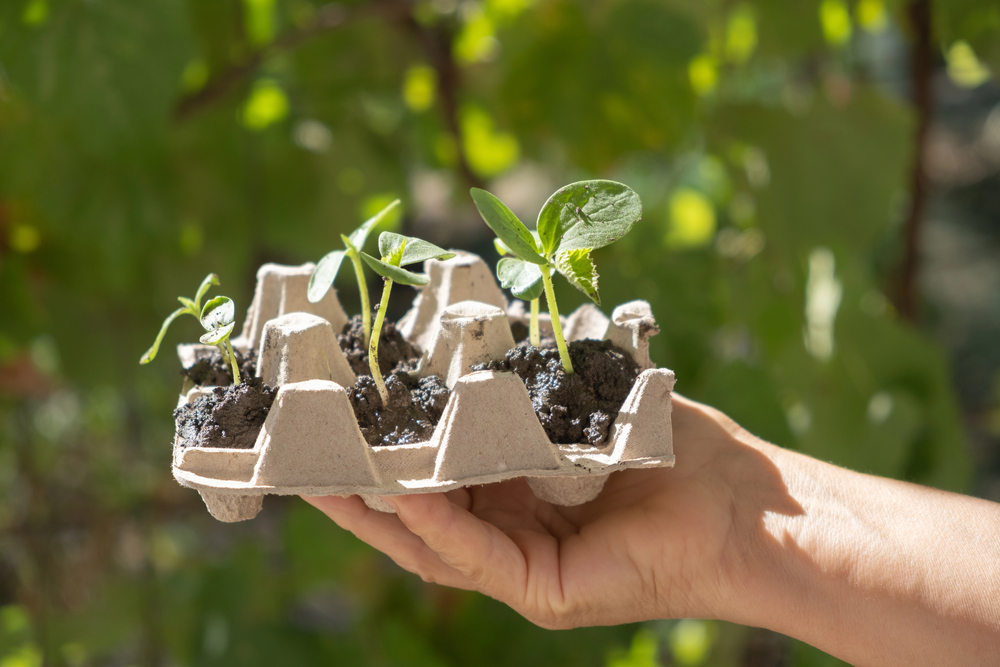
The next solution is titled “Six smart things to do with an empty egg carton before you toss it in the recycling bin”. Before you toss your next empty egg carton, hear me out. Those 12 little cups, or 10 or six, depending on how many eggs you get, they turn out to be surprisingly useful around the house, and the seed-starting one especially.
So that’s one of the uses that I’m going to get into. You just fill each cup with soil, you plant your seeds in them, and then when it’s time, just plant the whole thing into the ground, and then the cardboard breaks down, and the roots never get disturbed. So that would be something that I would do if I had a garden.
Karissa:
Mm-hmm.
Arielle:
Another one that I liked was the jewelry organization thing. So you can create little cups for your jewelry, and right now, all of my jewelry is just, like, willy-nilly all over the place in different rooms in tangles.
Karissa:
Yeah.
Arielle:
So I don’t need a garden to do that one, so maybe I will try that one out.
Karissa:
Yeah, I, I love this, and there’s really a big momentum around reducing household waste without buying more eco products, and this is about using what you already have.
Japanese sweet potatoes
Arielle:
The next solution is titled “What sets Japanese sweet potatoes apart, nutritionally speaking?” Japanese sweet potatoes are those, like… They just look like sweet potatoes, but they’re generally kind of longer, I find, and they look purple on the outside, and then when you cut them open, they’re white on the inside.
And it turns out that even though they are still sweet potatoes, they are doing completely different things nutritionally than the ones, like the orange ones that so many of us know and love.
Karissa:
Yeah.
Arielle:
And the comparison is more interesting than you’d expect. Japanese sweet potatoes are higher in vitamin C and E and anthocyanins, the same pigments that make blueberries and red cabbage dark, while orange ones are the beta carotene champions.
They’re complementary, not interchangeable. The fiber content is about four grams per serving, which puts them in, like, a genuinely filling territory for a carb. And luckily, there’s no evidence-based recommendation for how many to eat per week, so you don’t necessarily need to limit yourself if you end up really, really loving Japanese sweet potatoes.
The only thing is that dieticians say, um, make sure you don’t, like, hyper-fixate on them, just like on any food, and don’t make them your only kind of vegetable. Have you tried Japanese sweet potatoes before, Karissa?
Karissa:
Honestly, I don’t think I have. And I’m kind of not the biggest fan of just, like, normal sweet potatoes either, so they’re okay, but, like, I… And if they’re out, like, at a restaurant or something, like, and you know, it’s in front of me, I’ll eat it, but I usually, like… I, I never feel like preparing it myself. But maybe I’ll give Japanese sweet potatoes a try, and maybe I’ll fall in love with them.
Overwintering bees
Arielle:
The last solution that we are going to share with everyone today is titled “What to leave alone in your garden this October to help overwintering bees”.
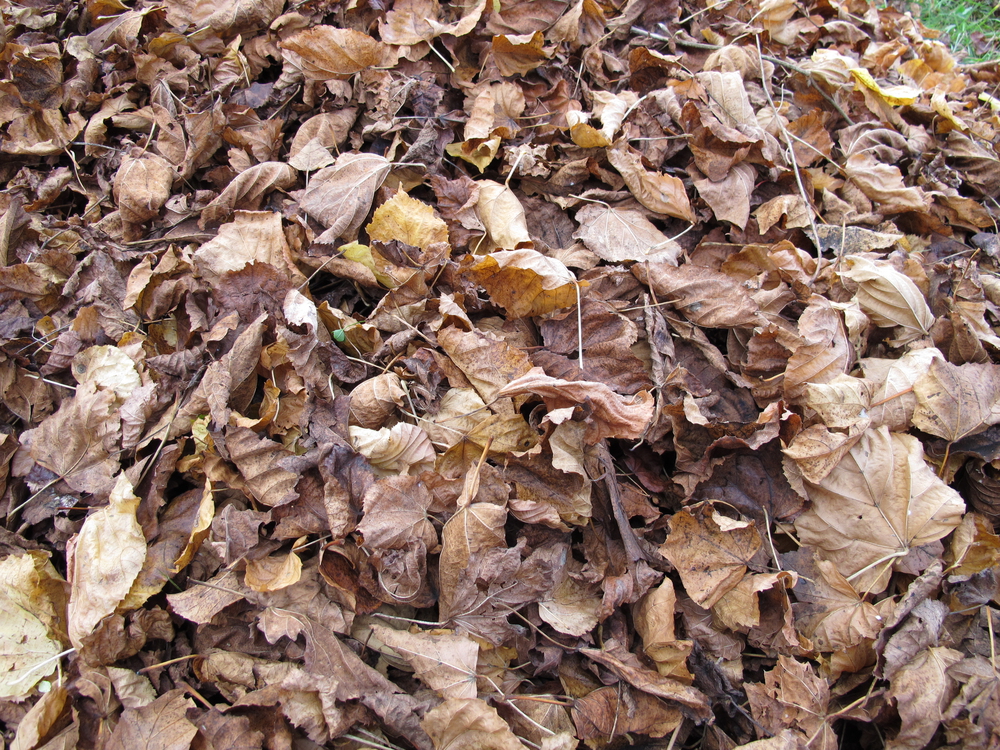
This could be considered a counterintuitive one, but maybe not so counterintuitive for longtime Optimists. The best thing you can do for native bees this fall is put down the rake. All that scraggly stuff you’re about to tidy away, the leaf piles, the hollow stems, the dead-looking cane fruit, that’s where the bees love to be.
There are over 3,600 native bee species in the US, and most aren’t honey bees. It’s those solitary wild bees that are in steep decline, and most of them nest in your garden over winter. So don’t compost your cut stems in fall. If bees have already nested inside them, composting kills the larvae still developing in there, and I did not know that.
I didn’t realize that there’s, like, little baby bees… inside cut stems. Also, try not to worry yourself about the bare patches of dirt in your lawn if you have them. I know it might look like neglected land, but that’s prime bee nesting habitat, apparently. Ground-nesting bees need bare, un-compacted soil to excavate their nests.
Karissa:
Wow, I didn’t even realize that there were that many, uh, bee species in the US for one, but, um… native bee decline is an issue that feels kind of, uh, abstract until you realize that the solution is literally just doing less yard work, and I love that because- Mm. Yeah … working in the yard can be such a pain.
Arielle:
Yeah, I mean, I kinda wish I had one. But it can be, uh, it can be toilsome. And maybe the solution sounds familiar to some people… because we have covered No Mow May before, and I think there have been a few articles about, like, just not raking so much in the fall. Yeah. Um, ’cause that doesn’t just help bees, but it also helps other insects and critters that are important for the ecosystem.
Quote & Outro
Karissa:
Well, Arielle, that was a great roundup of solutions, and before we head off for today, we have a positive quote to leave you off with.
Arielle:
This one is by Robert Frost, and it is, “The best way out is always through.”
Karissa:
Simple.
Arielle:
So yes, that’s, uh, yeah, nice and simple, but hard to do sometimes when you’re faced with a situation that you kinda wanna get out of, but you just have to endure and go through it.
Karissa:
Exactly.
Arielle:
Uh, but yeah. Well, on that note, Karissa and I wish all of you a very happy weekend, and we will be back next week with more solutions.
Karissa:
Until then, stay optimistic. Bye!