BY THE OPTIMIST DAILY EDITORIAL TEAM
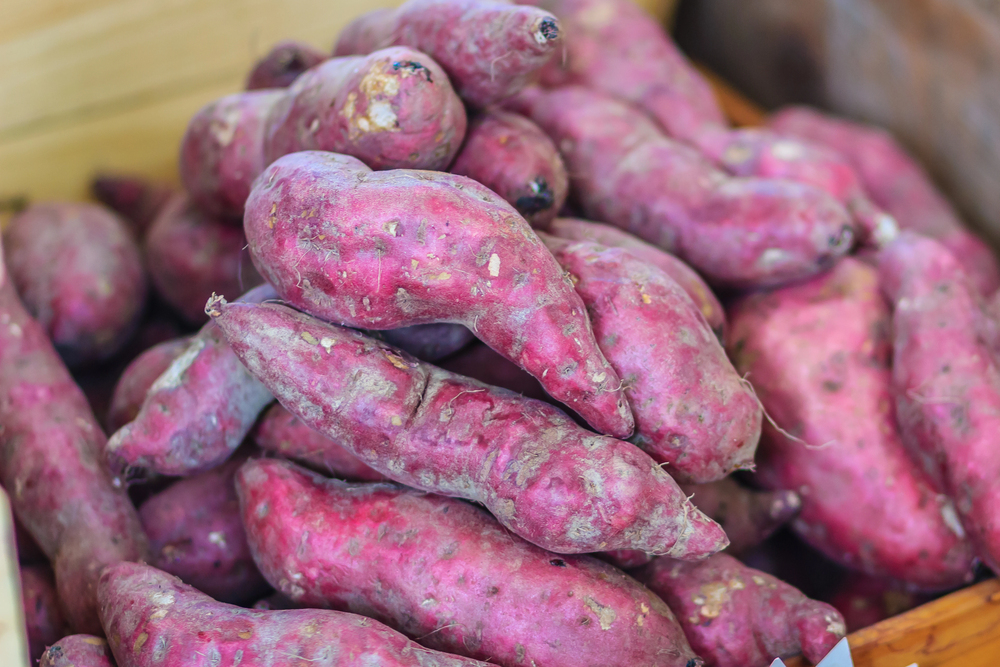
If you’ve bought a Japanese sweet potato, cut into it expecting orange, and found creamy white instead, you’ve already spotted the first thing that sets it apart. The skin is reddish-purple, the flesh is ivory, and the flavor is sweeter and earthier than the orange kinds most of us grew up with. The nutrition is different too, so the difference isn’t just skin deep.
What Japanese sweet potatoes bring to the table
They have about 26 grams of carbohydrates per 103-gram serving, nine percent of the daily value for adults. But unlike a plain starch, they come with fiber, potassium, and vitamin C alongside. Registered dietitian Danielle Smiley of NutriDS, LLC notes they’re well-suited for people who are physically active: the carbohydrates fuel effort and help with recovery. Registered dietitian Alyssa Smolen puts the fiber at about four grams per serving, which is enough to keep you full for a while. She suggests building them into a meal with a protein and some healthy fat rather than eating them on their own.
What about orange sweet potatoes?
Orange sweet potatoes are high in beta-carotene, which the body converts to vitamin A. Japanese ones run higher in vitamins C and E and carry more anthocyanins, the same pigments behind the color in blueberries and red cabbage. Research on different varieties shows considerable variation in carotenoids, flavonoids, and other plant compounds depending on flesh color. If you eat both types across the week, you get more of that range. They’re doing different things, basically.
How often to eat them
There’s no target number. “There isn’t an evidence-based recommendation that says someone should eat a certain number of Japanese sweet potatoes per day or week,” Smiley says. Most healthy adults can have them regularly, even daily, as part of a varied diet. A small to medium potato is a reasonable portion, though how much you need shifts with activity level. “An athlete, for example, may need substantially more carbohydrates than someone less active,” she adds.
What matters more is variety overall. Leaning heavily on any one food, even a good one, tends to crowd out the grains, legumes, and other vegetables that supply things Japanese sweet potatoes don’t. They’re a solid addition to what you’re already eating, not a replacement for any of it.