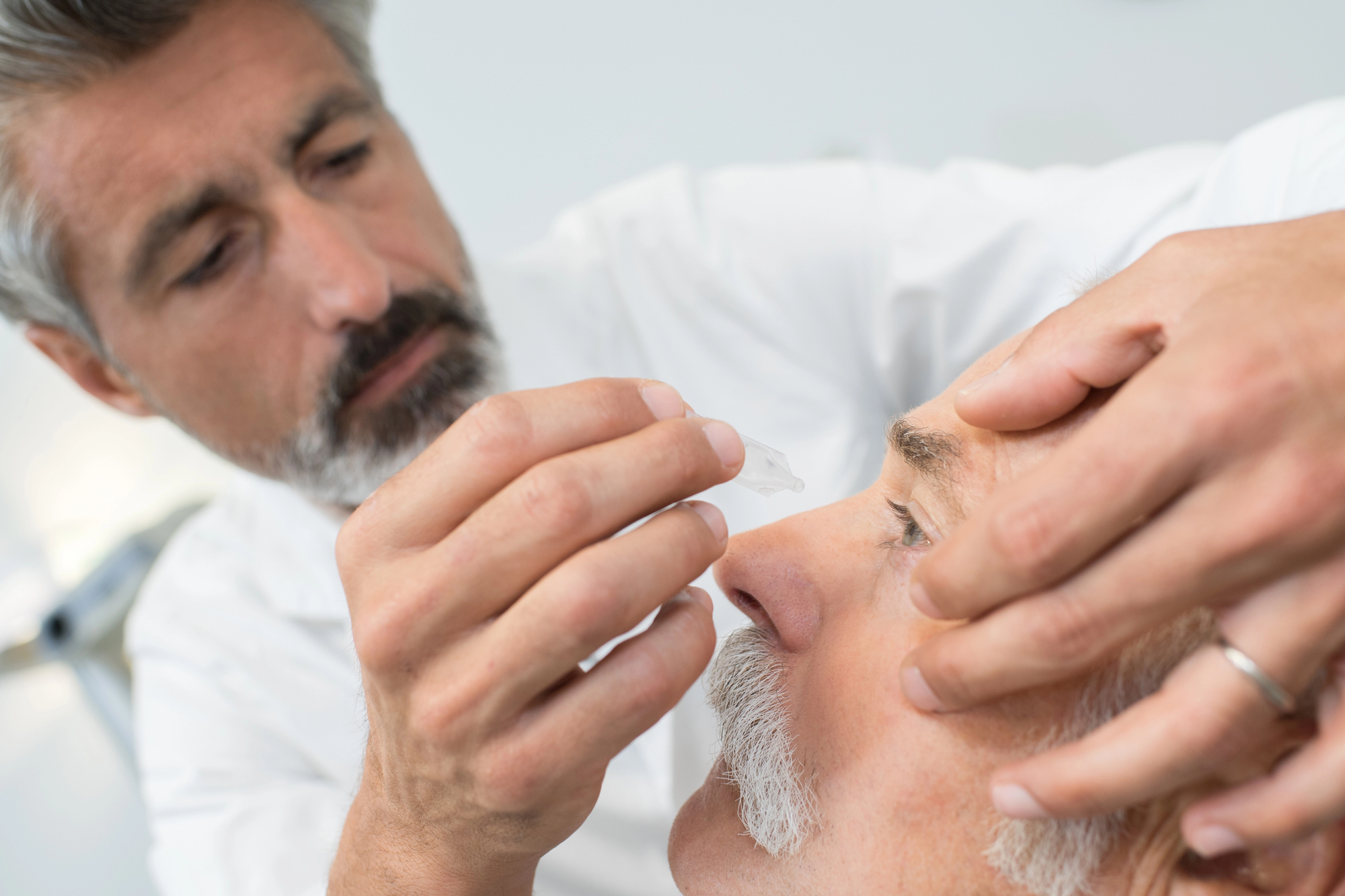
Robert Chang, a Stanford ophthalmologist, normally stays busy prescribing drops and performing eye surgery. But a few years ago, he decided to jump on a hot new trend in his field: artificial intelligence. Doctors like Chang often rely on eye imaging to track the development of conditions like glaucoma. With enough scans, he reasoned, he might find patterns that could help him better interpret test results. That is, if he could get his hands on enough data.
Chang embarked on a journey that’s familiar to many medical researchers looking to dabble in machine learning. He started with his own patients, but that wasn’t nearly enough since training AI algorithms can require thousands or even millions of data points. He filled out grants and appealed to collaborators at other universities. He went to donor registries, where people voluntarily bring their data for researchers to use. But pretty soon he hit a wall. The data he needed was tied up in complicated rules for sharing data.
But Chang thinks he might soon have a workaround to the data problem: patients. He’s working with Dawn Song, a professor at the University of California-Berkeley, to create a secure way for patients to share their data with researchers. It relies on a cloud computing network from Oasis Labs, founded by Song, and is designed so that researchers never see the data, even when it’s used to train AI.
To encourage patients to participate, they’ll get paid when their data is used. This is what the idea of mutual self-interest is all about: two parties equally “winning” in a transaction. And while this story may seem like a story related solely to health data, the reality is that in the future, you could (and should) be paid for the data you produce every day online. After all, there are third-party companies generating revenue off the data you produce everyday online without your awareness. Isn’t only fair that you get a piece of the pie?