


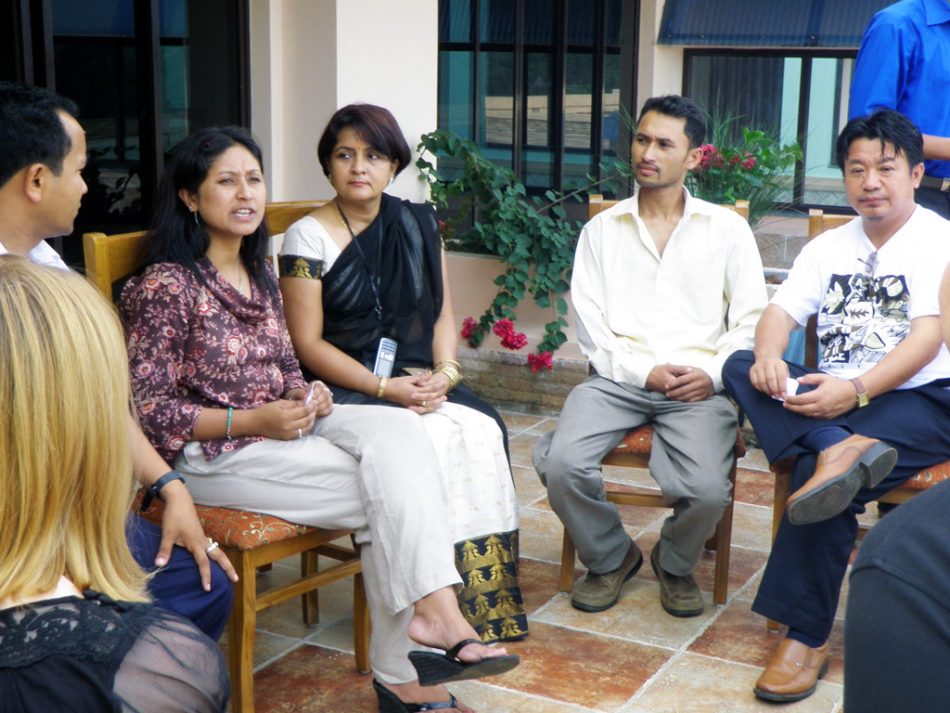
Meet Hasina Kharbhih. When she was just a schoolgirl in Shillong, India, she started supporting the social development of vulnerable communities in the northeast of the country. Now at the age of 49, Kharbhih and her Impulse NGO Network have rescued 72,000 women and children trafficked across India, Myanmar, Bangladesh, and Nepal.
In 2000, Impulse took on its first human trafficking case after Prerana, a Mumbai-based nongovernmental organization, rescued three northeastern girls from a red-light district in the city. Impulse’s immediate challenge was how to work with the government. And for that, it needed a plan of action. That turned out to be what is now called the Meghalaya Model, or the Impulse Model.
The trafficking tracking system focuses on the six R’s (reporting, rescue, rehabilitation, repatriation, reintegration, and restitution) and the six P’s (partnership, prevention, protection, policing, press and prosecution). Karbhih’s tracking center works with 1,000 non-governmental organizations and governmental departments across South and Southeast Asia and has been endorsed by the United Kingdom.
Anyone can report a case to the Impulse Case Info Centre (ICIC), which quickly connects local authorities and NGOs. Once a rescue operation is carried out, ICIC collaborates with social welfare departments and NGOs to provide shelter, medical care, and a long-term plan. whether that’s vocational training or returning the person home. And they follow up to make sure trafficking survivors receive financial compensation.
Ajailiu Niumai, a professor of sociology at the University of Hyderabad who researches human trafficking in northeast India, believes that what makes Kharbhih’s model different from others across India are the components of repatriation and financial compensation. “Besides,” Niumai adds, “Impulse has been able to take their model to the global platform by connecting with the organizations across South Asia and also Europe.”
Impulse is saving trafficking victims, and it’s all thanks to Kharbhih, who has a great reputation of personally getting involved with cases to see them through to justice. One victim, Ella Sangma, describes how Kharbhih flew back and forth between Meghalaya and New Delhi with her when she became the only survivor left to testify against a human trafficker.
After the trial, Sangma emerged from the courtroom to find Kharbhih and had a simple request: to run away. So the pair did just that, running miles and miles through the streets of Delhi, in the hopes that, even if just for a moment, Sangma could feel safe.






