


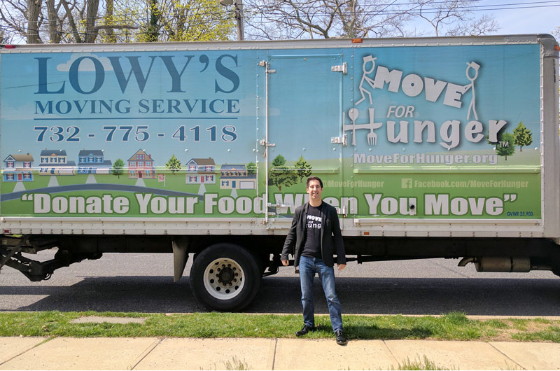
Adam Lowy grew up working for his family’s moving company and noticed that a large amount of food, including nonperishables, gets left behind and thrown away during the process. Lowy saw this as an opportunity to boost moving efficiency while reducing food waste and in 2009, he launched Move for Hunger, a nonprofit which collects leftover food from families during their move and donates it to local food banks.
Move for Hunger partners with moving companies, housing communities, and food banks across all 50 states and Canada to redirect unwanted food to those in need. The organization provides households on the move with donation boxes and information about local food needs. While packing up, people can simply fill the boxes with unwanted nonperishables and Move for Hunger will come pick them up and bring them to food banks.
Relocating can be a stressful process, and in the rush to get everything packed up, many people just toss food out rather than attempt to pack it or think to donate it. Move for Hunger makes it easy to put this food to good use without having to think about driving it to a donation site. So far, Move for Hunger has redirected 21 million pounds of food. They’ve even expanded to sponsor independent food drives to collect some of the items most sought after by food banks, like peanut butter and canned fish.
The pandemic has exacerbated demand for food bank assistance. Move for Hunger says it was their busiest year yet with 5 million pounds of food donated in the last year alone. Move for Hunger has found a simple yet impactful way to reduce waste and reroute that food to those that need it most. If you’re moving in the near future and want to check out their services, you can learn more about their operations on their website.
Image source: Move for Hunger






