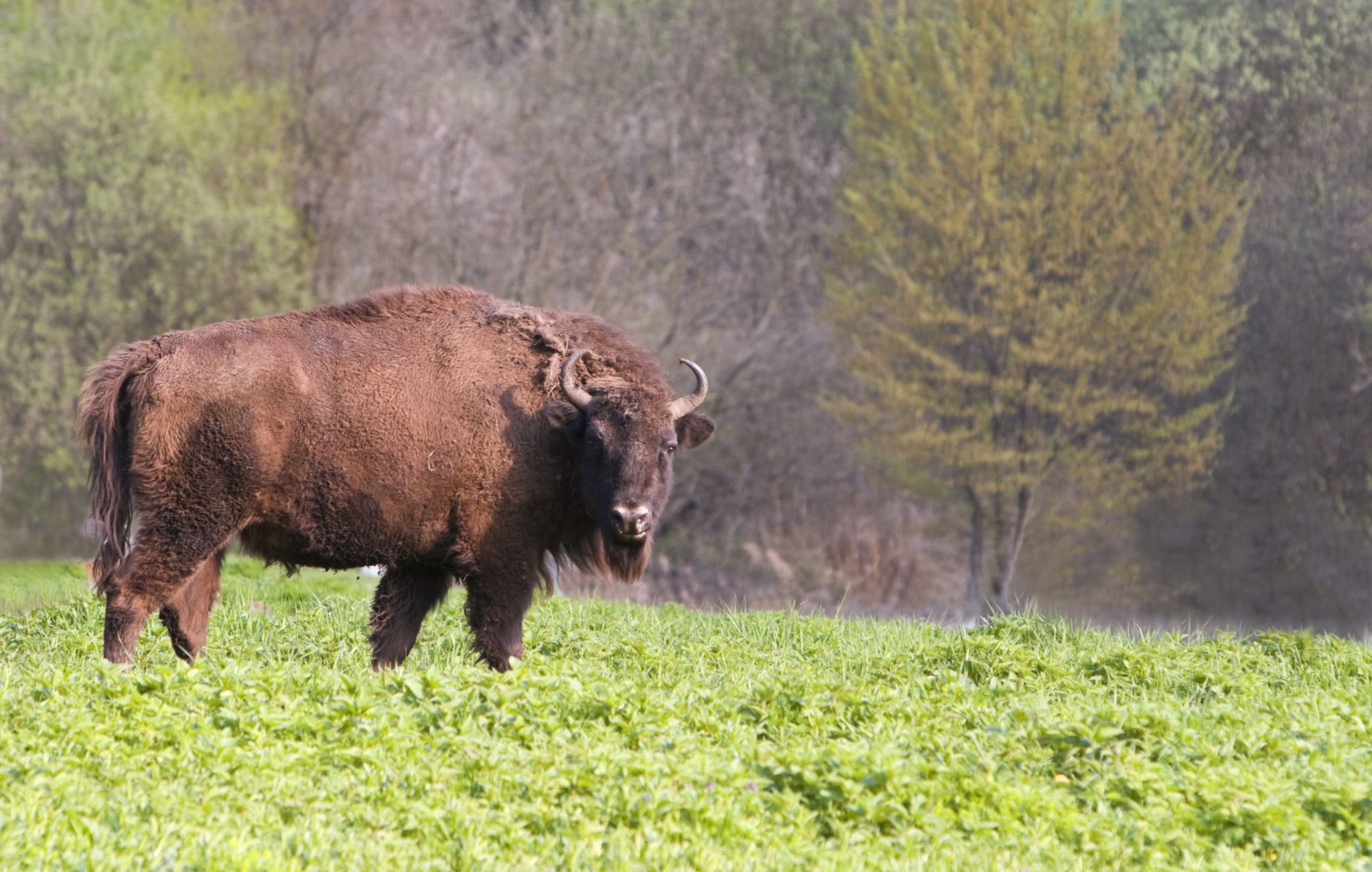
After 200 years of absence, the bison is once again a proud resident of Romania’s Carpathian Mountains. Though a less common sight than it was a few hundred years ago, the majestic animal is now making a determined comeback to the country’s wilderness, thanks to long-term conservation work.
“There was an urgent need to once again give the bison the chance to live in the wilderness and to mix the genes of those bison from captivity,” says Matei Miculescu, who works for the Bison Reintroduction Project established by the WWF and Rewilding Europe.
In recent years, the bison has been lured further into the forest by abundant vegetation, which would enable them to extend their natural habitat, reports euronews. According to Miculescu, who’s responsible for monitoring the Carpathian herd, the animals are faring much better in nature than in captivity which “creates the risk of inbreeding” and reduces their chances of survival.
A successful rewilding story
The Bison Reintroduction Project started in 2014, more than 200 years after they were last seen in Romania. Now, there are 105 of these majestic creatures roaming freely in the Țarcu Mountains. “The goal is to achieve a population of 250 individuals in five years time,” says Marina Druga, who leads the project.
After the animals first arrive in the country, they spend several weeks acclimatizing to Romania’s wilderness before being released into the wild and left to their own devices. Since 2014, there have been 38 bison calves born in the region, a number which has reinforced hopes about the animal’s future survival.
Ecosystem engineers
In addition to benefiting the bison themselves, the rewilding efforts also contribute to the wellbeing of the wider ecosystem. In fact, experts believe that the reintroduction of the bison has the potential to benefit some 600 species, from microorganisms to large carnivores, reports euronews.
“They change the landscape and architecture of the forest by stopping the spread of invasive tree species, spreading seeds for hundreds of plants and creating paths smaller animals use to access food,” says Druga.