BY THE OPTIMIST DAILY EDITORIAL TEAM
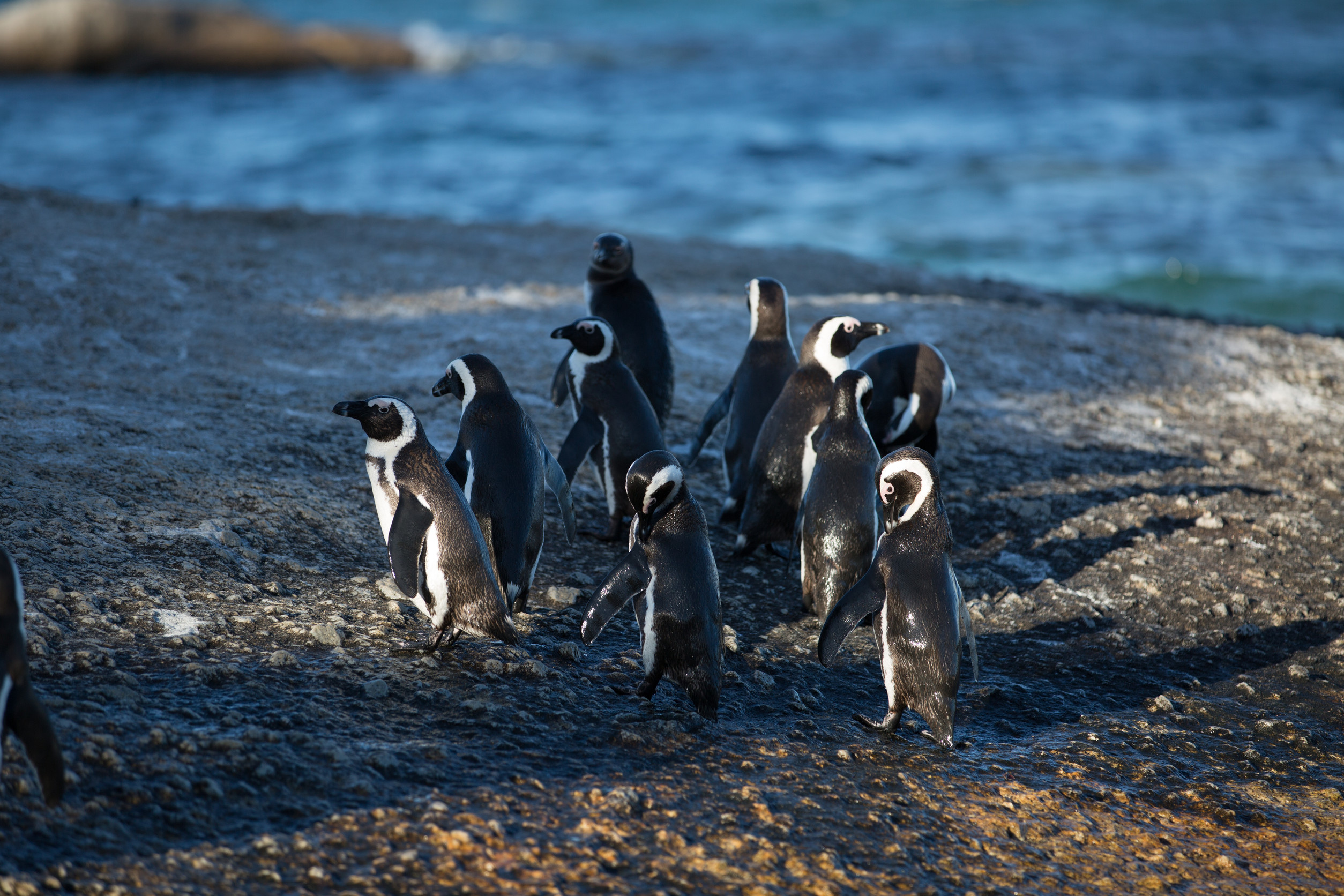
After years of debate between conservationists and the fishing industry, South Africa has taken a major step toward protecting the critically endangered African penguin. A new agreement will restrict sardine and anchovy fishing around six major breeding colonies for the next ten years, offering a potential lifeline for the species.
The deal establishes a 12-mile no-fishing zone around Robben Island, just off Cape Town, and Bird Island, near Gqeberha (formerly Port Elizabeth). Four other colonies will also see partial fishing closures, aiming to ease competition for food and improve penguin survival rates. The agreement, formalized through a court order, is set for review in six years, allowing for scientific reassessment.
A race against extinction
The African penguin population is in freefall, declining at 7.9 percent per year. Today, fewer than 10,000 breeding pairs remain—a stark contrast to the one million that existed a century ago. If this trend continues, the species could be functionally extinct by 2035.
“This order is a significant step forward in our fight to save the African penguin from extinction,” said Nicky Stander, head of conservation at the Southern African Foundation for the Conservation of Coastal Birds (SANCCOB). “However, while we celebrate today’s success, we remain acutely aware that our journey is far from over. The threats facing the African penguin are complex and ongoing.”
A compromise between conservation and industry
The agreement represents a hard-fought middle ground between conservationists and the fishing industry, which had long disputed the impact of commercial fishing on penguin numbers.
The South African Pelagic Fishing Industry Association and the Eastern and Southern Cape Pelagic Association welcomed what they called a “middle of the road compromise.”
“The perception that the fishing industry—or that fishing near breeding sites—is the primary cause of the decline in the penguin population is a false one,” the industry groups stated. “We are especially pleased that this settlement will now allow scarce resources to be used constructively to scientifically determine the principal factors causing the decline in the penguin population and to ameliorate those where possible.”
Balancing biodiversity and economic sustainability
South Africa’s Minister of Environment, Dion George, praised the deal, calling it a landmark example of collaboration between industries and conservationists.
“This agreement is a testament to what can be achieved when industries and conservationists unite for a common cause,” George said. “It delivers on the Department of Forestry, Fisheries and the Environment’s (DFFE) vision of protecting our penguins and preserving biodiversity while ensuring the sustainability of our fishing industry.”
This settlement came after a legal challenge by BirdLife South Africa and SANCCOB, who sued former environment minister Barbara Creecy in May 2024 for failing to implement scientifically meaningful fishing closures around critical penguin habitats. After taking office in July, George pushed for an out-of-court resolution, leading to the current agreement.
Will no-fishing zones be enough?
While the new protections are a positive step, some experts caution that they alone may not be sufficient.
“It is good to hear that the island closures have been agreed at last,” said Bob Furness, emeritus professor at the University of Glasgow, who was part of an expert panel that recommended these fishing restrictions. However, he warned that the conservation benefits could be “small” unless other factors affecting penguin survival are also addressed.
Beyond fishing pressures, African penguins face threats from climate change, land predators, and noise pollution caused by ship-to-ship refueling near Gqeberha. Additionally, experts say that the total stock biomass of sardines—one of the penguins’ primary food sources—remains vulnerable to overexploitation, further complicating efforts to stabilize their population.
“The focus must now turn to examining the industrial fisheries for sardine and anchovy,” said Phil Trathan, a visiting professor at Southampton University and member of the expert panel.
The path forward for penguin conservation
While the agreement provides a critical reprieve for African penguins, ongoing monitoring and enforcement will be essential to determine whether no-fishing zones truly make a difference. Conservationists are calling for further measures, including stricter fishing quotas and broader protections against habitat destruction.
As researchers and policymakers assess the impact of these changes over the coming years, one thing is clear: without bold action, one of Africa’s most iconic seabirds could disappear forever.