BY THE OPTIMIST DAILY EDITORIAL TEAM
Traditional burials, though deeply meaningful, often come at a steep environmental cost. The chemicals, hardwood, and land use involved can have long-term ecological impacts. But a quiet revolution in burial traditions is beginning to bloom and its roots are made of mushrooms.
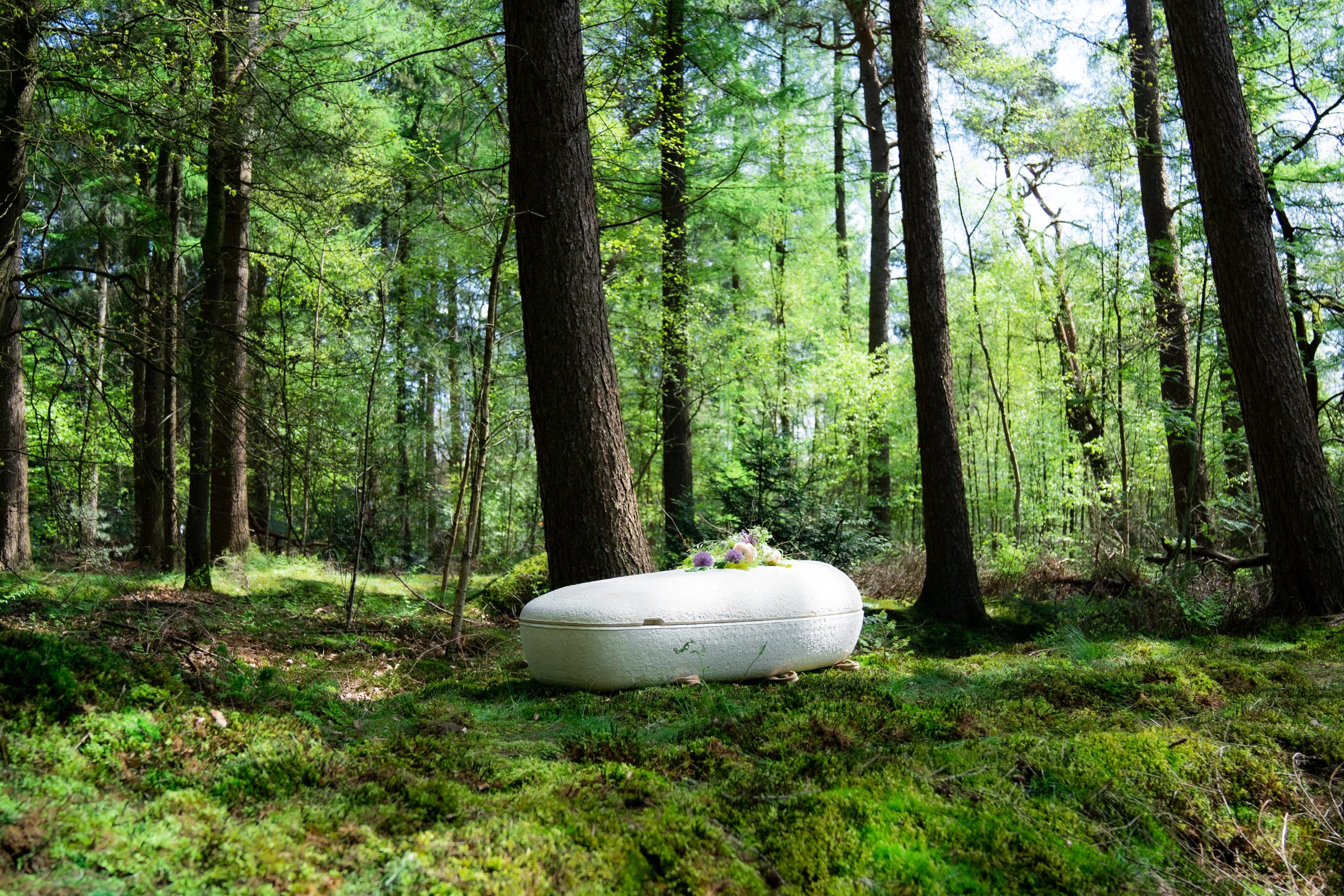
In a first for North America, a burial using a fully biodegradable mushroom casket took place on a serene hillside in rural Maine. The Loop Living Cocoon, developed by Dutch company Loop Biotech, is made entirely from mycelium, the intricate root system of fungi. The casket is grown in just one week, naturally breaks down within 45 days, and enriches the soil it returns to.
“My father always told me that he wanted to be buried in the woods on the property that he loved so much,” said Marsya Ancker, whose father Mark C. Ancker was laid to rest in the pioneering casket. “He wanted his final resting place to nourish the land and plants he cherished.”
The Ancker family’s intimate ceremony was held on private land in Industry, Maine. While it was a small gathering, they hope their choice inspires others to reimagine what it means to say goodbye.
Green burial gains ground
Though this was a first for North America, Loop Biotech has already facilitated more than 2,500 burials across Europe using mushroom caskets. Green burials are an alternative that avoids embalming fluids, hardwood caskets, and steel-reinforced concrete vaults, and they’ve been steadily growing in popularity since the 1990s.
“Since 2005, the Green Burial Council has certified over 250 providers and recorded 400+ green cemeteries across the U.S. and Canada: a clear sign of growing demand for environmentally conscious end-of-life choices,” said Sam Perry, president of the Green Burial Council.
The statistics are striking. According to the Council, conventional U.S. burials consume roughly 20 million board feet of wood, 4.3 million gallons of embalming fluid, and 1.6 million tons of concrete each year.
Bob Hendrikx, founder of Loop Biotech, believes funerals can be more than a final goodbye. “We created the Loop Living Cocoon to offer a way for humans to enrich nature after death. It’s about leaving the world better than we found it.”
Reimagining the funeral industry
The Global Green Burial Alliance, founded in 2022, is helping reshape global perspectives on death. Entirely volunteer-run, the organization connects families with green providers and empowers people to reclaim their voice in end-of-life decisions.
“Funerals can be more than endings: they can be beginnings,” Hendrikx echoed.
Ed Bixby, founder of the Global Green Burial Alliance, believes these choices create a legacy of compassion. “Death is the only guarantee in life; it is how we choose to embrace death that paints the landscape for generations to come. To embrace the living with our death becomes the final act of kindness we can bestow upon our planet.”
With innovations like the mushroom casket and a groundswell of interest in sustainable options, a cultural shift appears to be underway. It asks that we reimagine death not as an ending, but as a way to nourish new life.