


BY THE OPTIMIST DAILY EDITORIAL TEAM
In a world where the scale of plastic pollution can feel overwhelming, 2025 brought a milestone worth celebrating: The Ocean Cleanup, a Dutch nonprofit dedicated to removing plastic from marine environments, pulled more than 25 million kilograms of waste from global waters last year alone. That’s over 55 million pounds or about 2,000 garbage trucks’ worth of plastic that is no longer drifting through our oceans.
The achievement brings their cumulative haul to more than 45 million kilos (99 million pounds) since operations began. This number not only reflects enormous operational progress, but also offers a sobering reminder of just how vast the challenge remains.
The scale of the problem, a shift in strategy
While this record-setting year marks real momentum, it’s also a small dent in a much larger crisis. According to the United Nations Environment Programme (UNEP), a staggering 11 million metric tons of plastic (11 billion kilograms) flow into the oceans every year. In other words, for every ton The Ocean Cleanup removes, hundreds more are entering.
That’s why the organization has been refining its approach. Over the past year, it focused not only on removing plastic from the ocean, but also on stopping it from getting there in the first place.
Rivers: the source and the solution
A breakthrough study, co-published by The Ocean Cleanup in Science Advances, showed that just 1,000 rivers, which represent a mere one percent of the world’s waterways, are responsible for nearly 80 percent of plastic pollution reaching the ocean. This finding led the organization to double down on intervention at the source.
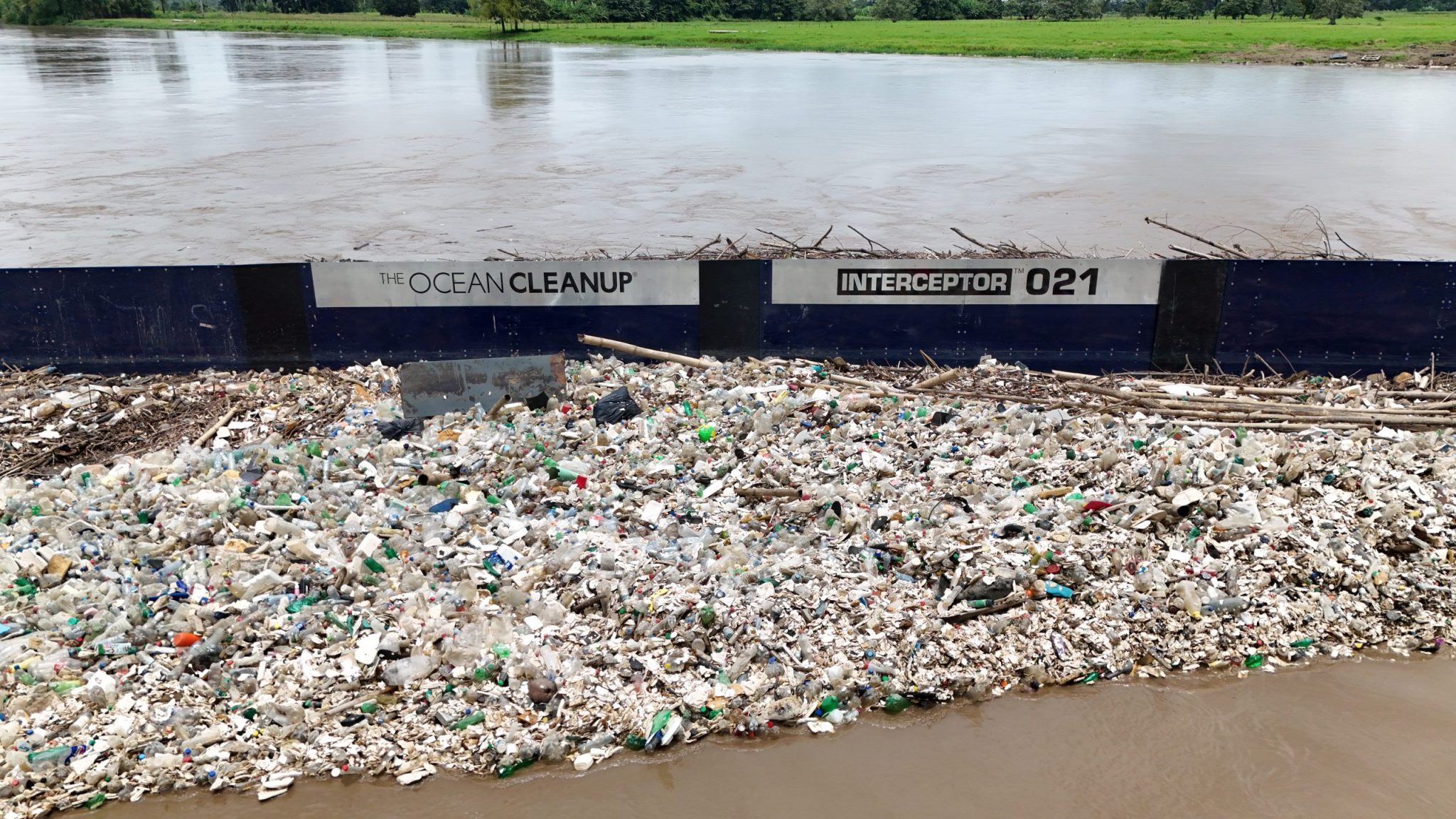
Enter the river interceptor: a solar-powered device designed to collect plastic before it ever hits the sea. By capturing trash upstream, these systems help reduce the amount of waste that makes it to open waters, where removal is far more difficult, costly, and time-consuming.
The 2025 success, the team notes, was the result of “years of research, data-driven decision-making, and commitment to implementing responsible solutions adapted to local contexts.” That includes working closely with communities, governments, and local partners to ensure each deployment fits the environment it serves.
Prevention is still the biggest puzzle piece
Despite the impressive totals, plastic continues to pour into our oceans at alarming rates. Much of it comes from poor waste management systems, outdated packaging design, and limited infrastructure in fast-growing urban centers. That’s why The Ocean Cleanup’s efforts, while vital, can’t solve the problem alone.
Real progress, say experts and advocates, requires prevention: reducing plastic production, redesigning products, improving recycling systems, and creating global standards for waste control.
Only about nine percent of the world’s plastic is currently recycled. The rest piles up in landfills, burns in incinerators, or leaks into natural ecosystems, where it can fragment into microplastics that linger for centuries.
90 percent reduction by 2040
Still, there’s hope on the horizon. The Ocean Cleanup’s official mission is ambitious but clear: remove 90 percent of floating ocean plastic by 2040.
To help meet that goal, the group unveiled its 30 Cities Program at the United Nations Ocean Conference in Nice. The initiative targets plastic pollution from some of the world’s most impactful urban rivers, the ones that are responsible for roughly a third of ocean-bound waste.
Success will require more than machines and data. It demands long-term commitment, local support, and effective downstream waste management.
That’s why the organization is partnering with municipal governments, NGOs, and residents to build systems that don’t just remove plastic but prevent it from ever entering the water again.
A two-pronged path forward
The next decade of ocean cleanup will unfold along two critical tracks:
- Technology and operations, scaling up the deployment of systems that clean more plastic, more efficiently, in harsher and more remote environments.
- Policy and prevention, driving global efforts to redesign the way we produce, consume, and manage plastic before it becomes waste.
As the numbers grow (25 million kilos in one year, 45 million total), it is tempting to focus on what’s been removed. But The Ocean Cleanup’s biggest achievement may be its evolving strategy. The shift to reach upstream and partner with local entities reminds us that no piece of plastic is too small to matter.
Did this solution stand out? Share it with a friend or support our mission by becoming an Emissary.






