BY THE OPTIMIST DAILY EDITORIAL TEAM
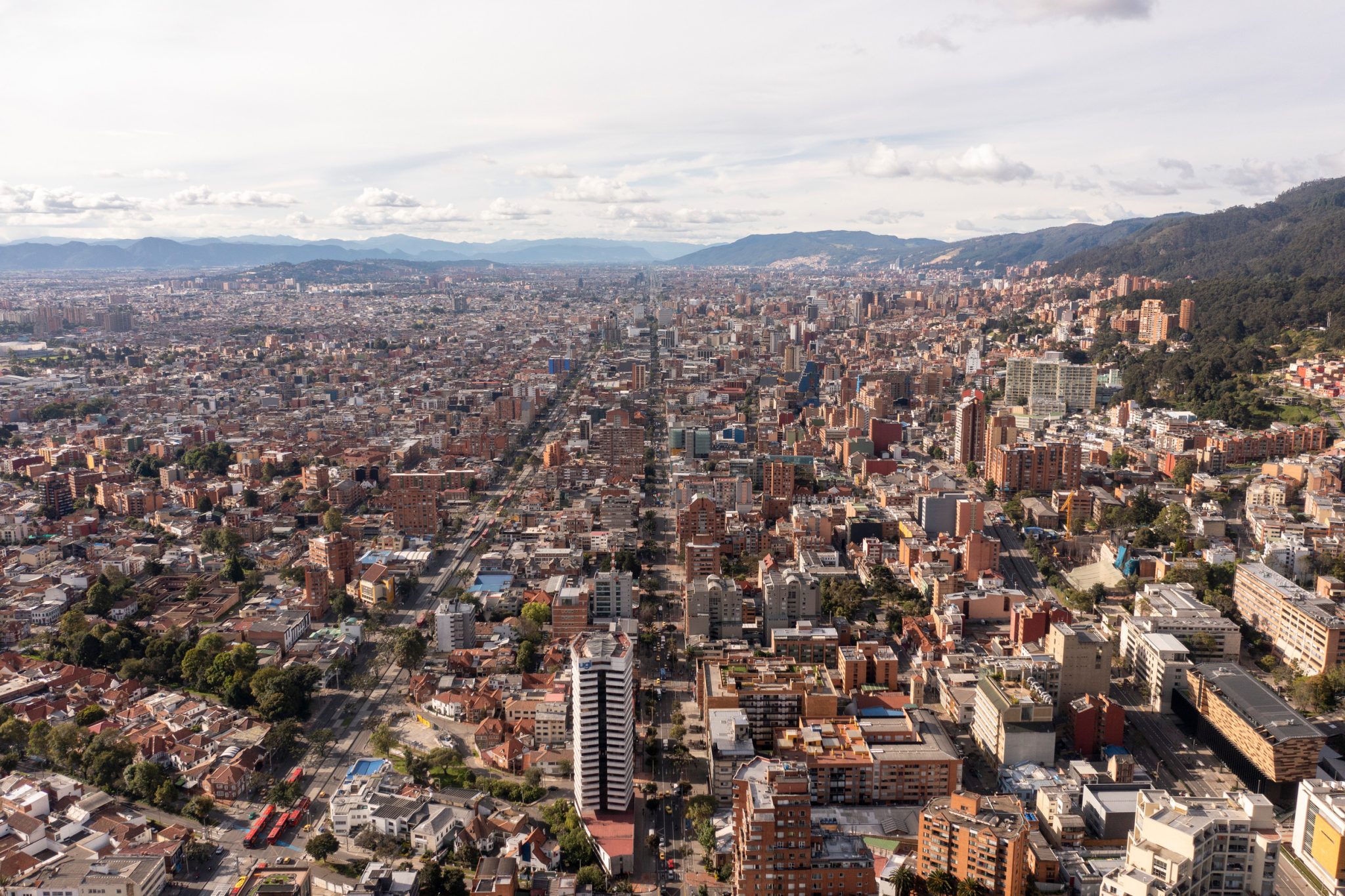
In Bogotá, Colombia’s bustling capital, the battle against air pollution isn’t just about cleaner skies. It’s about equity. While many cities focus on environmental reforms in wealthier districts, Bogotá is flipping that model. It’s bringing its first clean air zones to communities that have long borne the brunt of the city’s toxic air, poor infrastructure, and climate vulnerability.
The transformation is as visible as it is ambitious. On Sundays, major streets are closed to traffic and filled with cyclists, rollerbladers, and families strolling in the sun. But this car-free celebration is just one part of a sweeping strategy to improve air quality in the places that need it most.
From one of the most polluted to a regional leader
At the turn of the century, Bogotá ranked among Latin America’s most polluted cities, with harmful particulate levels up to seven times the World Health Organization (WHO) limit. But in the past six years, the city has made measurable progress, cutting pollution levels by 24 percent between 2018 and 2024.
A major factor has been a shift toward cleaner transportation. Bogotá now boasts 350 miles of cycle lanes, and is the largest such network in Latin America. The city also runs one of the world’s biggest electric bus fleets, with 1,400 vehicles on the road, and has expanded its reach with three new cable car lines (two more are underway), helping residents commute from hillside neighborhoods into the city center.
Clean air zones, starting where it’s needed most
One of the city’s boldest moves came with the introduction of ZUMAs (zonas urbanas por un mejor aire), or urban zones for better air. These clean air zones weren’t piloted in affluent, well-manicured neighborhoods; they were launched in Bosa, a southern district home to more than 700,000 residents, many of whom face economic hardship.
“This is where air pollution has the most serious impacts on people’s health,” said Adriana Soto, Bogotá’s Secretary for the Environment. “It’s really killing people.”
Bosa’s air quality statistics back her up. PM2.5 pollution levels are more than three times higher than WHO guidelines, and respiratory illness rates are significantly elevated, sitting at between 8.7 and 17.3 deaths per 100,000 people, compared with 7.47 citywide.
In this district, wide roads serve as freight corridors. Trucks with high exhaust stacks spew thick black smoke, and many streets remain unpaved. According to Soto, nearly 40 percent of PM2.5 emissions in Bogotá come from dust churned up by traffic on dirt roads.
Breathing room: repaving, rerouting, and reimagining
The ZUMA initiative goes far beyond vehicle restrictions. It’s a complete neighborhood overhaul. In Bosa, the plan includes repaving roads, rerouting freight traffic away from schools, and planting trees to create buffer zones between motorways and homes.
The transformation is rooted in urban planning, with local schools acting as the center of 39 planned upgrades, including new parks, urban forests, and green corridors. This is critical in a district where residents have just five square meters of green space each, which is among the lowest in the city.
For residents like Carolina Roches Díaz, the impact is personal. Dust from nearby roads covers her home and her son’s school. Her three-year-old, hospitalized at birth, still struggles with respiratory issues. “”I constantly tell him to cover up his little eyes,”” she says, holding his hand. They hope for rain to wash away the grime, but what they really need is lasting, systemic change.
From clean air to climate justice
What makes Bogotá’s approach notable is how it prioritises environmental justice, not just the measurable progress. Instead of starting where change is easiest, city leaders are focusing efforts on where health risks are highest.
“Bogotá is living proof of how cities can cut air pollution, fight climate change, and give their residents healthier futures,” said Jaime Rueda, the Bogotá lead at Breathe Cities, a global initiative supporting local air pollution solutions.
That approach is winning international recognition. In 2025, the ZUMA project was named one of the five winners of the Earthshot Prize, and the momentum isn’t slowing. Mayor Carlos Fernando Galán has announced plans to turn city bridges and parts of the new metro into walled gardens, adding to an ambitious goal of planting 1,500 trees, over 2,700 gardens, 362 urban gardens, and three urban forests by 2027.
“Clean air should not be a privilege,” Galán said. “With the ZUMAs we are bringing environmental action to neighborhoods that have carried the heaviest burden for too long.”
A model for other cities
Bogotá’s success is already inspiring other regions. According to Jane Burston, CEO of the Clean Air Fund, the momentum from Bosa is spreading. “Improving the green spaces and public transport as well means there is a lot of excitement about the clean air zone,” she said. “Other neighborhoods are already asking for one.”
That ripple effect is what city leaders are counting on. By showing that clean air can be delivered equitably and that it unlocks other community benefits, Bogotá is proudly rewriting the playbook on urban transformation. And in doing so, it’s proving that breathing easy should not depend on your zip code.
Did this solution stand out? Share it with a friend or support our mission by becoming an Emissary.