


BY THE OPTIMIST DAILY EDITORIAL TEAM
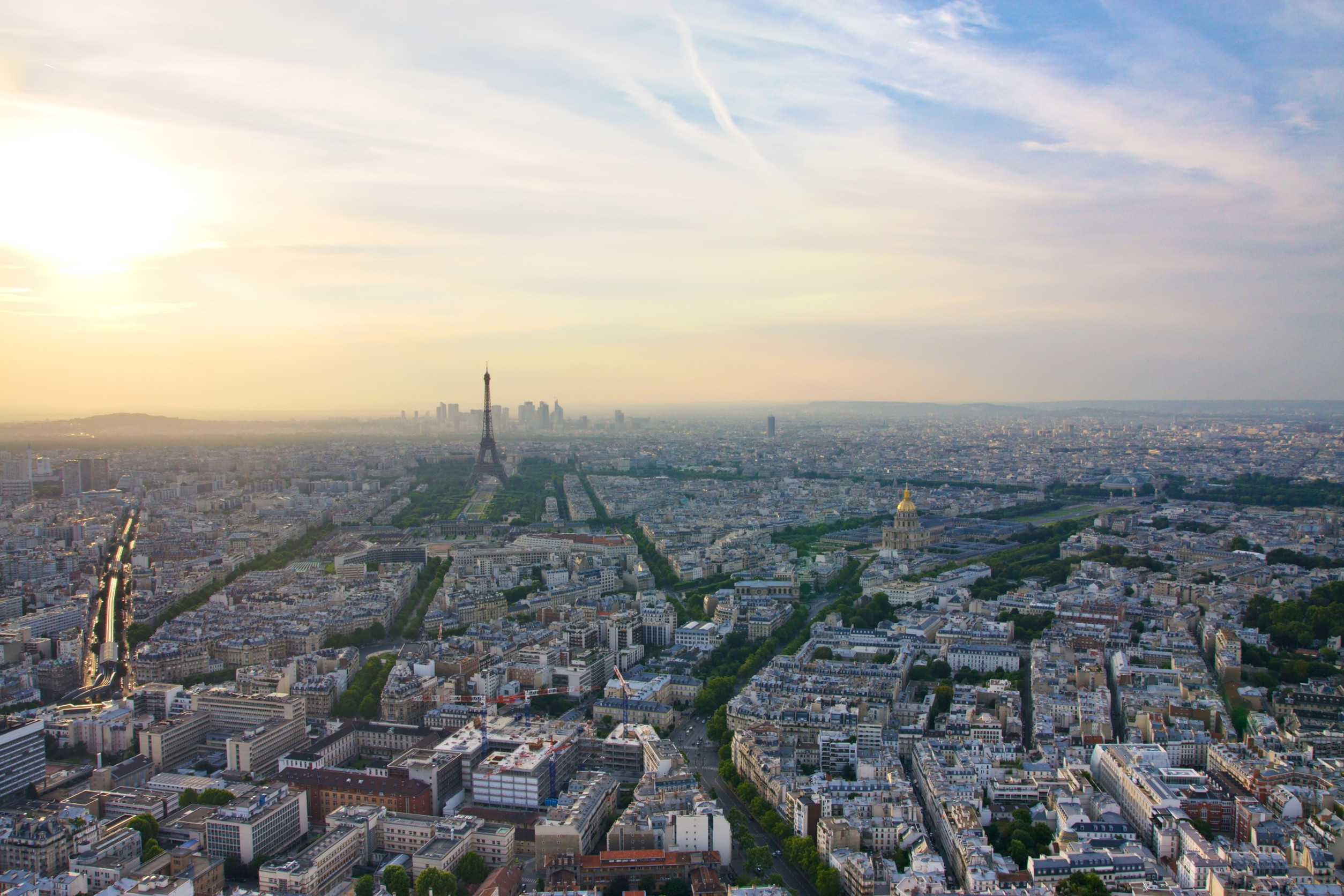
Paris spent the last two decades reimagining its urban landscape, and the results are not just visible, but breathable. The French capital has replaced car-centric streets with bike lanes and pedestrian zones, added green spaces, and eliminated more than 50,000 parking spots.
The changes have not only transformed how Parisians move through the city; they have also dramatically altered the air they breathe.
Airparif, an independent group that monitors air quality in France’s capital region, announced last week that since 2005, levels of fine particulate matter (PM 2.5) have dropped by 55 percent, while nitrogen dioxide has decreased by 50 percent. The organization attributes the improvement to “regulations and public policies,” particularly efforts to curb car traffic and phase out the most polluting vehicles.
The invisible rewards of urban redesign
Air pollution maps from 2005 to 2023 reveal just how significant the transformation has been. Two decades ago, maps of nitrogen dioxide levels showed nearly every neighborhood lit up in red— far above the European Union’s limits. By 2023, that red had faded to a few fine lines along the city’s busiest thoroughfares, a testament to how targeted interventions can reshape the environmental health of a metropolis.
Air pollution has long been labeled a “silent killer” by health experts, linked to conditions such as asthma, bronchitis, heart disease, and lung cancer. Reducing pollutants like PM 2.5 and nitrogen dioxide offers real health benefits, especially in densely populated urban centers.
A public health victory built on policy
The transformation has been driven by Mayor Anne Hidalgo, who took office in 2014 and has consistently championed green, people-centered policies. She has spoken of her vision for “a Paris that breathes, a Paris that is more agreeable to live in.”
Some of her administration’s most ambitious changes include converting parts of the Seine riverbank from traffic arteries into pedestrian zones, banning most vehicles from Rue de Rivoli—a once-congested shopping boulevard—and tripling parking fees for SUVs. Just last month, Paris residents voted in favor of turning an additional 500 streets over to pedestrians.
Carlos Moreno, an urbanist and professor at Paris 1 Panthéon-Sorbonne University, praised the city’s direction, describing its evolution as “an urban policy based on well-being.”
Not without resistance, but with lasting results
Paris’s car-reduction efforts have not been without critics. Right-leaning politicians, commuter groups, and suburban drivers have voiced concerns that the policies make daily life more difficult for those who depend on cars.
Still, the sustained reduction in air pollution and the overwhelming public support for recent referendums suggest that many residents are embracing the city’s new direction.
Paris’s experience demonstrates how long-term, consistent policy can lead to measurable environmental improvements. It also offers a model for other cities grappling with pollution and traffic congestion. Urban redesign, it turns out, is not just about aesthetics or mobility—it can be a matter of public health.






