


BY THE OPTIMIST DAILY EDITORIAL TEAM
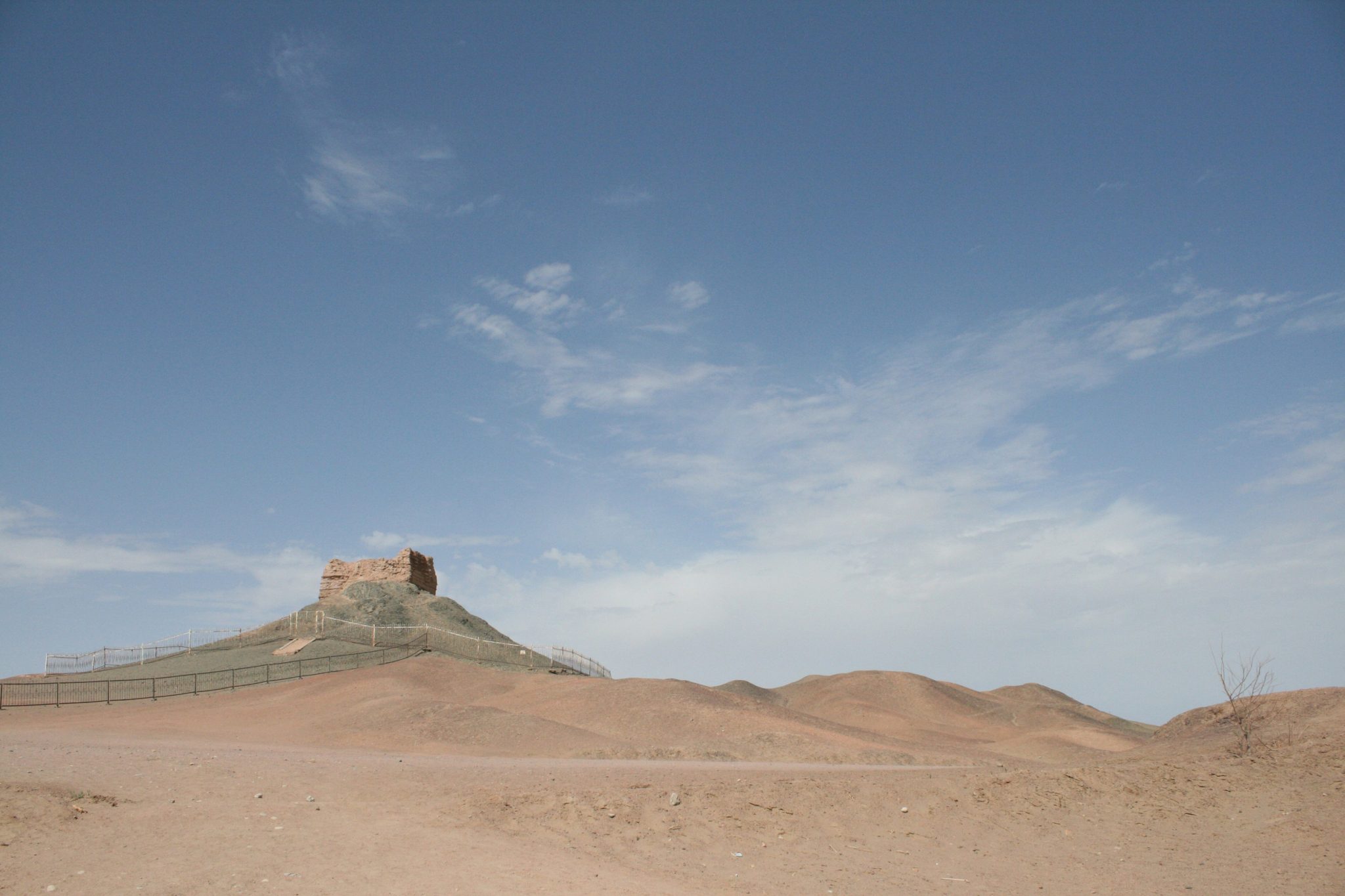
For decades, the Taklamakan Desert was described in stark terms: a “biological void,” a vast expanse of shifting sand where little could survive. Slightly larger than the state of Montana and ringed by mountains that block most incoming moisture, it remains one of the largest and driest deserts on Earth. Now, new research suggests that the story at its edges is changing.
After decades of large-scale tree planting, scientists report that vegetation surrounding the Taklamakan is absorbing more carbon dioxide than the desert emits, effectively turning parts of this once-expanding landscape into a carbon sink.
From desert expansion to ecological engineering
More than 95 percent of the Taklamakan is covered in moving sand. Since the 1950s, rapid urbanization and farmland expansion in China have contributed to land degradation and desertification, creating conditions that intensified sandstorms and allowed the desert to expand.
In 1978, China launched the Three-North Shelterbelt Program, widely known as the Great Green Wall. The ambitious initiative aims to plant billions of trees along the margins of the Taklamakan and Gobi deserts by 2050, creating a vast belt of vegetation designed to stabilize soil and slow desert spread.
To date, more than 66 billion trees have been planted across northern China. In 2024, officials completed the encirclement of the Taklamakan with vegetation. Forest cover across China has increased from about 10 percent of the country’s land area in 1949 to more than 25 percent today.
The project’s effectiveness in reducing sandstorms remains debated. But its impact on carbon dynamics is now coming into sharper focus.
A measurable shift in carbon balance
In a study published January 19 in Proceedings of the National Academy of Sciences, researchers analyzed 25 years of ground observations and satellite data tracking precipitation, vegetation cover, photosynthesis, and carbon dioxide fluxes around the Taklamakan.
They also incorporated modeling data from the National Oceanic and Atmospheric Administration’s Carbon Tracker, which maps global carbon sources and sinks.
Their findings reveal a consistent expansion of vegetation and increasing carbon uptake along the desert’s perimeter, trends that align in both time and location with the growth of the Great Green Wall.
“We found, for the first time, that human-led intervention can effectively enhance carbon sequestration in even the most extreme arid landscapes, demonstrating the potential to transform a desert into a carbon sink and halt desertification,” said study co-author Yuk Yung, a professor of planetary science at Caltech and senior research scientist at NASA’s Jet Propulsion Laboratory.
During the desert’s wet season, which runs from July to September, average monthly precipitation reached about 0.6 inches (16 millimeters), which is roughly two and a half times higher than in the dry season. That modest increase in rainfall had measurable effects.
Vegetation cover and photosynthesis along the desert’s rim increased during wetter months, lowering atmospheric carbon dioxide concentrations over the region from 416 parts per million in the dry season to 413 parts per million in the wet season.
While a three-part-per-million shift may sound small, at scale it signals a net uptake of carbon tied to living plant systems rather than unstable sand deposits.
Why this matters for long-term climate stability
Previous research suggested that the Taklamakan might act as a carbon sink because desert sands can absorb carbon dioxide. However, that storage mechanism is vulnerable. Rising temperatures can cause air trapped in sand to expand and release additional carbon dioxide, making it an unreliable long-term solution. The new findings highlight something different: carbon storage rooted in vegetation.
“Based on the results of this study, the Taklamakan Desert, although only around its rim, represents the first successful model demonstrating the possibility of transforming a desert into a carbon sink,” Yung said.
The emphasis on “around its rim” is important. The vast interior of the desert remains largely unchanged. But the vegetated perimeter is now playing an active role in carbon sequestration.
A model for other arid regions?
Questions remain about whether the Great Green Wall will significantly curb desertification or sandstorm frequency over the long term. Large-scale ecological engineering carries trade-offs, and scientists continue to assess water use, species selection, and ecosystem resilience. Still, the carbon findings offer a new lens on the project’s value.
Yung noted that the Taklamakan’s transformation “may serve as a valuable model for other desert regions.” If carefully designed and adapted to local conditions, similar interventions could help stabilize vulnerable landscapes while drawing carbon from the atmosphere.
Turning a desert into a forest is not realistic nor necessarily desirable across entire arid regions. But reinforcing the margins, stabilizing dunes, and expanding vegetation buffers may provide a pragmatic pathway for climate mitigation in some of the planet’s harshest environments.
The Taklamakan remains an immense desert. Yet along its borders, trees are reshaping the carbon equation, offering evidence that even extreme landscapes can respond to sustained, human-led restoration efforts.
Source study: Proceedings of the National Academy of Sciences— Human-induced biospheric carbon sink: Impact from the Taklamakan Afforestation Project
Did this solution stand out? Share it with a friend or support our mission by becoming an Emissary.






