BY THE OPTIMIST DAILY EDITORIAL TEAM
When 15 Girl Scouts in Pilot Mountain, North Carolina, gathered to watch the Artemis II launch, troop leader Heather Willard wasn’t sure how captivated they’d be. Then the rocket lifted off.
“All of the girls were mesmerized,” she said.
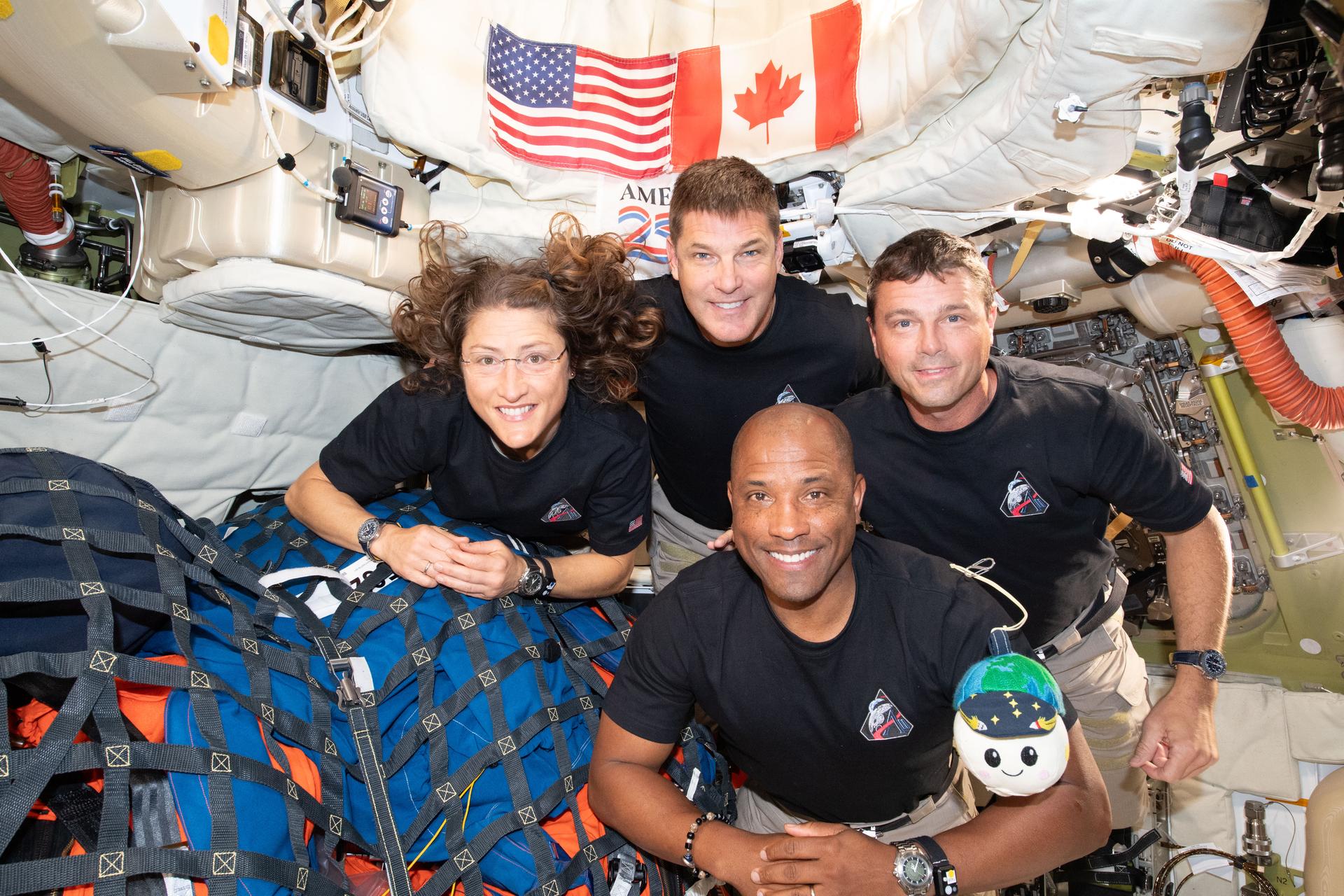
Across the country, the same thing kept happening. For ten days, as Reid Wiseman, Victor Glover, Christina Koch, and Jeremy Hansen flew around the far side of the moon and came back safely, a country that can’t agree on much of anything found itself watching the same thing. The mission ended with splashdown off the coast of San Diego, the first crewed lunar voyage in more than 50 years. It was an aerospace milestone. It was also something that turns out to be surprisingly rare: something almost everyone wanted to see.
A country that disagrees on almost everything agreed on this
About 69 percent of Americans say they get excited about space exploration. Around 80 percent hold a favorable view of NASA, Republicans and Democrats alike, according to a Reuters/Ipsos poll taken during the mission. Nearly 69 percent said it matters to them that astronauts go back to the moon.
At Chicago’s Adler Planetarium, senior astronomer Gaza Gyuk watched hundreds of people come in to track the mission: different backgrounds, different ages, the same room.
“Everyone can be excited about humans extending their capabilities, learning new things, and doing so in a positive, peaceful way,” he said.
In Elkins Park, Pennsylvania, astronomy enthusiast Hector Ybe organized a launch watch party that drew around 225 people: families, kids, people from different ethnic and religious communities. For two hours, he said, the outside world dropped away.
“For two hours, everybody forgot what was happening outside in the world, everybody was talking about space,” Ybe said.
The crew the country needed to see
Part of what made Artemis II feel different was who was on board. Victor Glover was the first Black astronaut to travel to the moon. Christina Koch was the first woman. Commander Reid Wiseman and mission specialist Jeremy Hansen, the first Canadian to fly a lunar mission, rounded out a crew that looked more like the country watching than any Apollo team ever had.
In Northglenn, Colorado, engineering teacher Erin Brabant covered her school hallway with mission posters and had students build their own lunar lander models. Whenever Artemis came up in class, the same thing happened.
“When we talk about Artemis, it’s like every kid stops what they’re doing,” Brabant said. “Their little side conversations stop, and they have questions.”
For the Girl Scouts in North Carolina, Koch meant something specific. She is a former Girl Scout herself, and the troop had been preparing presentations on famous alumnae for Women’s History Month when the launch pulled their attention to her story.
Why the moon still pulls at us
The draw people feel toward the moon goes back further than any space program, and it is not only emotional. Earth and the moon came from the same collision. Around 4.5 billion years ago, a Mars-sized body called Theia slammed into a young Earth, and the debris that coalesced in orbit became the moon. The atoms from that impact are present in every living thing on this planet, the same ones that were in every person who stood outside to watch the launch. The moon has never been foreign to us. It was formed from the same event we were.
It also never stopped shaping how life works here. The moon stirs the oceans, steadied Earth’s axial tilt during the long stretch when complex life was getting started, and its craters hold geological history that wind and rain on Earth have long since erased. Scientists are still reading what is in them. There may be effects that nobody has catalogued yet.
When Gyuk shared images from the Artemis mission showing Earth from deep space, oceans and landmasses clear but no borders in sight, he noticed what happened in the room. “That helps people sort of realize that we’re all in this together,” he said.
“We will always choose Earth”
The moment people keep returning to is what Koch radioed to Mission Control in Houston, looking back at a planet that had become small and distant after the crew’s translunar burn.
“We hear you can look up and see the moon right now. We see you, too,” she said. “When we burned this burn towards the moon, I said that ‘we do not leave Earth, but we choose it.’ And that is true. We will explore. We will build. We will build ships. We will visit again. We will construct science outposts. We will drive rovers. We will do radio astronomy. We will found companies. We will bolster industry. We will inspire. But ultimately we will always choose Earth. We will always choose each other.”
NASA Administrator Jared Isaacman called the splashdown “just the beginning,” with a lunar landing planned for 2028 and a permanent base as the longer-term goal. Whether any of that stays on schedule is an open question. What Artemis II already gave people is harder to plan for: a few days when millions of them stopped arguing and looked at the same sky. The moon has been pulling that off since before anyone thought to write it down.
Did this solution stand out? Share it with a friend or support our mission by becoming an Emissary.