BY THE OPTIMIST DAILY EDITORIAL TEAM
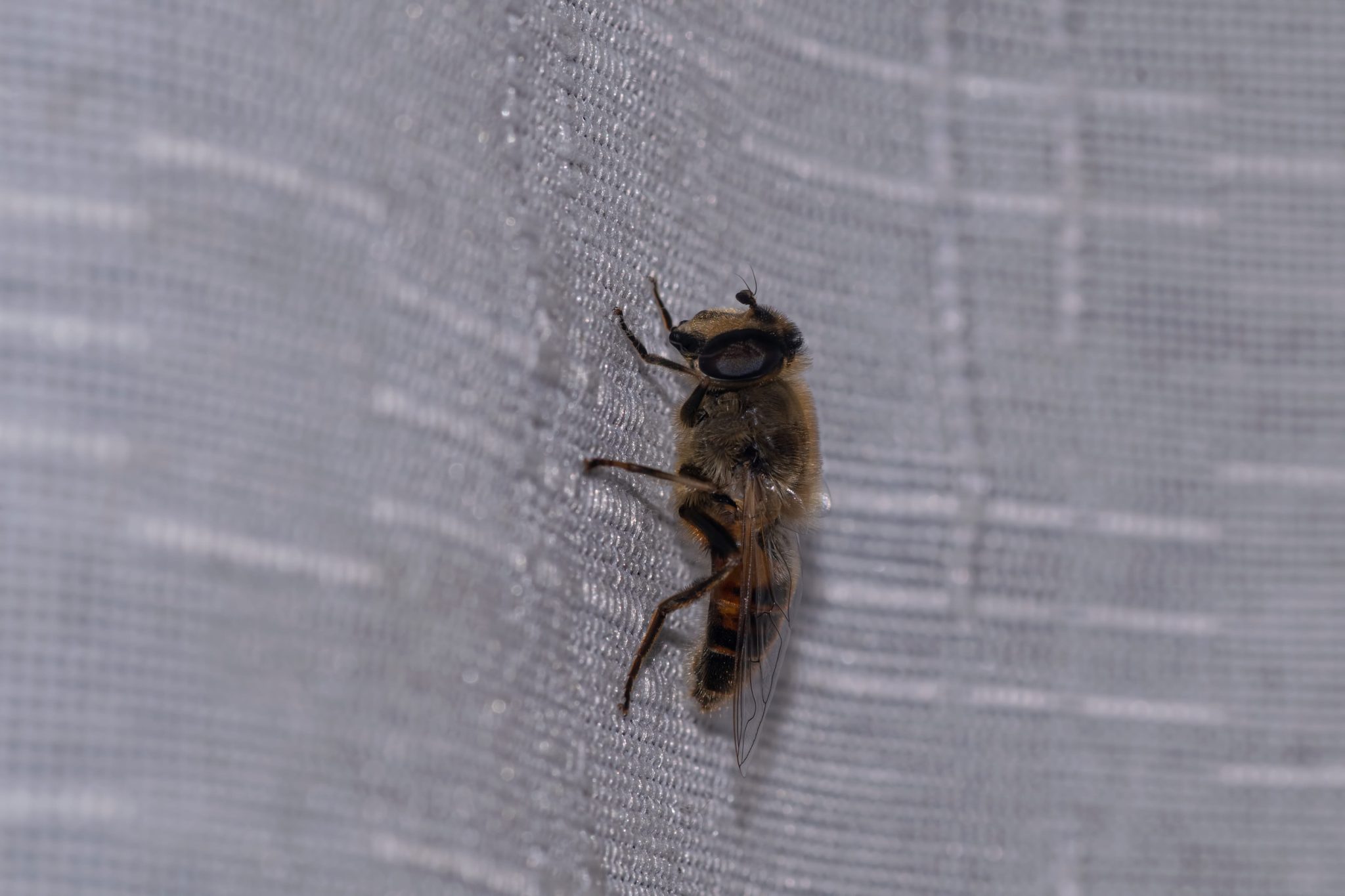
The human brain contains approximately 86 billion neurons. A honeybee brain contains roughly one million, packed into about one cubic millimeter. That brain, it turns out, can learn to tell human faces apart.
The research goes back more than two decades. Across multiple studies, honeybees have been trained to recognize individual faces from photographs, identify the target face among similar distractors with 80 to 90 percent accuracy, and hold that recognition for at least two days.
How the training works
Researchers show bees standardized photographs of human faces, cropped from the neck up. One face is paired with a sucrose solution. The others get quinine, which bees find aversive. Over repeated trials, individual bees learn to go toward the rewarded face and away from the rest.
Accuracy varies across individuals and conditions. The core result has been replicated consistently.
What they are actually doing
Human facial recognition relies on configural processing: reading faces by the spatial relationship of features to each other, not by cataloguing parts. Bees, it turns out, use the same method.
Martin Giurfa of Université Paul Sabatier in Toulouse put it this way: “What is really amazing is that an insect with a microdot-sized brain can handle this type of image analysis when we have entire regions of brain dedicated to the problem.”
Humans have the fusiform face area, a dedicated neural region that activates specifically for faces. Bees have nothing like it. What they do have is flexible associative learning: the ability to attach reward signals to complex visual patterns and keep those associations intact over time.
Why the comparison to humans matters
Facial recognition has long been treated in neuroscience as a problem that requires a big, specialized brain. The bee research pushes back on that assumption.
Adrian Dyer, who first documented this in 2005, argued that configural processing is not a primate-only capability. The brain does not need to be large or structurally dedicated to learn to read a face. It just needs to be able to associate patterns with outcomes.
That changes what researchers look for when studying recognition across species. It also raises a reasonable question: which other animals are doing something similar, and nobody has thought to check?
Did this solution stand out? Share it with a friend or support our mission by becoming an Emissary.