BY THE OPTIMIST DAILY EDITORIAL TEAM
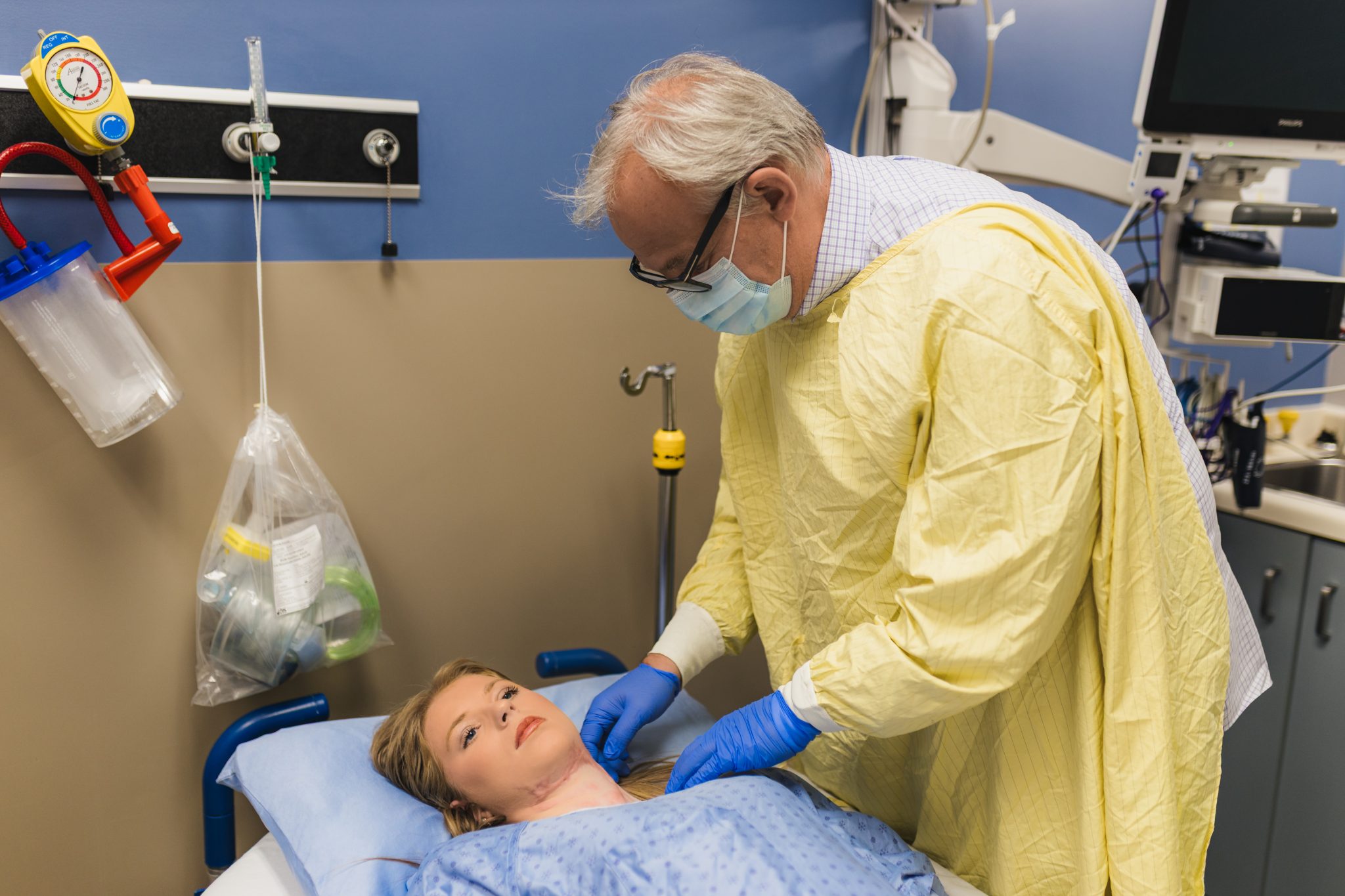
Kaitlin Jeffrey was 18 when her face and hair caught fire at a fraternity party at Western University last December. She ended up at the burn unit at Hamilton Health Sciences in Ontario, where her surgeon had an approach he’d never been able to try on a burn patient.
Jeffrey was one of five people hurt when rubbing alcohol was thrown onto a lit torch at a Pi Kappa Alpha party in London, Ontario, on December 2, 2025. Her injuries were serious enough that she was transferred from London’s Victoria Hospital to Hamilton, where Dr. Marc Jeschke led her care.
What are skin grafting’s limitations?
The usual treatment for severe facial burns is skin grafting: harvesting skin from another part of the body and transplanting it to the burned area. It works, but the results are visible. Grafted skin doesn’t match surrounding tissue; it scars and has a patch-like appearance. On a young person’s face, that’s a difficult outcome to accept as the only option.
“You can do the best graft on the planet, but you won’t return the skin to normal,” Jeschke said. “And, for a young person, a skin graft to the face and neck can be absolutely devastating.”
What exosomes do
Exosomes are tiny particles that cells release to communicate with each other, coordinating healing and managing inflammation. They’ve been studied in burn research for years and used in clinical trials for other wound types, with early results that looked promising. Nobody had injected them into a burn patient until Jeschke applied to Health Canada for compassionate use authorization and received no objection.
Over several days, Jeffrey underwent two treatments using one trillion exosomes sourced from lab-grown cells in the United States. Hamilton Health Sciences said she healed faster and with better results than another student from the same fire, whose burns, while serious, didn’t require skin grafting and so didn’t qualify.
What came next
“It’s honestly a miracle,” Jeffrey said. “Being injured in the fire has also had deep impact on my mental health, and it’s something I’m continuing to deal with. But having such good results, particularly to my face, is helping me move forward.”
Her family hopes the treatment eventually becomes standard for burn patients. Jeschke’s goal from the start was to spare Jeffrey from a surgical outcome that left permanent marks. He got there. Whether that becomes repeatable, and for whom, is what comes next.
Did this solution stand out? Share it with a friend or support our mission by becoming an Emissary.