BY THE OPTIMIST DAILY EDITORIAL TEAM
Scientists can now draw a straight line from a single oil company’s emissions to a specific disaster. Not a rough estimate of the industry’s overall contribution, but a specific company, a specific event, a specific percentage.
That’s what a new peer-reviewed study published in Earth’s Future has done, and the fossil fuel industry is paying attention, because their defense in climate lawsuits has always been that causation is impossible to prove. Christopher Callahan’s work punches a hole in that argument.
Callahan, an Earth systems scientist and assistant professor at Indiana University’s O’Neill School of Public and Environmental Affairs, ran more than 150 simulations across eight different climate models, building a statistical map of the relationship between atmospheric carbon dioxide and the odds of extreme heat and rainfall. He then plugged in historical emissions data from individual companies and countries.
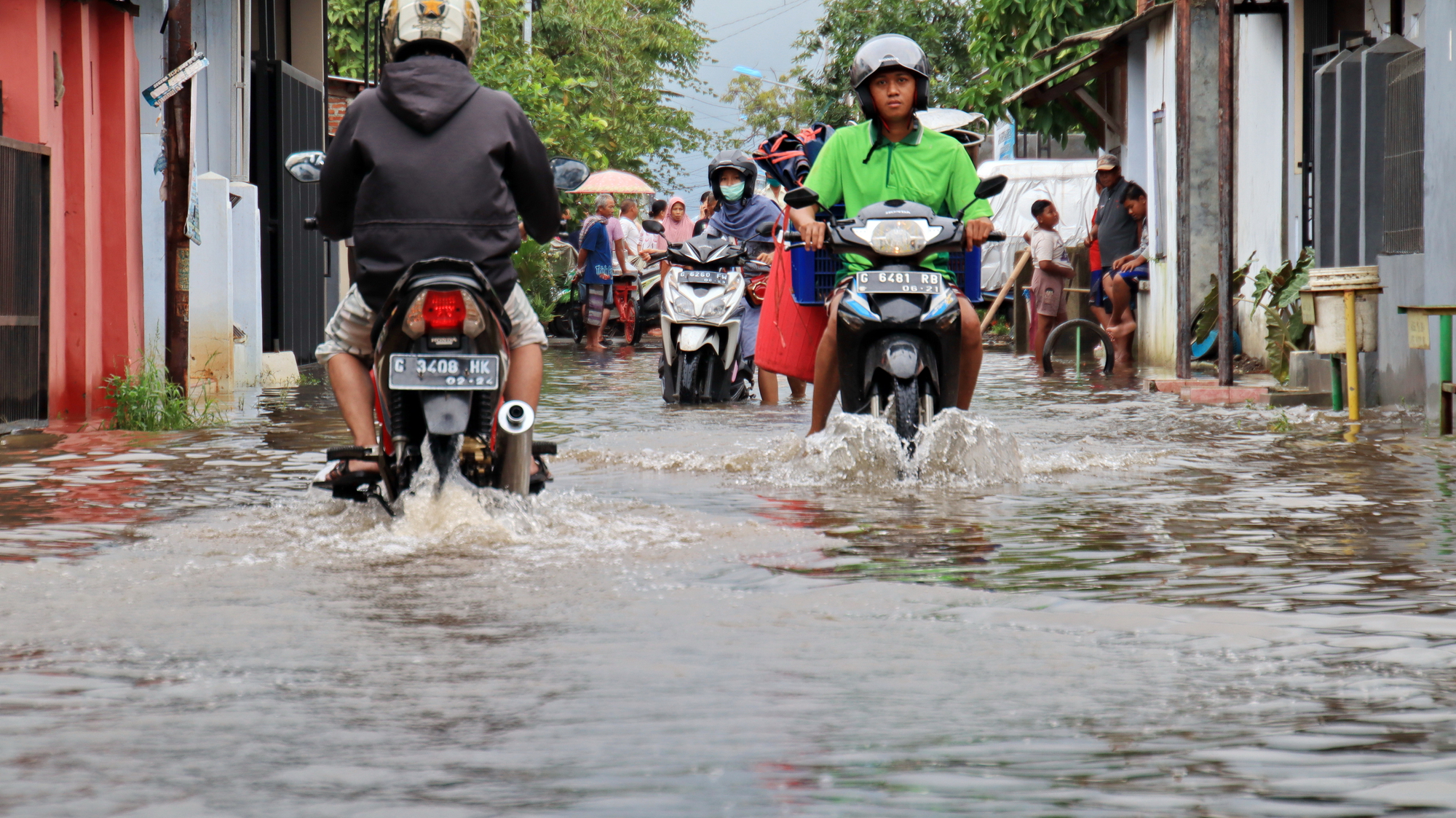
The numbers he got are not minor. Fossil fuel firms increased the likelihood of the 2021 Pacific Northwest heat wave by 31 percent. They raised the probability of Pakistan’s catastrophic 2022 extreme rainfall by seven percent. “There is no level of emissions that does not contribute to changing climate impacts,” Callahan said. “Every ton matters.”
Why source attribution is different
Climate attribution science has been around for over two decades. Its core question: how much did human-caused warming increase the odds of a given event? Source attribution goes narrower and asks which specific actors caused which specific effects.
Answering that used to mean linking multiple climate models together in processes that could take months and required significant computing resources. Callahan’s approach bypasses that. Because the relationship between cumulative emissions and warming follows predictable proportions, he can calculate each emitter’s contribution to a specific event using historical data alone.
“What this science tells us,” Callahan explained, “is that there is a direct relationship between how much an entity emits and the extreme events that alter people’s lives.”
Kim Cobb, an observational climate expert at Brown University, called it “extremely valuable” and noted it “would have been a pipe dream 10 years ago; it simply wouldn’t be possible.” Jim Hurrell, a professor of atmospheric science at Colorado State University and chair of the National Academies’ recent extreme weather report, is less focused on the courts than on what comes after. “This science could be really useful to help communities plan for the future,” he said.
A missing piece for climate lawsuits
More than 40 climate lawsuits have been filed against major oil companies in the US since 2017, brought by states, municipalities, and tribal governments. At least five have entered the discovery phase, where executives could be forced to hand over internal documents and testify under oath about what the companies knew and when.
The sticking point in most of these cases has been causation. At a 2025 Federalist Society panel on climate litigation, Michael Buschbacher, a partner at Boyden Gray PLLC who has backed industry opposition to climate liability laws, put the challenge plainly: “How do you show that emissions from company X cause injury Y from a hurricane or whatever?”
Callahan’s study is a direct response to that. Even Kyle Kohli, writing in Energy In Depth, a publication of the Independent Petroleum Association of America, acknowledged what this science represents for plaintiffs: “Climate attribution research seeks to connect greenhouse-gas emissions to specific climate impacts, and increasingly, to particular industries or companies. That makes it especially valuable to climate plaintiffs attempting to overcome one of their biggest legal obstacles: proving causation.”
The American Petroleum Institute listed stopping “extreme climate liability policy” as one of its top 2026 priorities. It is a harder problem to solve than it used to be.
The campaign against the research
The fossil fuel industry has known about its role in warming the planet for more than 50 years. Its long-running response has been to fund doubt wherever the science gained traction. A June investigation by Politico found a secret campaign by oil industry allies to discredit a National Academies of Sciences, Engineering, and Medicine report on extreme weather attribution, coming just months after Republican attorneys general successfully forced the removal of a NAS climate sciences chapter from a reference manual for federal judges.
A NASA scientist who asked not to be named called the decision to pull the chapter “pathetic. If they cannot stand up for science, then who is going to?”
Researchers themselves are not divided on the findings. Michael Mann, a climate scientist at the University of Pennsylvania, called the NAS report “great” and said it “didn’t pull any punches.” Kristina Dahl, a climate scientist and vice president for science at Climate Central, described it as “a really excellent roundup of the state of the science.”
Callahan is clear-eyed about where his research sits politically. “Our responsibility as scientists is not to never do science that is relevant to the political conversation,” he said. “We should follow the results of our questions wherever they lead and report them regardless of what they are.”
Climate scientist Yann Quilcaille of ETH Zürich put it plainly: “We need to act quickly, and we have the solutions.”
Did this solution stand out? Share it with a friend or support our mission by becoming an Emissary.