BY THE OPTIMIST DAILY EDITORIAL TEAM
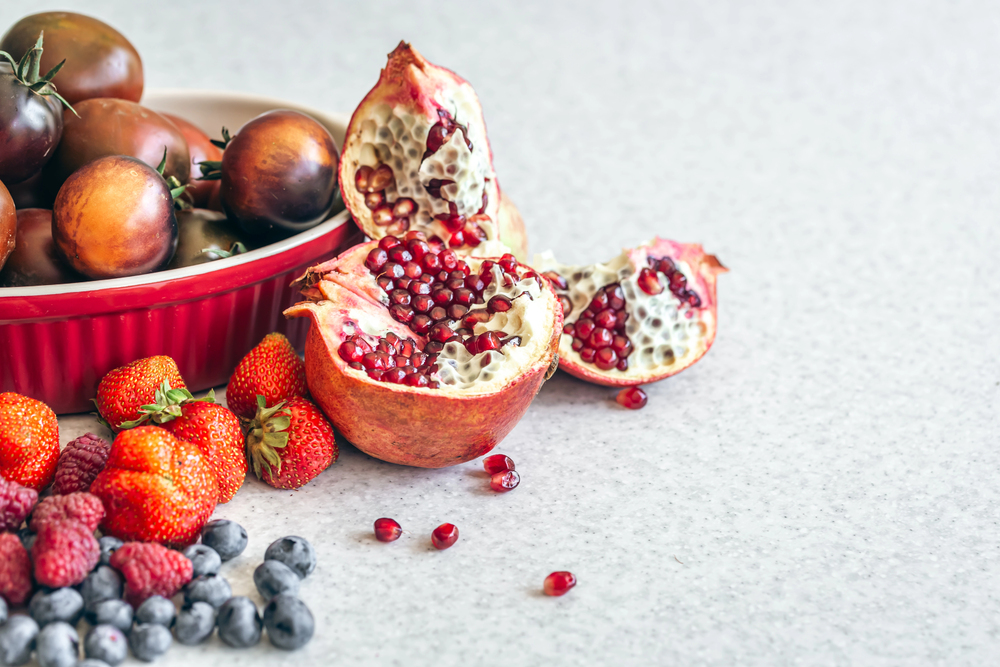
Gut bacteria that break down compounds in pomegranates, walnuts, and berries produce a metabolite called urolithin A. New research from the University of Louisville shows this compound can activate a protective pathway in intestinal cells that repairs the gut lining rather than inflaming it.
The study, published in Nature Communications, is the first to trace this mechanism in detail and test it in human tissue.
The receptor with two modes
The mechanism runs through the aryl hydrocarbon receptor, or AHR, a protein that reads signals from environmental toxins, diet, and gut microbes. Toxins can activate it with damaging results. Dietary compounds can activate the same receptor and produce something different. The new findings trace why.
The University of Louisville team, led by Venkatakrishna Rao Jala, associate professor in the Department of Microbiology and Immunology and UofL’s Brown Cancer Center, found that the difference has to do with location. Urolithin A activates AHR specifically in intestinal epithelial cells, the cells that form the gut lining, not in immune cells or other tissue. That localized signal triggers a cellular response system called the NLRP6 inflammasome.
Inflammasomes are better known for driving damaging inflammatory responses. Here, activated in the right cells by the right compound, the NLRP6 inflammasome does something more useful: the molecules it releases repair the gut lining, shore up the intestinal barrier, boost mucus production, and strengthen defenses against harmful microbes.
A more targeted approach to treating IBD
Crohn’s disease and ulcerative colitis, the two main forms of inflammatory bowel disease, affect millions of people globally. Both involve ongoing inflammation and a deteriorating intestinal barrier. Once that barrier starts failing, bacteria that belong in the gut can leak through and feed the inflammatory cycle further. That feedback loop is much of what makes IBD so difficult to manage long-term.
Most existing treatments suppress the immune system broadly. The Louisville findings suggest there may be a more precise target: a repair pathway inside the gut lining that a diet-derived compound can apparently switch on.
“The findings show that not all inflammatory pathways are harmful,” said Sweta Ghosh, previously a postdoctoral researcher in Jala’s laboratory and lead investigator on the study. “Under the right conditions and in the right cells, these pathways can play an essential role in maintaining gut health and supporting tissue repair.”
From lab models to human tissue
The team tested the mechanism through cell studies, organoid models, and intestinal tissue from IBD patients. The same protective pathway appeared in all three. The human tissue results are what move this from a basic science finding to something with clinical relevance.
Jala has been working on urolithin A for years. Earlier research from his group established the compound’s beneficial effects in the gut; this study goes further by mapping the molecular pathway behind those effects. “By identifying this specific protective pathway, we may be able to develop more targeted therapeutic approaches that restore intestinal balance instead of broadly suppressing immune responses,” he said.
No clinical therapy exists yet, and whether urolithin A is a viable drug candidate or simply a key to understanding how the pathway works remains to be established. Either way, the mechanism is now on the map.
Source study: Nature Communications- Urolithin A activates aryl hydrocarbon receptor-NLRP6-mediated pathways in intestinal epithelial cells to modulate mucosal immunity and strengthen gut barrier integrity
Did this solution stand out? Share it with a friend or support our mission by becoming an Emissary.