BY THE OPTIMIST DAILY EDITORIAL TEAM
Most building materials are designed to resist the elements, to stay sealed and unchanged for as long as possible. Respyre, a Dutch startup, is working from the opposite premise.
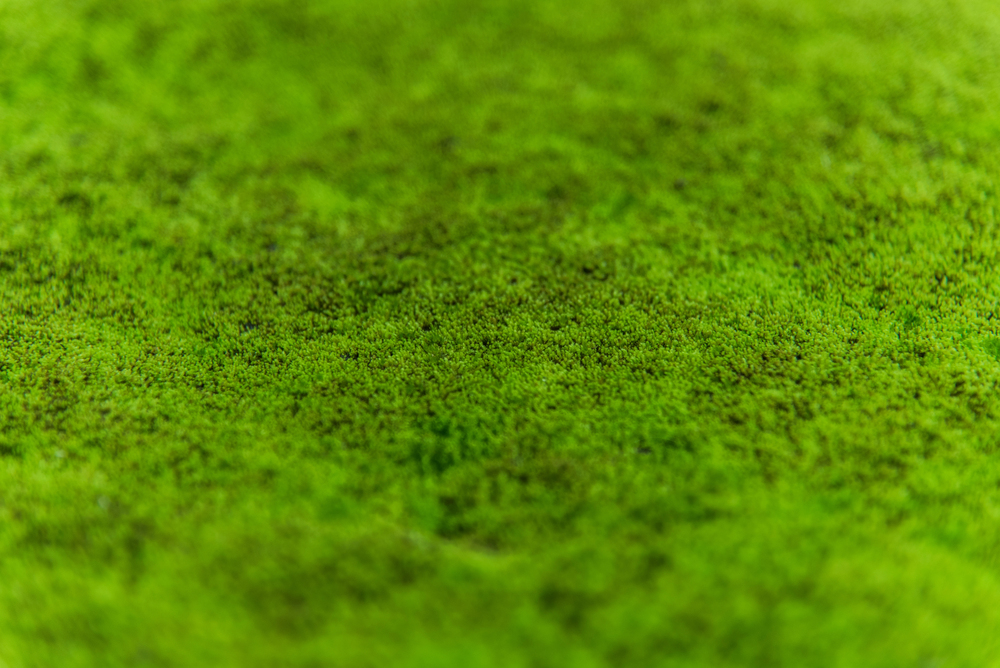
The company has developed Mosscrete, a bioreceptive concrete coating that creates conditions for moss to grow directly on vertical surfaces, drawing moisture from rain and air without any soil or irrigation system. The science comes from research at Delft University of Technology, and since its commercial launch, Respyre has applied the technology across eight projects in Belgium and the Netherlands.
How moss takes hold
Moss doesn’t have roots in the conventional sense; it attaches to surfaces through rhizoids, tiny thread-like structures that cling to the material without penetrating or damaging it. Unlike a traditional green wall, which needs structural support for soil, a built-in watering system, and regular upkeep, Mosscrete sidesteps most of that. And because it’s applied as a coating rather than built in, it can go onto an existing facade just as easily as a new one.
The material works especially well on blank or inaccessible walls where conventional planting isn’t an option, and Respyre has been using those spaces to test how the technology holds up under different real-world conditions.
Eight buildings, different tests
In Kortrijk, Belgium, 450 square meters (about 4,840 square feet) of a new industrial warehouse facade were coated with Mosscrete during construction and integrated with rainwater harvesting, keeping the whole system maintenance-free from day one.
A 300-square-meter (about 3,230-square-foot) noise barrier in Hoofddorp, the Netherlands, is being used to test passive greening: moss growing from natural moisture alone, no watering involved. The porous structure of moss may also help absorb sound, which makes the noise barrier a natural fit for the technology.
A 260-square-meter (about 2,800-square-foot) social housing facade in Purmerend was one of the first practical applications. Traditional greening options were rejected there as too expensive and maintenance-heavy, and the project helped Respyre work out how bioreceptive facades are best designed and applied. In Haarlem, a 313-square-meter (about 3,370-square-foot) commercial renovation combined Mosscrete with insulation, aiming to both green the facade and improve thermal performance. Research published in June 2026 in the journal Science of the Total Environment found the effect is moisture-dependent: wet moss creates a cooling effect through evaporation, while dry moss can overheat in direct sunlight.
In Amsterdam, the technology is being tested on bridge piers where graffiti has been a persistent problem. Moss-covered surfaces are less appealing as targets, and since the site has no irrigation, the project is also tracking how moss develops under ordinary conditions of rain, shade, and humidity.
Designing for change
Respyre is betting on a different idea of what building materials should do. Most are made to resist change, to stay gray and sealed for decades. Mosscrete is made for the opposite: it works best when moss gradually takes over.
Urban greening helps manage stormwater and heat in dense cities, and there’s evidence it supports local biodiversity too. But a building slowly covered in moss doesn’t look like neglect. It looks like something is alive there.
Did this solution stand out? Share it with a friend or support our mission by becoming an Emissary.