BY THE OPTIMIST DAILY EDITORIAL TEAM
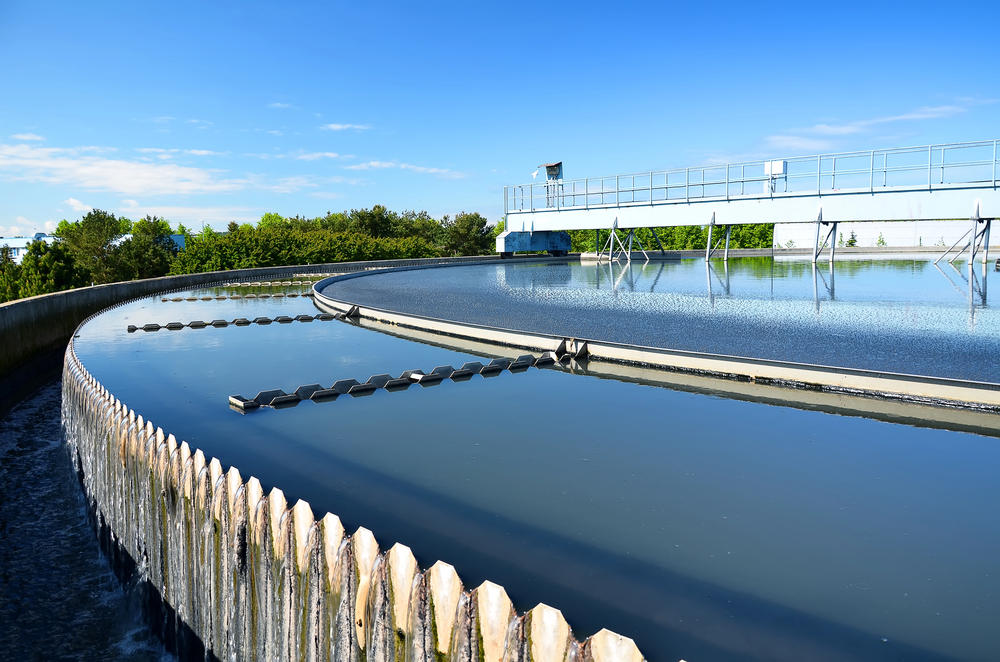
For decades, wastewater treatment plants have been filtering out bacteria, chemicals, and biological waste before discharging treated water back into the environment. Microplastics have been going straight through. This week, a plant in Atlantic City, New Jersey, became the first in the world to do something about that, installing a system built specifically to capture microplastics before they reach the ocean. As of this moment, no law requires this. PolyGone Systems, a startup founded by two former Princeton University graduate students, built it anyway.
Why microplastics are hard to remove
Plastics don’t biodegrade; they break down into tinier and tinier fragments called microplastics, which don’t go away and build up in living organisms over time. Standard wastewater treatment removes a lot, but it wasn’t designed for particles this small or this plentiful. They get into the water from industrial discharge, stormwater picking up particles shed from car tires, and washing machines releasing microfibers from synthetic clothes. By the time water arrives at a treatment plant, the microplastics are already in it.
“We’re discharging to the ocean,” said Matt DeNafo, president of the Atlantic County Utilities Authority. “So, if we’re not removing the plastic that’s in our wastewater, we’re putting it back into the environment. It’s getting into the fish that we’re eating, even the water that we’re bathing. So, it really becomes an issue for human health.”
Microplastics and nanoplastics have already turned up in human bloodstream, brain tissue, and other organs. Some researchers have linked exposure to a higher risk of heart attack or stroke, though scientists are still working out exactly what harm these particles cause at different levels of exposure.
How the technology works
PolyGone’s founders, Nathaniel Banks and Yidian Liu, trained as architects, and the technology they built shows it. Their system, called Polypods, doesn’t try to filter microplastics out of water the conventional way. Instead, it replicates the surface of ultrahydrophobic plants found in wetlands, which microplastics cling to naturally. Scale that up, and you can pull microplastics out of a water stream with very little material and minimal energy.
The lab numbers are strong: more than 98 percent of microplastics removed. There’s no commercial data yet, but Banks and Liu say the Polypods work best on the smallest particles, which are also the hardest to catch by other means and the ones most easily absorbed by living tissue.
Liu on the design philosophy: “We really like how some sleek products such as the iPhone were able to resolve very complex problems with very simple but sleek-looking designs. And we want to really emphasize that in how we design the Polypods.”
“I think this really marks a new era for treatment innovation, where we’re able to build very large, scalable systems that use a very small amount of material and very low energy to treat very challenging contaminants,” Banks said. “And, having the first system in the world for that in Atlantic County, it’s quite unusual.”
Where PolyGone goes from here
A similar installation is already running at a wastewater plant in California, and PolyGone is developing a residential version. The Atlantic City system was fully funded by a federal grant, and both the technology and the funding route could give other municipalities a path to act without waiting on a mandate.
Did this solution stand out? Share it with a friend or support our mission by becoming an Emissary.