


Trending

New uses for everyday spaces: South Korea turns parking lots into solar power hubs
BY THE OPTIMIST DAILY EDITORIAL TEAM Parking lots might not seem like climate solutions, but South Korea is proving they can be. Starting this month, any parking lot in the country with more than 80 spaces will be required to install solar canopies or carports. The new requirement applies not Read More...

Keeping dignity at the center: how to support your loved one's sense of self through dementia
BY THE OPTIMIST DAILY EDITORIAL TEAM Dementia is something that touches more and more families every year. Globally, someone develops dementia every three seconds. In the U.S. alone, more than 6 million people live with some form of the condition, and that number is expected to double by 2060. Read More...

California reimagines high school: how one innovative campus is shaping the future of learning
BY THE OPTIMIST DAILY EDITORIAL TEAM At CART High near Fresno, there are no bells, no fights, and no hallways echoing with chaos. Instead, students carry laptops through bright, spacious corridors on their way to classes in biotechnology, forensics, and digital marketing. It looks and feels Read More...

Extinction rates are slowing—and conservation efforts may be paying off
BY THE OPTIMIST DAILY EDITORIAL TEAM For years, headlines have warned that Earth is entering a sixth mass extinction. But new research suggests that this dire picture may be more nuanced, and even somewhat hopeful. A study by Kristen Saban and John Wiens of the University of Arizona's Read More...

Deforestation in Brazil’s Amazon drops to 11-year low ahead of COP30
BY THE OPTIMIST DAILY EDITORIAL TEAM Deforestation in Brazil’s Amazon rainforest has fallen to its lowest level in more than a decade, according to new government data. This encouraging milestone appears just days before the country hosts the upcoming United Nations climate summit, Read More...

Bloomsbury expands dyslexia-friendly publishing as smaller presses lead the way
BY THE OPTIMIST DAILY EDITORIAL TEAM Bloomsbury Publishing launched a new collection of dyslexia-friendly editions of 11 bestselling adult titles, joining a growing movement of publishers transforming the reading experience for adults with dyslexia. The initiative, announced at the start of Read More...

Too much sitting? Cocoa might be your sweetest health hack yet
BY THE OPTIMIST DAILY EDITORIAL TEAM If you spend long hours glued to your desk, there’s a bit of good news brewing in the lab. Specifically, in a cup of cocoa. A new study from researchers at the University of Birmingham in the UK suggests that flavanols, plant compounds found in cocoa, could Read More...

French court holds TotalEnergies accountable for greenwashing in landmark ruling
BY THE OPTIMIST DAILY EDITORIAL TEAM In a groundbreaking decision, a French civil court ruled that oil giant TotalEnergies misled consumers in a 2021 advertising campaign that promised it could reach carbon neutrality by 2050. The judgment marks the first time France’s greenwashing law has Read More...

Silver Linings Rescue Ranch proves senior dogs deserve love, care, and a new leash on life
BY THE OPTIMIST DAILY EDITORIAL TEAM 2025 Local Changemakers Series: Compassion-driven sustainability & care for the overlooked Welcome to the first installment of The Optimist Daily's Annual Local Changemakers series. Over the next five weeks, we’re highlighting ten extraordinary Read More...
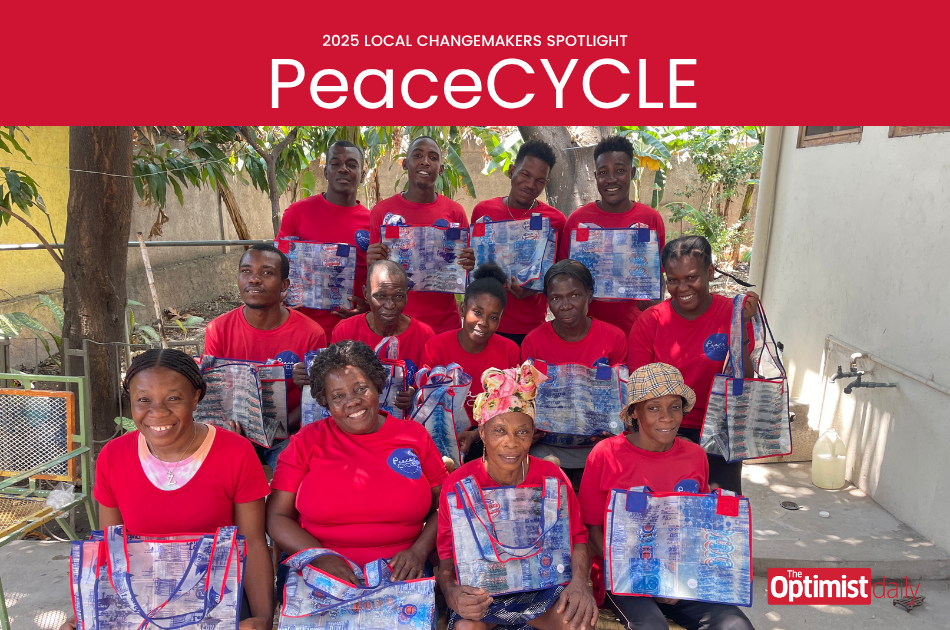
How PeaceCYCLE transforms Haiti’s water sachets into sustainable jobs
BY THE OPTIMIST DAILY EDITORIAL TEAM 2025 Local Changemakers Series: Compassion-driven sustainability & care for the overlooked Welcome to the first installment of The Optimist Daily's Annual Local Changemakers series. Over the next five weeks, we are highlighting ten extraordinary Read More...