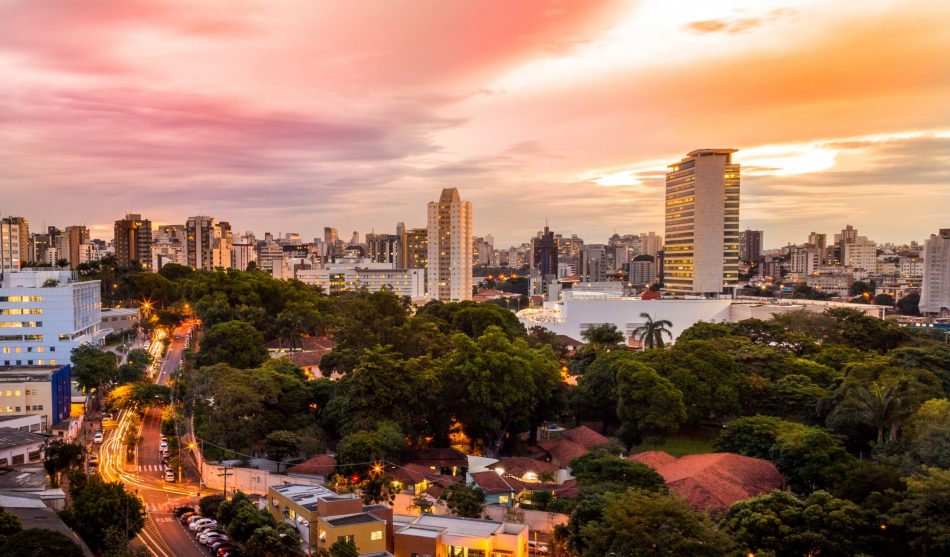
In a nation characterized by abundance, it’s baffling that some 10.5 percent of households in the US suffer from food insecurity. This fact becomes even more stupefying when we consider that an estimated 30 to 40 percent of America’s food supply winds up in the trash. With this in mind, we ask the question: how can we ensure that everyone in America has access to healthy food? To help us find an answer, let’s take a trip down south to the city of Belo Horizonte in Brazil.
Ensuring food security in a cost-effective way
Belo Horizonte is a city of 2.5 million located roughly 275 miles north of Rio de Janeiro. It is an industrial and technological hub that has stark socioeconomic divisions, including high rates of poverty, which is not so different from many cities in the US. Despite this, Belo Horizonte has managed to effectively eliminate hunger in the city thanks to a pioneering food security system that requires less than 2 percent of the city’s annual budget.
In 1993, the city enacted a municipal law that established a citizen’s right to food and created a commission of government officials, farmers, labor leaders, and others, tasked with a mandate to “provide access to food as a measure of social justice.”
Connecting food producers directly to consumers
As described by Yes! Magazine, Belo Horizonte’s food security system now comprises 20 interconnected programs that approach food security in sustainable ways. They connect food producers directly to consumers (eliminating retailer markup); offer healthy, fresh food at fixed, low costs at several restaurants popular, or “popular (public) restaurants”; provide food directly to schools, daycare centers, clinics, and nursing homes, shelters, and charitable organizations; establish farmers’ markets and stands to allow farmers to sell their goods directly to residents; regulate food prices for 25 specific items, which must be sold at 20-50 percent below market price; create food banks to distribute unused produce from those markets; and establish community and school gardens, in addition to providing nutrition education.
Achieving food security amidst the pandemic
What’s particularly impressive about the food security program is that it has managed to keep feeding its people despite the fact that Brazil has been hit hard by the coronavirus pandemic, which only increased the number of people in need of fresh, healthy food. Building upon existing infrastructure, the city increased the number of open-air markets and supported restaurants that could help distribute food to those in need.
As mentioned earlier, Belo Horizonte’s food security program only requires 2 percent of the city’s annual budget, a relatively small amount considering both the health and financial benefits that come with feeding residents with healthy food. And by taking care of citizens’ food needs, those same citizens can then use the money they would have been spent on food to take care of other basic needs, which could be an absolute life-saver during the coronavirus pandemic.
Additional sources:
USDA ERS – Food Security and Nutrition Assistance
Future Policy – Belo Horizonte’s Food Security Policy