


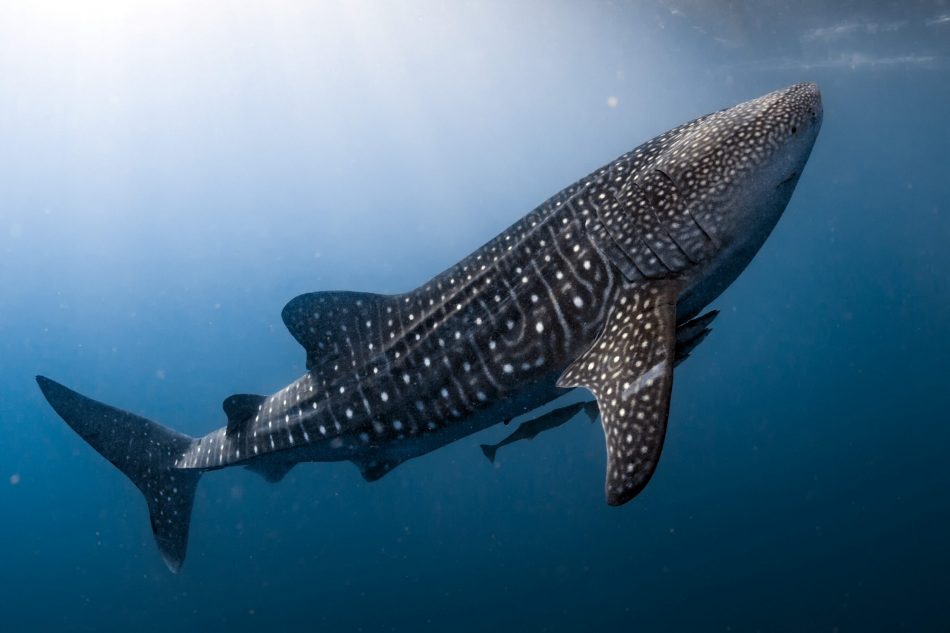
Whale sharks are remarkable creatures, known to be the largest fish on Earth. Such a grand title draws a lot of attention from tourists and marine life enthusiasts and this popularity means they are also at a higher risk of injury due to interactions with boats and people contending for a glimpse of these gentle giants in their natural habitat.
Fascinatingly enough, new research has revealed that whale sharks have the surprising ability to heal damaged tissues with impressive speed. Because whale sharks possess unique patterns on their skin, scientists can track individuals and monitor how each shark is recovering from wounds such as those that are a result of encounters with boats and humans.
Freya Womersley, study lead from the research team at The University of Southampton, says that they were able to determine that the sharks can heal from grave injuries within weeks and months. Even more impressive, through this close monitoring scientists were able to document the whale shark’s ability to regrow severed dorsal fins for the first time, regenerating not only the tissue but the original markings and spots of the injured fin.
These findings suggest that whale sharks are more resilient to injuries than previously thought, but scientists assert that there are likely other negative effects of these injuries that aren’t as obvious, such as changes to foraging behaviors or weakened fitness levels.
Because of a wide collection of threats that are a direct result of human activity, whale sharks have experienced a significant decline in their population around the globe. Further studies such as these can help us gain a deeper understanding of the healing capabilities of whale sharks and sharks in general. Womersley hopes that they can continue their research to provide critical information that will aid in the conservation of species.






