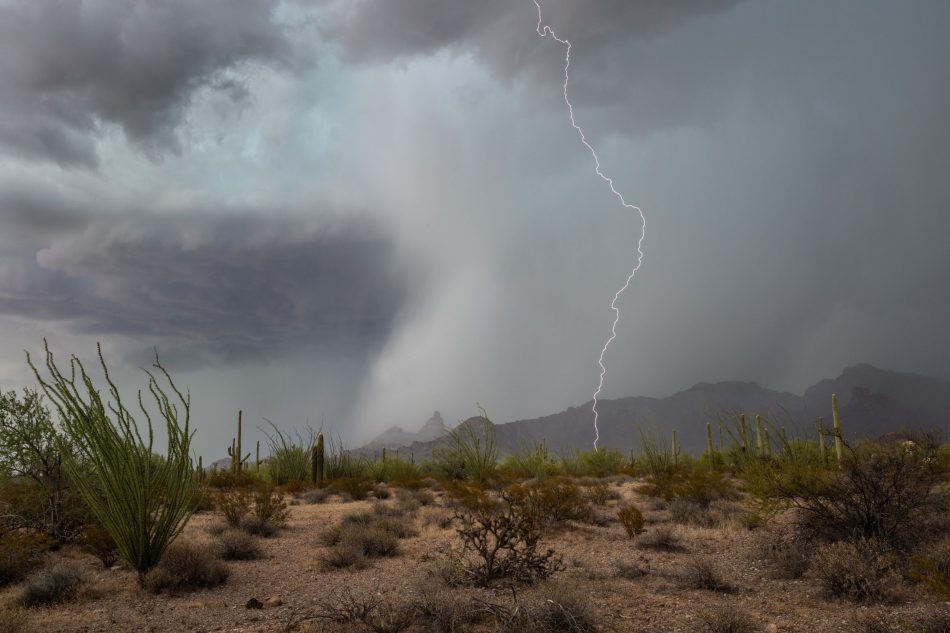
If you’ve ever lived in the Southwestern United States, you know the calming smell of the desert after a rainstorm. The earth and desert flora like creosote emit an aroma after rain unlike anything else. They also, as it turns out, have health benefits for those smelling them.
Researchers from the University of Arizona have found that oils and chemicals released from plants may explain the health benefits and euphoria following Sonoran rainstorms.
Desert bathing
Gary Nabhan, a research social scientist at the University of Arizona Southwest Center, was inspired by the practice of “forest bathing” from the coniferous forests of Asia. This is known to reduce stress and improve overall well-being, and Nabhan wanted to investigate the health benefits of desert flora.
“The fragrant volatile organic compounds from desert plants may in many ways contribute to improving sleep patterns, stabilizing emotional hormones, enhancing digestion, heightening mental clarity, and reducing depression or anxiety,” Nabhan says.
“Their accumulation in the atmosphere immediately above desert vegetation is what causes the smell of rain that many people report. It also reduces exposure to damaging solar radiation in ways that protect the desert plants themselves, the wildlife that use them as food and shelter, and the humans who dwell among them.”
During the Summer, when temperatures reach yearly highs and the monsoons come, desert plants release more fragrant oils to protect themselves from the heat. When the rains come, these oils are washed off the plants and into the air. Creosote is one of the most known plants in the Sonoran Desert, with the most identifiable smell. It contains trans-caryophyllene, which has anti-inflammatory and antioxidant properties.
Nabhan and his colleagues are aiming to implement these plants in a therapeutic setting, already having planted a fragrance garden at the Sonoran Desert Inn and Conference Center in Ajo, Arizona.
“I would like to see these fragrance gardens around every hospital, community clinic, and bed and breakfast—wherever anyone comes to heal, relax, and recreate,” Nabhan says. “These public gardens will not only produce nutritious foods, but offer residents, out-of-town guests, and hikers a powerful opportunity to sense how the desert smells like rain.”