


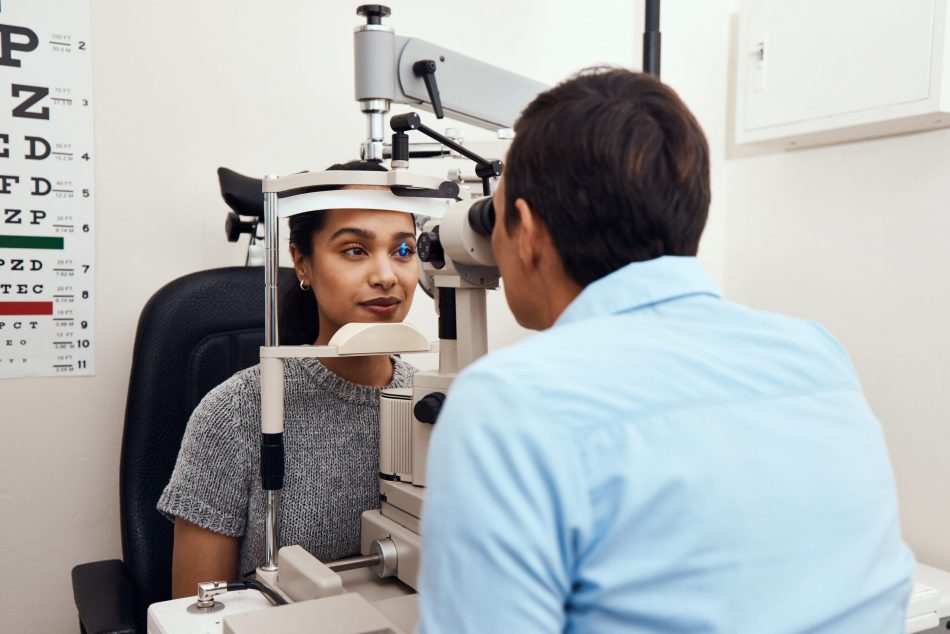
In a study presented at the annual conference of the European Society of Human Genetics, researchers explained how they combined clinical factors with an eye exam to predict patients’ likelihood of a heart attack.
Researchers used medical and lifestyle data from 500,000 people from the UK Biobank. Patterns of blood vessels in the retina were combined with factors like age, sex, systolic blood pressure, body mass index, and smoking status to calculate a measure named “fractal dimension.” Researchers found that there was a shared genetic basis between “fractal dimension” and myocardial infarction (MI), commonly known as a heart attack.
“Strikingly, we discovered that our model was able to better classify participants with low or high MI risk in UK Biobank when compared with established models that only include demographic data. The improvement of our model was even higher if we added a score related to the genetic propensity of developing MI,” said Ana Villaplana-Velasco, a Ph.D. student at the Usher and Roslin institutes at the University of Edinburgh and the presenting author.
Since the average age for a heart attack is around 60 years, researchers suggest using this eye exam technique 5-10 years before a possible heart attack. They hope in the future that simple eye exams will be able to spot someone at risk and help them ahead of time.
“The calculation of an individualized MI risk from those over 50 years old would seem to be appropriate,” said Villaplana-Velasco. “This would enable doctors to suggest behaviors that could reduce risks, such as giving up smoking and maintaining normal cholesterol and blood pressure.”
Researchers also believe that this technique could go beyond spotting heart attacks. It may be useful in identifying risk for other diseases too.
While cautioning that these findings still needed to be peer-reviewed, Dr. James Ware of Imperial College optimistically stated: “It is well recognized that the retina provides a unique opportunity to directly visualize vessels and assess vascular health. Approaches like this that use computer vision and/or machine learning to detect subtle vascular features predictive of future heart health appear promising.”






