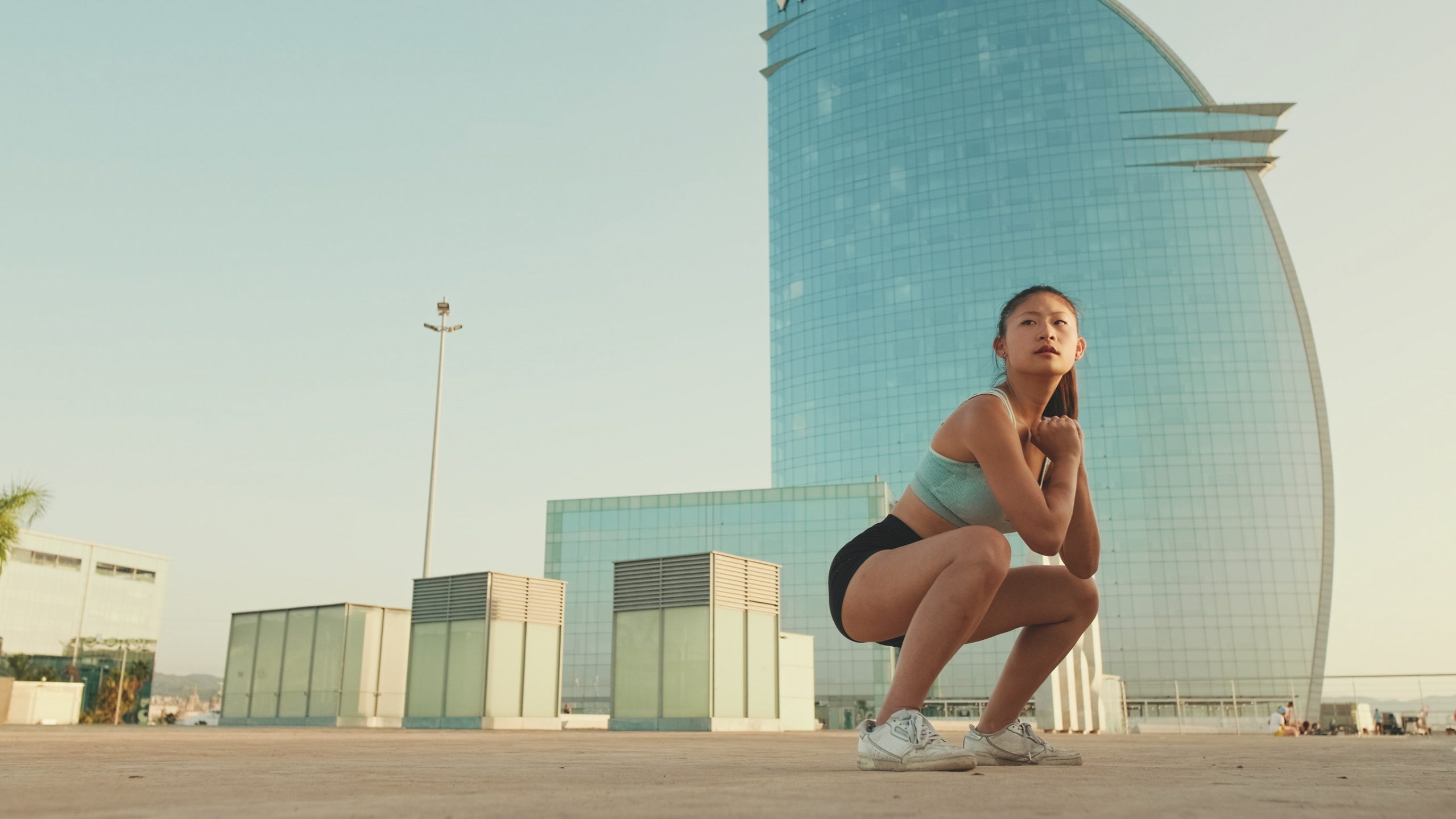
Squats are a staple of most workout routines (especially on leg days), but what about a deep resting squat? That isn’t always a go-to, but it should be. “The deep resting squat, or as some people call it, the deep bodyweight squat, is the position where your hips and glutes are below your knees with feet flat resting in a natural resting position without a ton of load on the muscle tissues” explains Joey Thurman, CPT, a certified personal trainer for kuudose, a fitness and wellness community. “It opens up the hips and trunk.”
Children are natural pros at this butt-to-the-ground posture. It’s also not an uncommon movement for adults; when lifting something heavy or sitting on the ground, the deep squat is often assumed. Plus, it’s a birthing position that results in fewer perineal tears.
These days, however, our sedentary lifestyles and heavy reliance on chairs have taken away many people’s ability to perform a deep resting squat, depriving them of the numerous health benefits it provides.
“The saying, ‘if we don’t use it, we lose it,’ is extremely true in the case of being able to squat like a toddler again,” Thurman says. “As we get older, move less, and sit more, our soft tissue gets tight, the spacing between our joints [decreases], and our nervous system gets used to not moving through full ranges of motion.”
The advantages of a deep resting squat
One of the advantages of deep resting squats is improved mobility, particularly ankle mobility, which Thurman claims many people lack. Practicing deep resting squats will also improve our natural movements, reduce pain, and lower risk of injury. “If you are more mobile and your joints move in all directions [like] they are supposed to, the tissue doesn’t take as much load and can help you move without pain,” Thurman says.
The upsides of deep resting squats carry over into your workouts as well. Powerlifters, for example, would benefit from getting low and driving through an entire motion without pain. Deep resting squats can help with this as they strengthen the body’s backside.
According to Thurman, “deep squats themselves have been shown [to be] even more effective at building that powerful backside over regular squats.” They also help with pelvic and back health, he adds. “Having a stronger pelvic floor and deep spinal muscles such as the spinal erectors will help stabilize the hips and pelvis.”
How to do a deep resting squat
To do a deep resting squat properly, Thurman recommends standing with your feet hip-width apart with your toes slightly pointed out. Then, slowly lower your body, allowing your hips to sink as if you were about to sit in a very low chair. Get as low as you (comfortably) can, ideally with your buttocks below your knees. Take it slowly and don’t overdo it. This posture should not cause any discomfort. If it does, come to a halt and adjust, and if necessary, grab something for support.
Thurman points out that if you’re just starting out with a deep resting squat, going very low may not be possible, which is fine. The key is to keep your feet flat on the ground, maintain a flat, neutral spine (don’t hunch over), and ensure that your shoulders are in line with your hips.
Hold the position for 10 seconds, then stand back up, and repeat six times throughout the day, especially after long periods of sitting. As you improve, Thurman recommends increasing the length of each session to 30 seconds or more, as long as it feels comfortable.
As with any practice, the more you do it, the easier it gets. Who knows? You could soon be comfortably reading books or meditating in a deep squat, for which your body will thank you!