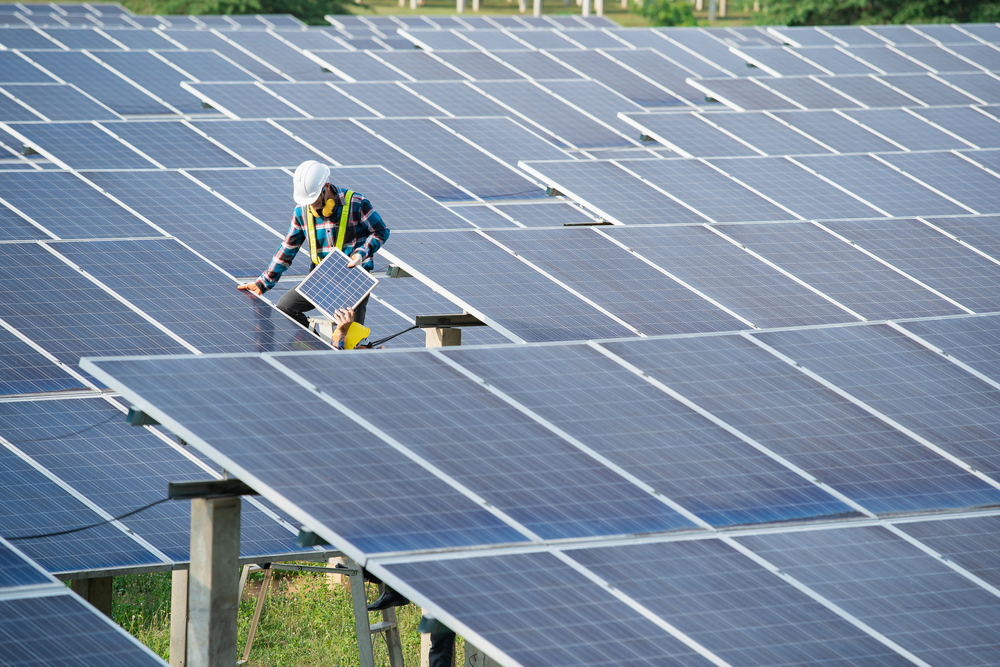
The Ockendon solar farm, the third largest of its kind in the UK, is harnessing the power of the sun on what was once a bleak trash site in Essex in a revolutionary feat of eco-reinvention. The waste management company Veolia infused new life into this unexpected environment, where more than 100,000 solar modules now span 173 acres of land. According to Donald Macphail, Chief Operating Officer of Veolia’s treatment division, “the project would have minimal ground-level impact, allowing wildlife to coexist with the technology.” This outstanding project not only helps create cleaner electricity but also exhibits the art of long-term transformation.
Landfills: Untapped goldmines of solar potential
The success of the Ockendon solar farm highlights an interesting discovery: closed waste sites around the UK have untapped potential for solar arrays. This is only the beginning, according to Philippe Queruau, electrification services manager at Veolia UK. Thousands of hectares of active waste dumps may follow suit, providing an ideal place for solar energy generation. “We’re just scratching the surface for now,” Queruau says, “but we need a lot more solar, and landfills are a prime location.”
On the horizon: A solar-powered nation
The UK government set an ambitious target of boosting solar power capacity from 14 gigatonnes to 70 gigatonnes by 2035. To achieve this goal, developments like the Ockendon solar farm must sprout up at an alarming rate—roughly one every five days for the next 12 years. “We urgently need more solar in the UK to help meet our legally binding net-zero goals,” says Frank Gordon, Director of Policy at the Association for Renewable Energy and Clean Technology. “This summer’s extraordinary global weather has further underlined the need for climate action.”
While the UK’s solar ambitions are lofty, a big impediment is the tremendous demand for National Grid connections, which has resulted in a backlog of applications and wait times of up to 15 years. The Ockendon solar farm, on the other hand, is a ray of hope. Unlike many others, it did not have to wait long for a grid connection and will share grid infrastructure with a nearby major solar farm. This demonstrates the efforts being made to guarantee that sustainable energy sources may be seamlessly integrated into our national power systems.
The transition of the Ockendon solar farm from landfill to renewable energy powerhouse shows the tremendous transformations that are achievable when we challenge the status quo. One thing is certain as we rush toward a greener future: inventive efforts like these will play a critical role in illuminating the path to a more sustainable world.