


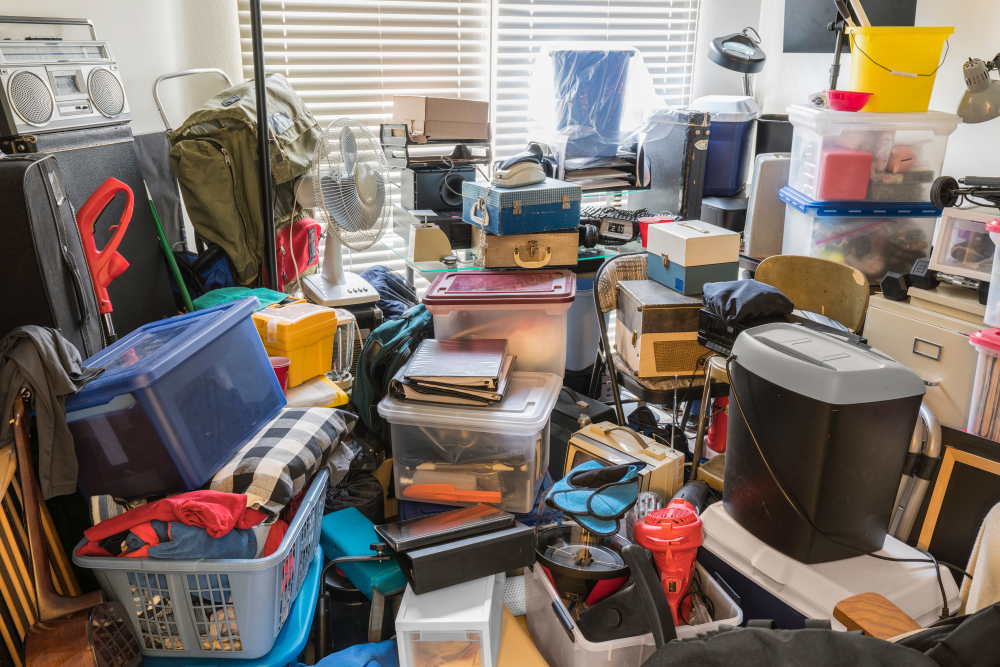
Decluttering one’s house can be a daunting and emotionally charged undertaking for anyone, but especially for people suffering from hoarding tendencies. Instead of signing up for dramatic reality TV shows as a call for help, assistance may soon come in the surprising form of virtual reality (VR). In a groundbreaking study from Stanford University, hoarders have been finding solace in the world of VR, a fresh approach that promises real progress.
This study, published in the Journal of Psychiatric Research, included nine people over the age of 55 who had been clinically identified as hoarders. Their decluttering adventure began with 16 weeks of online group therapy, which laid the groundwork for the groundbreaking VR experience.
Making a virtual hoarding zone
In an unusual twist, participants were asked to photograph 30 of their possessions, as well as photographs of their most congested living areas. These goods and rooms were then painstakingly replicated in the virtual environment, allowing individuals to engage with their hoarded possessions in ways never previously possible.
VR integration in treatment
The study’s heart was centered on participants donning virtual reality headsets and immersing themselves in their simulated hoarding scenarios. They went through the laborious process of disposing, giving, or recycling virtual things. They were also given a difficult homework assignment: to discard an actual item from their physical living area.
Despite the study’s modest sample size, the results were overwhelmingly positive. Seven of the nine subjects reported a decrease in hoarding tendencies. Even more impressive, during house visits, eight out of nine people had significantly less clutter.
The findings of the study indicate that when combined with group therapy, VR can be a strong addition to the therapist’s toolset. These findings highlight the potential for a more comprehensive approach to hoarding disorder treatment.
Challenging the stigma
Hoarders frequently experience emotions of humiliation and solitude. The study’s primary investigator, Dr. Carolyn Rodriguez, a Stanford psychiatry and behavioral sciences professor, underlined the necessity of breaking down these barriers. “People tend to have a lot of biases against hoarding disorder and see it as a personal limitation instead of a neurobiological entity,” Dr. Rodriguez said in a statement. “We just really want to get the word out that there’s hope and treatment for people who suffer from this. They don’t have to do it alone.”
Understanding hoarding
Hoarders are frequently misunderstood, and their condition can stem from a variety of things, including brain damage, traumatic life events, substance misuse, and it can also be an indication of mental disorders. Viewing their chaotic living spaces in a virtual reality setting serves as a first step toward healing.
The Stanford study gives patients suffering from hoarding disorder new hope. By embracing virtual reality as a therapeutic tool, it is clear that a brighter, less cluttered future is on the horizon. As Dr. Rodriguez and her colleagues work relentlessly to de-stigmatize hoarding and provide practical solutions, it’s evident that the power of technology can be used to benefit individuals and families.
Source study: Journal of Psychiatric Research—Augmenting group hoarding disorder treatment with virtual reality discarding: A pilot study in older adults






