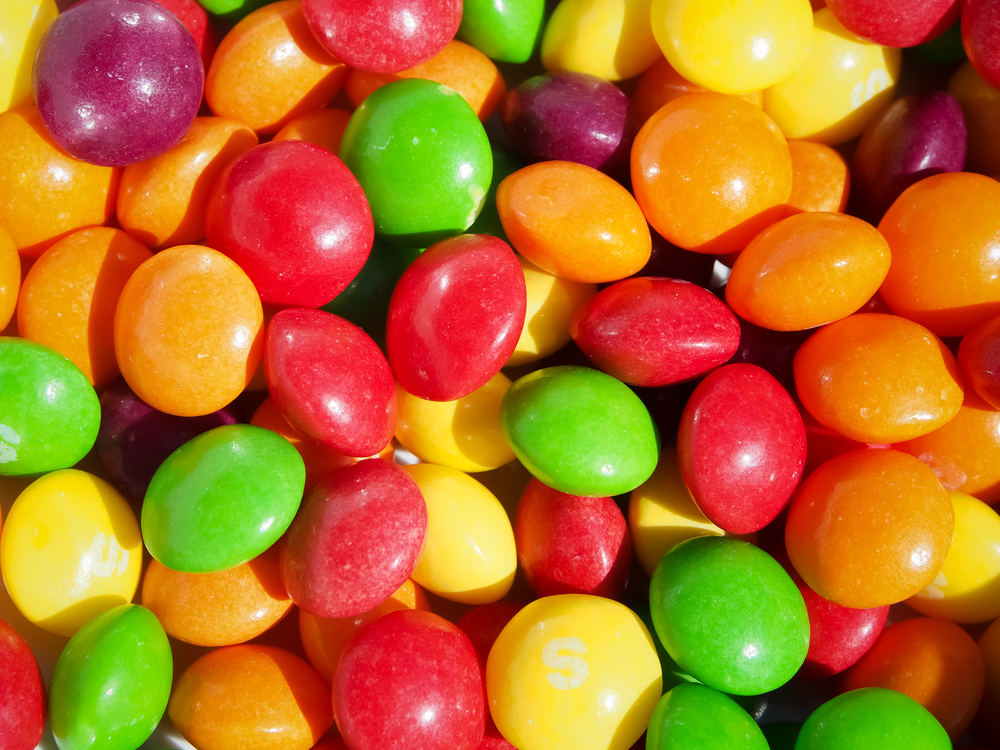
In a big step forward for food safety, California recently enacted a new law known as the “Skittles ban.” While the nickname may be deceptive (Skittles are not actually affected), the goal of this bill is to ban certain dangerous food additives by 2027. The additives in question, which include brominated vegetable oil, propyl paraben, red dye No. 3, and potassium bromate, have been linked to health hazards such as cancer and “hyperactivity in children,” according to a measure enacted in September.
Understanding the banned additives
Titanium dioxide, which is used in Skittles and other candy, was first included in the bill but was later removed. It’s worth mentioning that this chemical has been linked to DNA damage, which is known as genotoxicity. The “Skittles example” used by Governor Gavin Newsom during the bill’s announcement further fueled the misconception that Skittles would be affected.
Why now, and why these particular products?
The Food and Drug Administration (FDA) has banned certain chemicals because they have not been adequately assessed for four to five decades. Despite the fact that the FDA previously set restrictions on some of these compounds, such as brominated vegetable oil and red dye No. 3, there is a need for reevaluation.
Based on experiments involving rats consuming excessive amounts of the oil, the FDA imposed restrictions on brominated vegetable oil in the 1970s. While the study’s findings were far from applicable to human consumption, they did raise worries about potential heart effects.
Similarly, the FDA restricted the cosmetic use of red dye No. 3, popularly known as erythrosine, in the 1990s. The decision was made in response to the revelation of possible linkages between this additive and thyroid cancer, although through unpublished animal research.
The future of the candy industry
In California, the “Skittles ban” will result in small changes to the formulations of impacted products. However, the legislation’s broader impact is projected to affect the whole candy sector in the United States. Candy manufacturers are unlikely to maintain two separate production sites, implying that freshly developed candy goods will be available across the country by 2027.
As science advances, so does our understanding of food additives and their effects on health. It is critical to periodically review the safety of things ingested. The prohibition of certain additives not only demonstrates a commitment to public health, but it also stimulates manufacturers to develop safer alternatives, resulting in a more responsible and health-conscious food business.
The “Skittles ban” is a step in the right direction in the fight for safer and better food options, and we hope that it will inspire similar measures and improvements throughout the food industry. It is our right as consumers to know what ingredients are in the products we consume, and it is the industry’s responsibility to give safe and transparent options.
We are highlighting this piece as part of our annual “Best Of” roundup of articles published at The Optimist Daily this year. Today’s focus is on the top Political solutions of 2023.