


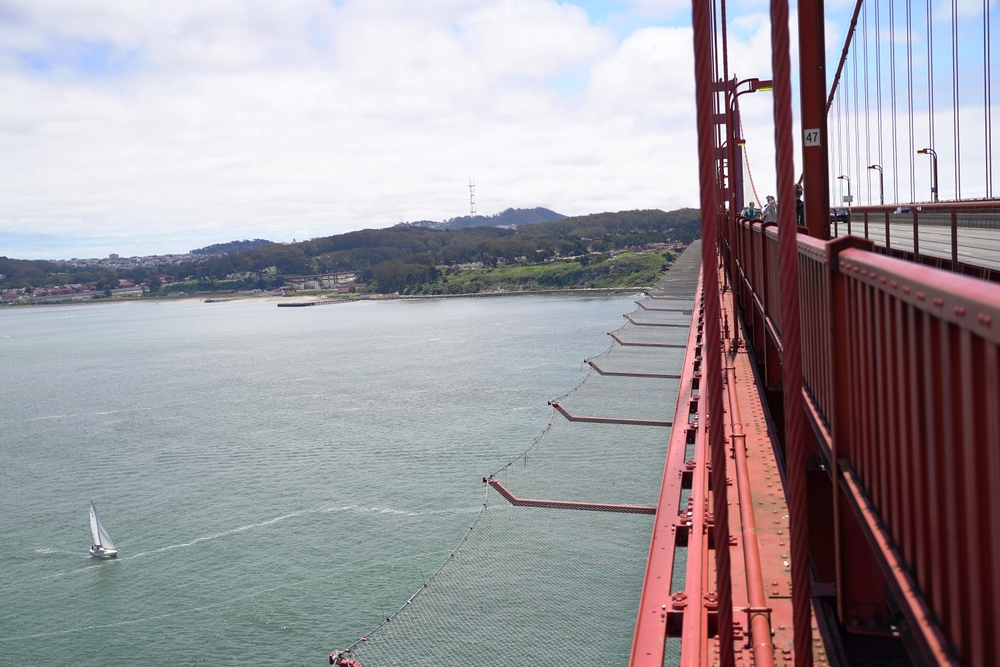
After two decades of tireless effort, the Golden Gate Bridge in San Francisco now has stainless-steel netting designed to prevent suicides, a project championed by survivors and families devastated by tragedies.
Kevin Hines, who miraculously survived a jump over the bridge at the age of 19, spearheaded this transforming initiative: “Had the net been there, I would have been stopped by the police and gotten the help I needed immediately.” Hines, now a suicide prevention champion, praised the tireless efforts of a small, determined group that never gave up on this important cause.
Since its inauguration in 1937, approximately 2,000 people have jumped from the renowned bridge. The project, which was approved more than a decade ago, has been repeatedly delayed.
Installation of protective nets
The 20-foot-wide stainless-steel mesh nets, located 20 feet beneath the bridge’s surface, are hidden from vehicles but visible to walkers. Dennis Mulligan, the Golden Gate Bridge’s general manager, underlined the barriers’ immediate impact on curbing leap attempts.
Nets: an effective deterrent
As the nets neared completion in 2023, the number of jumpers fell substantially from an annual average of 30 to 14, indicating their effectiveness in preventing suicides, while some occurrences happened in incomplete parts.
Controversies and challenges
While the stainless-steel wire nets discourage jumpers, they also endanger those who attempt them. Mulligan clarified, “It’s like jumping into a cheese grater. It will hurt.” Despite these concerns, training programs for rescue operations and attentive bridge patrols try to reduce these hazards.
The advocacy for preventive measures, which began shortly after the bridge’s opening, faced opposition due to concerns about disrupting the iconic views. The plan for higher fences was met with criticism, ultimately leading to the recommendation of nets.
Construction expenses rose from an initial estimate of $76 million to $224 million as a result of design revisions and structural problems. Legal disagreements between contractors and the bridge district exacerbated the project’s financial challenges.
Debates on effectiveness
While detractors dispute the large cost in discouraging determined individuals, defenders point to research that show that restricting access to lethal means reduces the risk of repeat attempts.
The personal impact
Families directly affected by these tragedies advocate for nets, claiming such barriers would have stopped their loved ones. Dayna Whitmer, who lost her son in 2007, emphasized the necessity of limiting access to avoid impulsive behavior.
This article involves sensitive discussions about suicide. If you or someone you care about is struggling, please reach out to the National Suicide Prevention Lifeline at 988. Support and guidance are available to you.






