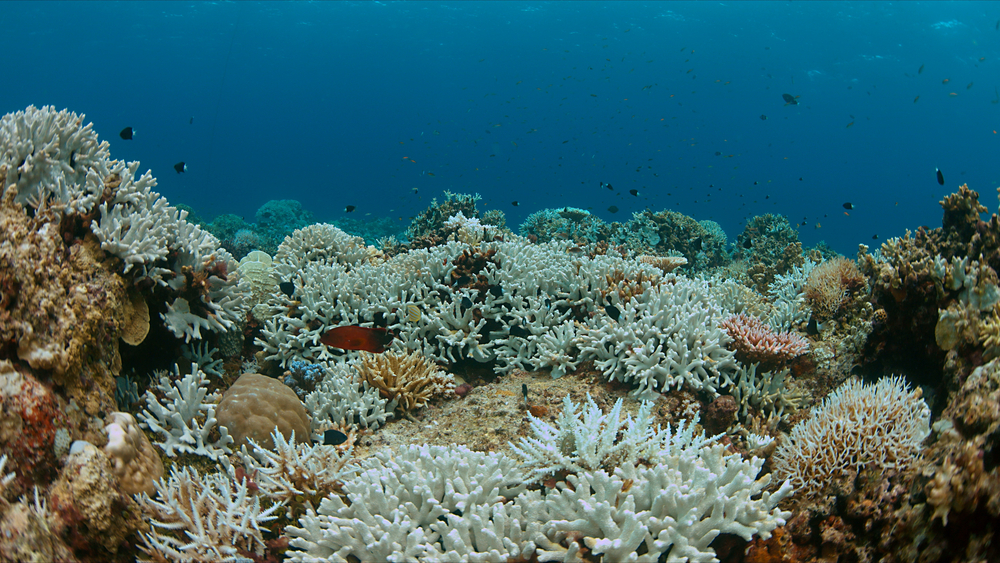
Coral reefs, vibrant undersea ecosystems brimming with life, are experiencing an existential crisis. With forecasts indicating that 90 percent of these unique ecosystems may perish by 2050, immediate action is required. Despite this grim picture, scientists are discovering new and ingenious methods for coral reef rehabilitation.
Engineering resilience: the power of reef stars
Dr. Timothy Lamont and his team at Lancaster University led ground-breaking coral reef regeneration research. They discovered a source of hope while assessing the effectiveness of the MARS Coral Reef Restoration Program. Lamont’s team observed amazing healing after planting sand-coated steel frames known as reef stars on a destroyed reef off the coast of Indonesia.
How does reef star recovery work?
The reef under investigation had been severely damaged by blast fishing three to four decades prior, leaving behind a dismal landscape of ruins. Blast fishing, a harmful activity in which explosives are detonated underwater to catch fish, not only kills marine life but also destroys coral formations, leaving them a mess of detached coral debris. Lamont goes on to say, “The loose rubble impedes coral larval growth, hindering natural recovery.” Reef stars, carefully placed and fastened to the seafloor, provided stability, allowing coral larvae to grow.
Artificial vs natural coral reefs: what’s the difference?
While artificial coral reefs can save damaged ecosystems, recognizing the differences between artificial and natural reefs is critical. Natural coral reefs have a varied range of species, including enormous, encrusting, and plating corals, which help to maintain the reef’s structural integrity. In contrast, rebuilt reefs frequently host a predominance of fast-growing species, such as Stylophora, Acropora, and Pocillopora, that were initially tied to reef stars, leaving experts questioning whether reef stars save coral reefs but sacrifice biodiversity. However, Lamont explains that what we see now is not necessarily what will come to be in the future. He goes on to say, “The first years of recovery always exhibit dominance by fast-growing species, whether through natural or artificial means.”
Assessing reef health: understanding the carbonate budget
The carbonate budget is an important indication of coral reef health since it depicts the total expansion of the reef structure. Lamont goes on to say, “A healthy coral reef has a positive carbonate budget and produces roughly 20 kilograms of limestone per square meter per year.” This parameter measures the reef’s ability to sustain itself and the existence of healthy coral ecosystems. Lamont’s team discovered a positive carbonate budget in the rebuilt reefs of Indonesia, indicating that the restoration work had been effective.
Challenges beyond the reach of reef stars
Reef stars address immediate problems, but they are not a cure for the larger issue of climate change. Lamont emphasizes: “Climate change poses a formidable threat to coral reef survival.” Heat-induced bleaching events, exacerbated by rising ocean temperatures, are a serious danger to coral resiliency. To overcome this, novel ways including assisted evolution and sexual reproduction are being investigated.
Future directions for coral restoration
Despite the formidable challenges, the potential of coral reef restoration provides a ray of optimism. Lamont goes on to say, “It is inspiring that we can rebuild coral reefs, but it necessitates concerted efforts to mitigate climate change.” As researchers continue to develop and collaborate, the ideal of thriving coral reefs may yet be within reach.
Source study: Current Biology—Coral restoration can drive rapid reef carbonate budget recovery