


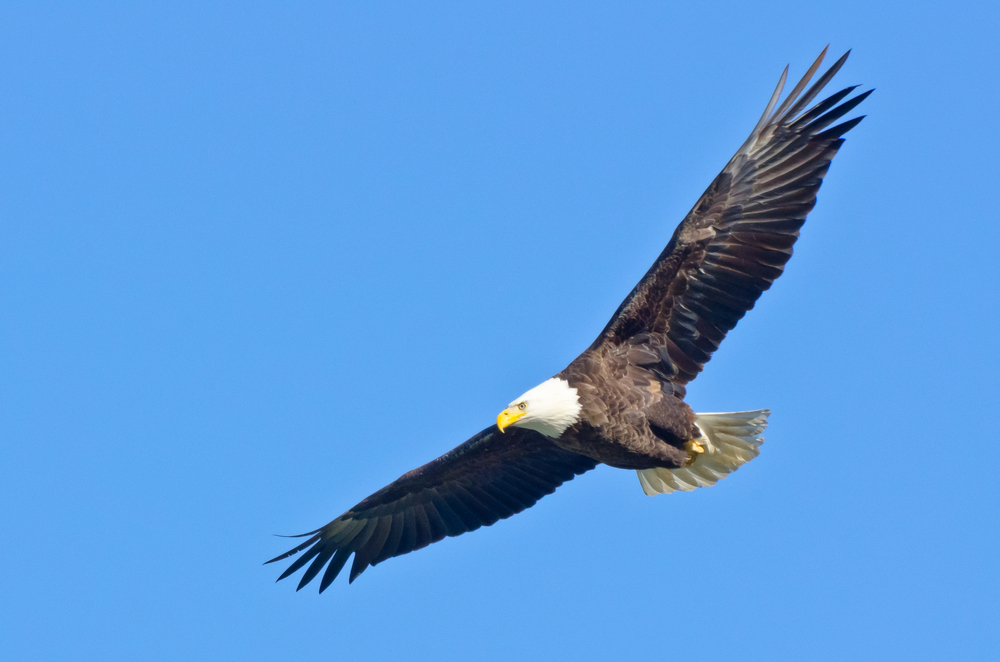
It is a momentous occasion for the Canadian city of Toronto, as it welcomes a pair of bald eagles nesting for the first time in recorded history, highlighting the city’s growing environmental commitment.
Karen McDonald from the Toronto and Region Conservation Authority notes, “These eagles are a testament… If we didn’t have healthy waters and a healthy food web, I don’t think they’d be here.”
Bouncing back from the brink of extinction
Bald eagles were once demonized as pests, and they experienced extensive extermination on top of the devastation caused by the toxic chemical and commonly used insecticide DDT. DDT was introduced in the 1940s and made its way up the food chain, drastically weakening the shells of eagle eggs by the early 1960s.
Michael Drescher, an environmental planning expert at the University of Waterloo, reflects on the grim reality, stating, “It was a very sad and very low point for the population.”
The prohibition on DDT and eagle hunting was a watershed moment for the current environmental movement. Drescher emphasizes eagles’ adaptability, noting, “Other species on the brink of extinction… are much harder to help.”
Bald eagles: endangered no more
Bald eagles were removed from Ontario’s endangered species list in May, which is being hailed as a watershed moment. However, worries have arisen regarding potential dangers as a result of recent amendments to the Endangered Species Act.
Karen McDonald underlines the link between decades of investment in ecological restoration work and a thriving ecosystem, saying, “For decades, we’ve invested heavily in ecological restoration work… it’s paying off.”
Decades of investment in ecological restoration efforts are finally yielding rewards, as seen by the return of bald eagles to Toronto’s open spaces. McDonald’s perspective emphasizes the symbiotic relationship between conservation efforts and a functioning ecosystem.
Beyond eagles: a wider reemergence of wildlife
The bald eagle’s reappearance is part of a bigger story of renewal. From a 42-inch muskie in the port to the re-emergence of northern river otters, Toronto’s ecology is showing signs of recovery.
Karen McDonald expressed her delight in observing the resurgence of diverse creatures, saying, “To see these animals returning, it just warms my heart.”
Balancing act: protecting eagles from human intrusion
The charismatic nature of eagles raises concerns about possible disturbances. McDonald expresses concern about the eagles’ sensitivity to human meddling, highlighting the importance of striking a balance.
She goes on to say, “Eagles are really charismatic species, and people have this intense desire to connect with nature.”
Optimism takes off: Toronto’s symbolic victory
While the eagles’ future in Toronto is unknown, their presence represents the city’s dedication to cleaning up contaminated rivers and industrial sites. McDonald remains positive, underlining the Eagles’ potential with the appropriate level of respect.
“If people show them the respect that they deserve, I feel like they’ve got a real fighting chance here.”






