


BY THE OPTIMIST DAILY EDITORIAL TEAM
Women and youth empowerment through education
Welcome to the final week of The Optimist Daily’s Annual Local Changemakers series, where we’ve spent five weeks celebrating community-rooted leaders driving bold solutions across the globe. We close this year’s series with two extraordinary women who remind us that education is far more than a tool; it’s a lifeline.
Whether it’s Shirley Santana Herrera nurturing the next generation of Latin American youth leaders or Shereen Arent championing women’s empowerment through Sambhali U.S. and its work in India, these changemakers understand that confidence and opportunity begin with access. Their stories span continents, but share a common thread: when education is paired with dignity, support, and vision, generational change takes root.
Let’s take a closer look at how Sambhali Trust, with support from Shereen Arent and Sambhali U.S., is turning education into lasting empowerment for women and girls across Rajasthan.
Empowered to choose: Helping women and girls change their own lives
In a dusty village in Setrawa, Rajasthan, a woman named Meera once dreamed of being a teacher. However the difficult realities of life eclipsed this hope. Her own education had ended after just two years of elementary school. She was married at 21, raising three children and running a struggling family shop. Her dreams seemed out of reach—until a life-changing opportunity arrived in 2007. That year, Sambhali Trust opened its first empowerment and education center in her village, offering free education, vocational training, and support for Dalit women and children.
That year, Meera took a leap of faith that would change everything. She enrolled her children in the newly opened Sambhali Primary Education Center and began attending Sambhali’s Empowerment Center herself.
Despite resistance from her father-in-law, Meera’s husband supported her choice. She fought for the right to learn, to work, and to envision a new future for her family.
Meera also enrolled her young daughter Lalita in Sambhali’s programs, and in 2012, Lalita became one of the first girls to move to Jodhpur for Sambhali’s boarding home program. Today, she is thriving while studying science in college, working part-time with Sambhali, and mentoring the next generation of girls.

Meera, now a trained English and math teacher at the same Primary Education Center where her journey began, recently reopened the family store with her husband. Her eldest son is pursuing a master’s degree in computer science in Italy. Her youngest son is also in college.
A family transformed because one woman gathered the courage to say yes to a new path.
One grandmother’s vision: Jamali and the Bheel basti of Jaisalmer
Two hundred miles away in the border city of Jaisalmer, a similar story unfolded more recently in the Bheel basti, a community where access to electricity, clean water, and education remains limited. Jamali, a respected midwife and community elder, saw what was possible when Sambhali Trust arrived.
She encouraged her daughter-in-law Ganga to attend the nearby Empowerment Center, where Ganga developed advanced sewing and embroidery skills. With support from Sambhali, Ganga and her husband expanded their small shop into a thriving business. As trust in Sambhali grew, Jamali made an even bolder move: she led the push to send girls from their basti to Sambhali’s boarding homes in Jodhpur.
She started with those close to her heart, her own granddaughters. Samaira and Uma became pioneers for the community, inspiring 12 other families to follow suit. Her eldest granddaughter Latika stayed in Jaisalmer and studies at a private school through a Sambhali scholarship. She aspires to join the army while Samaira hopes to become a district collector.
In a basti where girls were once rarely educated, a new norm is taking root.

Listening, responding, and growing: Sambhali Trust and Sambhali U.S.
These are just two of the 80,000 stories made possible by Sambhali Trust since its founding in 2007. At the heart of the organization is a commitment to listening to the needs of Dalit women and girls, responding with care, and building solutions together.
What began as a single Empowerment Center in Setrawa has grown into a network of interconnected programs: education centers, boarding homes, self-help groups, anti-violence services, health education, scholarships, and more. New locations like Jaisalmer were not chosen by strategic plan, but by invitation. During India’s severe COVID lockdowns, families in Jaisalmer heard via WhatsApp that Sambhali was distributing food and called them to come. Sambhali answered, and seeing the need, decided to stay.
What makes this story even more powerful is the quiet force of cross-cultural allyship helping it flourish.
The U.S. connection: How Shereen Arent is building bridges, not blueprints
Though Sambhali Trust is based in Rajasthan, the depth of its impact reaches far beyond India’s borders, thanks in large part to Sambhali U.S., a nonprofit that raises critical funds, provides technical assistance, and shares stories of resilience with American audiences. At the helm is Shereen Arent, whose journey with Sambhali began in 2019 with a self-funded volunteer trip that blossomed into deep, lasting relationships.
Since then, Shereen has traveled to India more than half a dozen times at her own expense. She’s now considered a mentor and friend by many of the boarding home girls, some of whom she first met as teenagers and has watched grow into confident young women.

“I think a key part of what makes Sambhali so successful is its inclusive and holistic approach to supporting marginalized communities,” Shereen told The Optimist Daily. “Sambhali grows in response to the community, whose members feel empowered to bring the obstacles they face to staff who then work with them to co-create programs.”
A support system that honors Indian leadership
As Sambhali Trust’s impact has grown, so too has the role of Sambhali U.S., but always with humility and intention. Under Shereen’s leadership, the U.S. arm remains firmly rooted in community-led values.
“Our job isn’t to direct,” she emphasizes. “It’s to support Sambhali’s vision while making sure our assistance respects and strengthens their leadership.”

In the past year alone, Sambhali U.S. has supported a wide range of initiatives: boarding homes, school scholarships, women’s self-help groups, menstrual health and nutrition workshops, and more. Volunteers have contributed to curriculum design, program evaluation, communications, and direct service. In total, Sambhali Trust has now reached more than 80,000 women and children across Rajasthan.
For Shereen, though, it always comes back to the people.
“These are not just numbers or projects. These are people I know. Young women I met as high schoolers who are now in college. Families I’ve stayed in touch with. This is what makes the work matter.”
That human-centered approach is part of what makes the U.S.-India partnership so effective. Rather than leading the work, Sambhali U.S. amplifies it. They mobilize resources, share stories, and stand in solidarity with Sambhali’s India-based leadership every step of the way.
Why it matters now
In the areas Sambhali serves, only 28 percent of women can read and write. Fewer than 10 percent complete middle school. Despite education being mandatory for children in India ages 6 to 14, many girls are pulled out early or never even enrolled. Sambhali’s centers are rewriting that future.
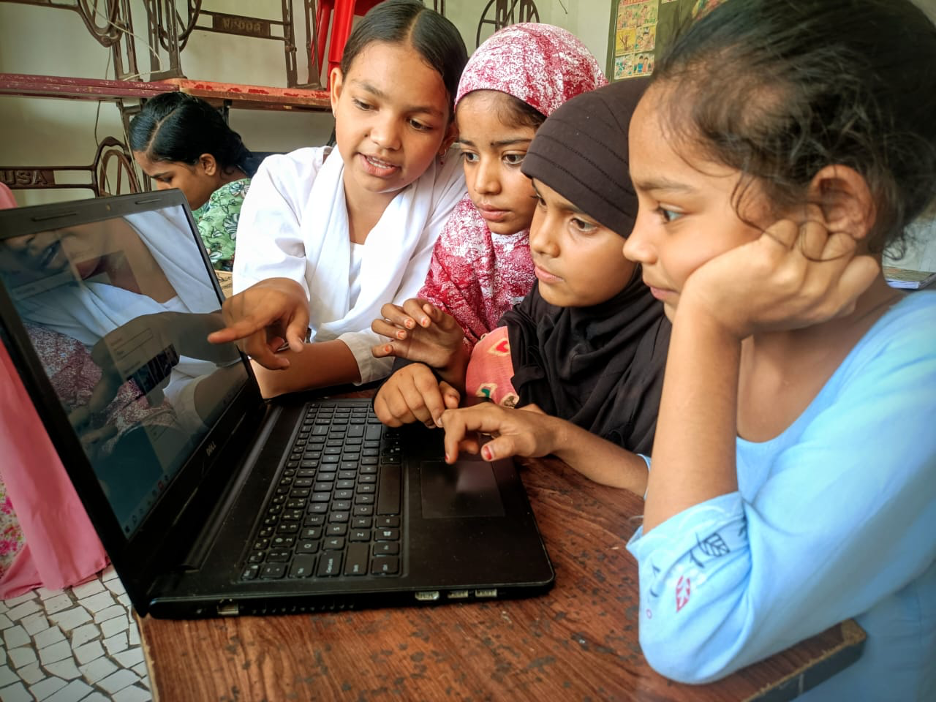
Through inclusive education, trauma-informed support, and economic empowerment, Sambhali is shifting cultural norms from the inside out. From Rajasthan to the rest of the world, their message is clear: when you invest in women and girls, entire communities rise.
Learn more and support this life-changing work at sambhalius.org






