BY THE OPTIMIST DAILY EDITORIAL TEAM
Good news: the Southern Ocean is filling with whales again.
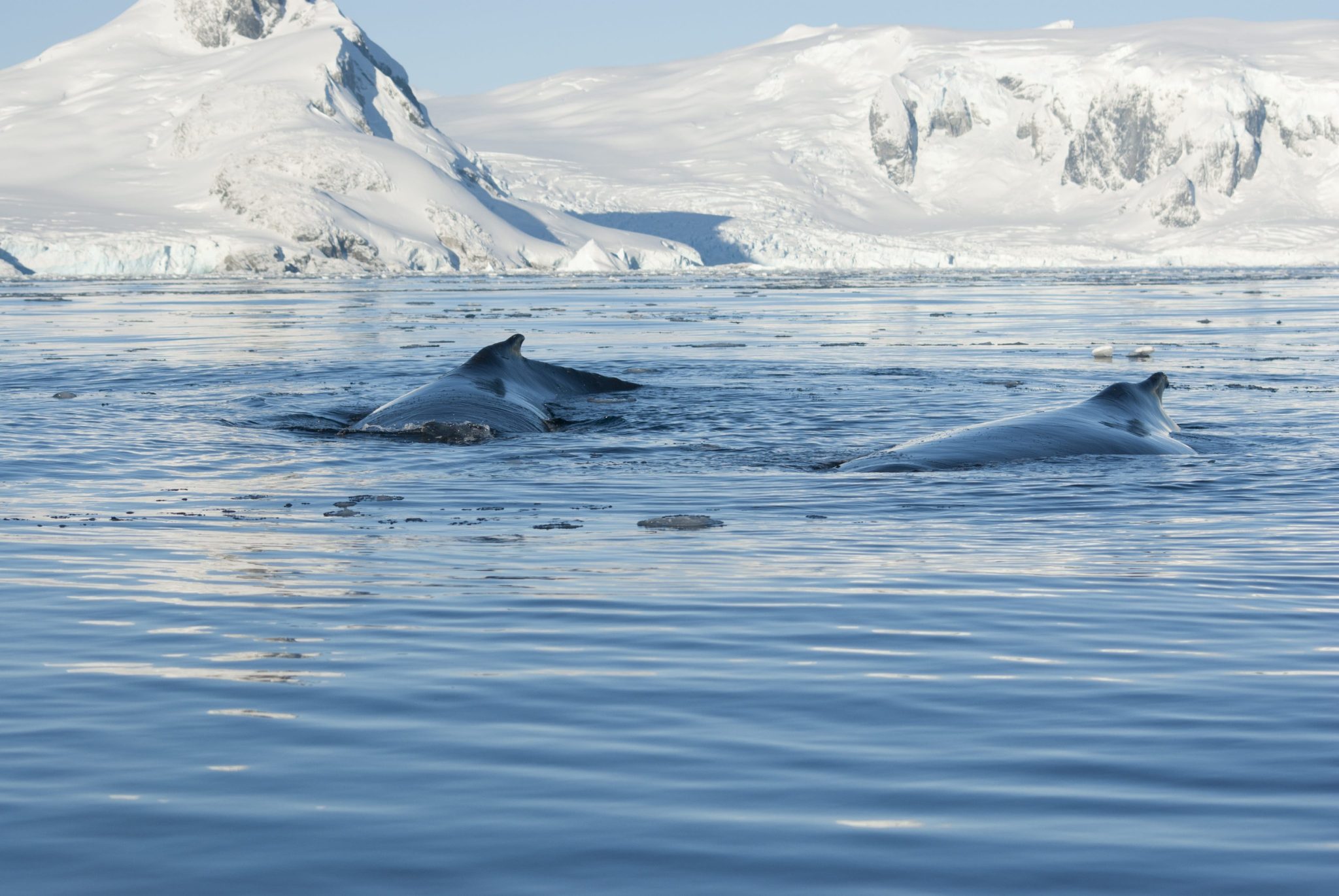
Humpback populations in Antarctica have nearly returned to pre-whaling levels, a rebound scientists say has been faster than almost anyone expected. Researchers conducting a survey near the South Orkney Islands this February recorded multiple groups of more than 100 feeding whales in a single day, scenes they described as “remarkable and breathtaking” and comparable to accounts written by the first polar explorers more than a century ago.
Since commercial whaling was banned in 1986, ending a period in which more than 2 million whales were killed in the Southern Ocean, the recovery has been steady. Blue whales, the world’s largest animals, have bounced back more slowly. That trend has held for nearly four decades.
“It is incredible that every day at the South Orkneys with decent weather, we could more or less guarantee seeing a group of 100-plus whales,” said Dr. Matt Savoca of Stanford University’s Hopkins Marine Station, who was aboard Sea Shepherd’s research vessel the Allankay for the survey. “The fact that groups this size are common here is what’s most remarkable. It’s breathtaking to see blows stretch from horizon to horizon, just as the first explorers to the region described over a century ago.”
A looming threat
Unfortunately, the same waters that once drew whalers now attract a different industry, and researchers say the timing could not be worse.
Industrial krill trawlers, some weighing up to 3,000 metric tonnes (roughly 3,300 US tons), operate in the same feeding grounds where the whales feed. The vessels fish for Antarctic krill, the small crustaceans that form the base of the Southern Ocean food web and the primary diet of whales, penguins, and seals.
What makes this particularly damaging, according to whale researcher Ted Cheeseman, is not just the volume of krill being removed but what happens to it. When whales consume krill, they return nutrients to the water through their waste, feeding the phytoplankton that krill populations depend on. Industrial trawlers, which process krill into dietary supplements, pet food, and aquaculture feed, pull those nutrients out of the ocean entirely.
“When a whale eats krill, it poops out krill,” said Cheeseman, who co-founded the citizen science organization Happy Whale. “There’s a nutrient recycling happening. If you take out more predators, you would imagine you get more prey. But when you take out whales, the krill reduces.”
The trawlers can be up to 100 times the size of a humpback whale. Cheeseman’s read: they have become a new kind of predator in the ecosystem.
Conservation through collaboration
The body responsible for protecting Antarctic marine resources, the Commission for the Conservation of Antarctic Marine Living Resources (CCAMLR), has been unable to act so far. In both 2024 and 2025, the commission failed to reach consensus on conservation measures after China and Russia blocked renewal of a key agreement restricting krill fishing in ecologically sensitive areas. Climate change is adding pressure of its own, with warming waters already affecting krill populations independently of fishing.
With no international agreement in sight, Savoca and Cheeseman are proposing a practical alternative: a voluntary 30-kilometer (19-mile) buffer zone around the South Orkney Islands where krill fishing would be banned. Krill fishers have already accepted similar buffers around penguin colonies, which gives the researchers some reason to think the industry might be open to the idea.
“There is an incredible opportunity for conservation through collaboration,” said Savoca. “The NGOs, scientists, and the fishing industry can come together and succeed where CCAMLR has failed.”
Whether that happens may determine whether this whale recovery continues or runs into the ceiling of what krill-depleted waters can actually support. The trawlers and the whale aggregations are operating in the same stretch of ocean right now. A buffer zone would not fix the diplomatic deadlock, but it could buy time while the politics catch up.
Did this solution stand out? Share it with a friend or support our mission by becoming an Emissary.