BY THE OPTIMIST DAILY EDITORIAL TEAM
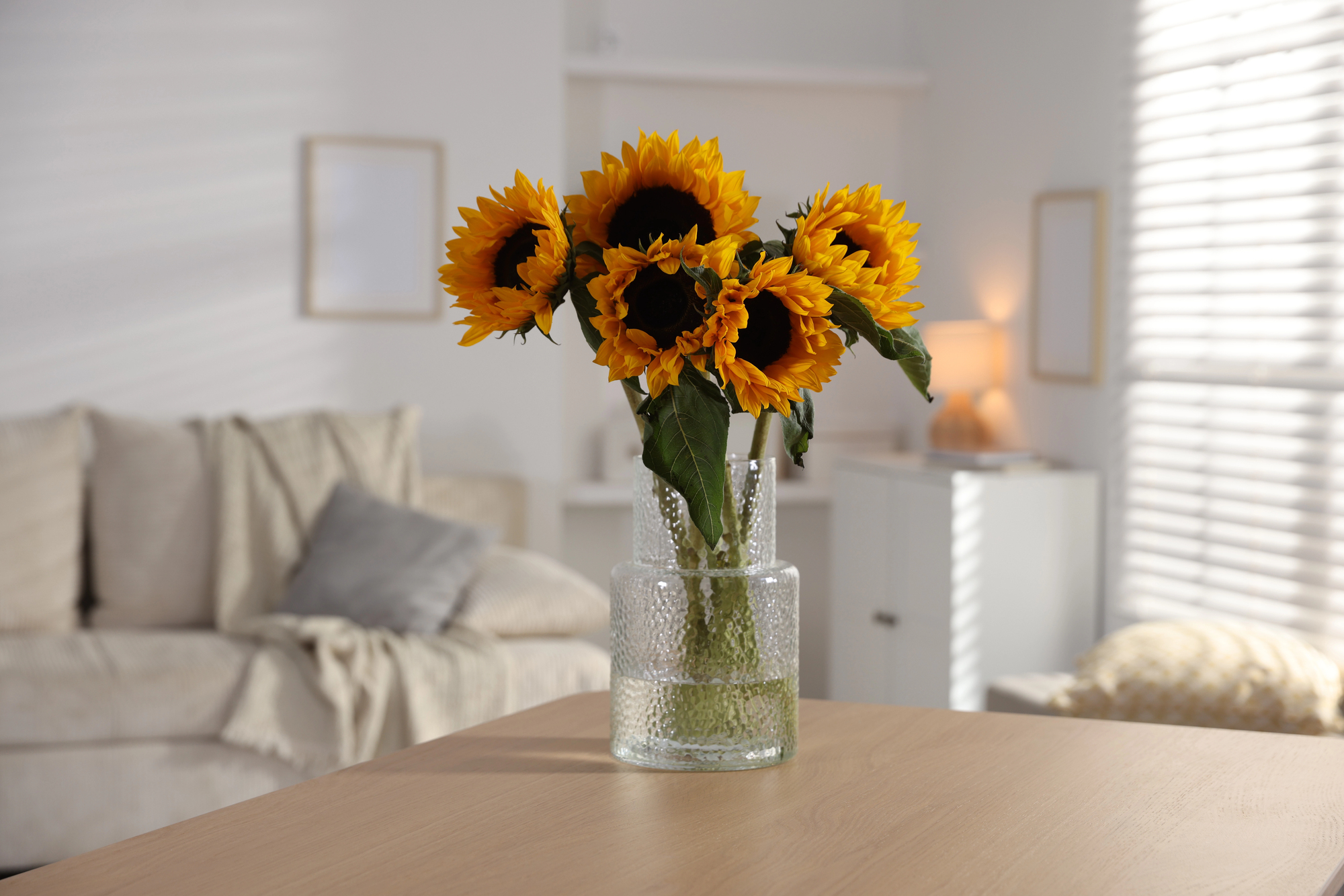
You brought them home, stuck them in a vase, and two days later they were drooping. Happens to everyone, and it’s frustrating when you paid good money at the farmers’ market. The thing is, sunflowers aren’t that demanding. The difference between four days and ten mostly comes down to what you do in the first thirty minutes.
Start with a clean vase
Bacteria kill cut flowers, and sunflowers are especially vulnerable. Their thick stems and large leaves break down faster than most, and once the water turns murky, it’s a losing battle. Wash the vase with hot soapy water before filling, or rinse it with diluted bleach if you want to be thorough. A vase that looks clean isn’t always clean.
Pick something tall and sturdy too. Sunflower heads are top-heavy, and a wide-mouthed or squat vase won’t hold them properly.
Strip the leaves before they hit the water
Any leaves below the waterline need to come off before the stems go in. Sunflower leaves are large and decompose fast in water, turning it cloudy and encouraging bacterial growth that shortens vase life. Do this at the sink before you fill it.
Cut the stems at a sharp diagonal
Trim one to two inches off each stem at a sharp angle. The diagonal cut opens up more surface area and keeps the stem from sitting flat on the bottom of the vase, where it can’t take up water properly.
For sunflowers, this matters more than it would for thinner-stemmed flowers. The stems are thick and fibrous, and scissors compress them, which slows absorption. Use bypass pruners if you have them, and cut right before putting them in the water.
Feed the water, not just the flower
Add flower food to fresh water. The small packets that come with florist bouquets do three things: nutrients, a mild acid that helps with water uptake, and a bactericide. No packet? Mix your own: two tablespoons of lemon juice, one tablespoon of sugar, and a quarter teaspoon of bleach per quart of water. Use bottled lemon juice rather than fresh; the acidity is more consistent.
Give them air and a cool spot
Sunflowers need room. Their heads are heavy and do better with airflow around them, so don’t pack the arrangement too tightly. A wider vase helps if you have a big bunch.
Once they’re in, find them a cool spot out of direct sun. Heat vents, sunny windowsills, and the tops of appliances all shorten their lives. A shaded spot on the counter is what you want.
Stay on top of the maintenance
These flowers drink a lot. Top up the water every day. Around day two or three, do a proper reset: re-cut the stems, rinse the vase, and start fresh with new water and flower food. Keep trimming every couple of days after that.
If a bloom starts to wilt, pull it out right away. A dying flower releases ethylene gas and speeds up the decline of everything around it.
Do all of this, and you’re looking at seven to ten days. Skip it, and five is more realistic. It’s not much work. Walking past that vase on Wednesday and finding them still open? Worth it.
Did this solution stand out? Share it with a friend or support our mission by becoming an Emissary.