


BY THE OPTIMIST DAILY EDITORIAL TEAM
The sustainable fashion industry has spent years trying to reduce harm: less water, fewer synthetic chemicals, more recycled material. A research team at the Shenzhen Institutes of Advanced Technology went in a different direction. They grew the fabric from a living organism.
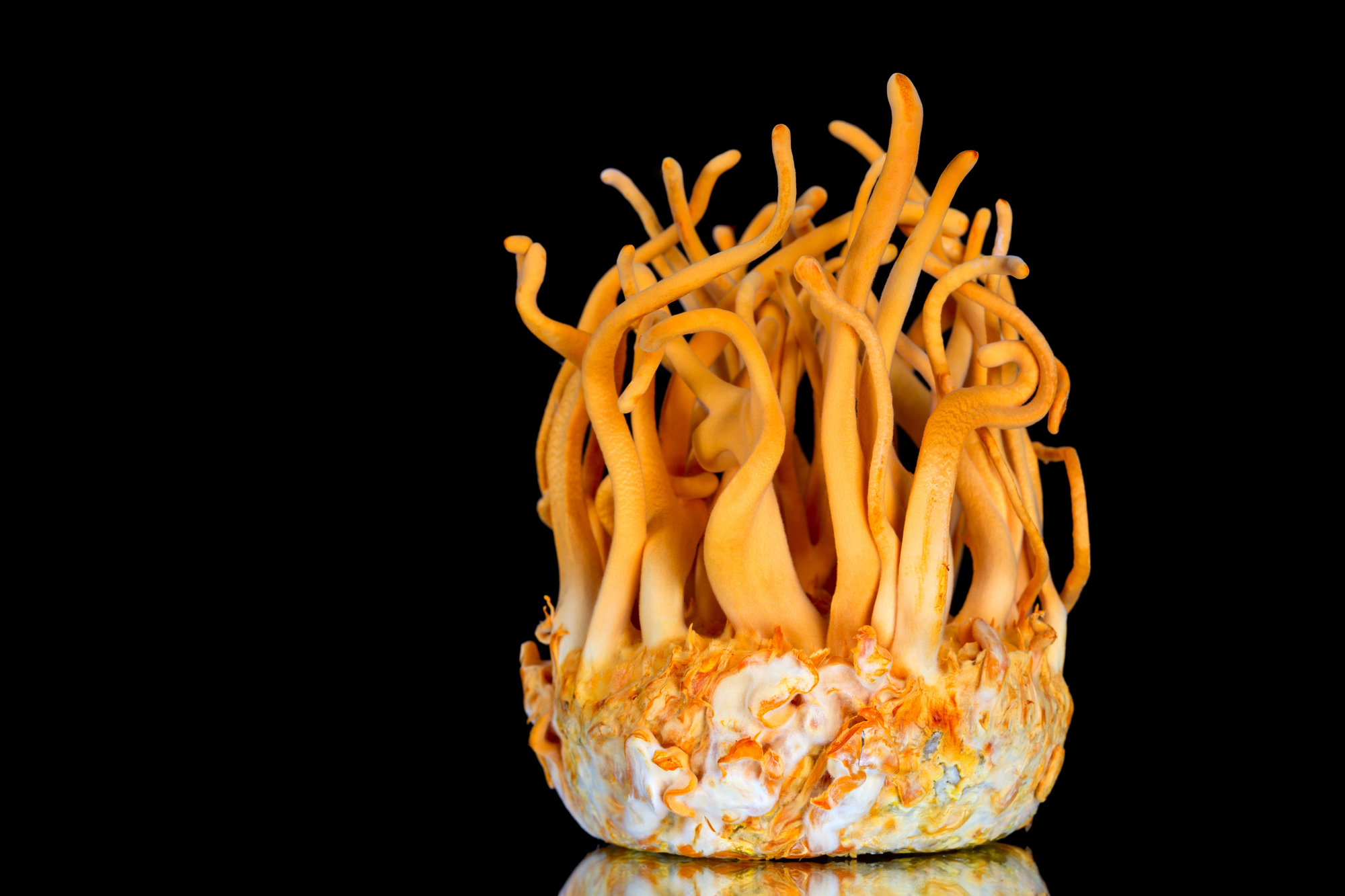
The material comes from Cordyceps militaris, a fungus used in traditional Chinese medicine that naturally forms hyphae, fine threadlike filaments that weave into dense networks. Researchers cultivated it into small pellets, pressed those into flexible sheets, and added glycerol to make them pliable.
The resulting fabric can clean itself, and if it tears, placing fresh fungal pellets on the damaged spot causes new fibers to grow back. “A living textile does not mean that the dress is constantly growing during normal use,” Li Ke, the paper’s first author, said. Under dry conditions with little to feed on, the biological activity stops.
What else it can do
The fungal matrix can host other microorganisms. The team demonstrated this by adding an engineered yeast that clings to fungal cell walls to introduce color, and incorporating hyphae from Aspergillus niger, a melanin-rich fungus, for UV protection. They describe the structure as a “plug-and-play platform,” meaning different organisms can be layered in to give the material different properties without changing its base form.
Environmental testing found it degraded fully within 41 days. The team made a prototype dress, but Li was direct about where things stand: this is not replacing cotton anytime soon. The near-term uses he describes are temporary: short-run fashion, exhibition pieces, art installations, biodegradable packaging. “The broader concept could extend beyond clothing wherever a biodegradable structure with locally programmable biological functions is useful,” he said.
The cost structure is a real hurdle. The culture medium accounts for more than 95 percent of production expenses, and getting to commercial scale means finding cheaper nutrient sources and improving the fermentation process, before real-world testing for washability and durability.
The longer aim is to cut down on outside inputs, having the fungus produce its own pigments and functional molecules rather than relying on added organisms. “In the longer term, synthetic gene circuits may enable biological functions to be activated only at selected locations, times or environmental conditions,” Li said.
Did this solution stand out? Share it with a friend or support our mission by becoming an Emissary.





