BY THE OPTIMIST DAILY EDITORIAL TEAM
The last time a team completed a comparable crossing of Antarctica’s interior, they burned through roughly 170,000 liters (about 45,000 gallons) of fuel to do it. The Wind Sled expedition that left Spain on October 18 plans to use none.
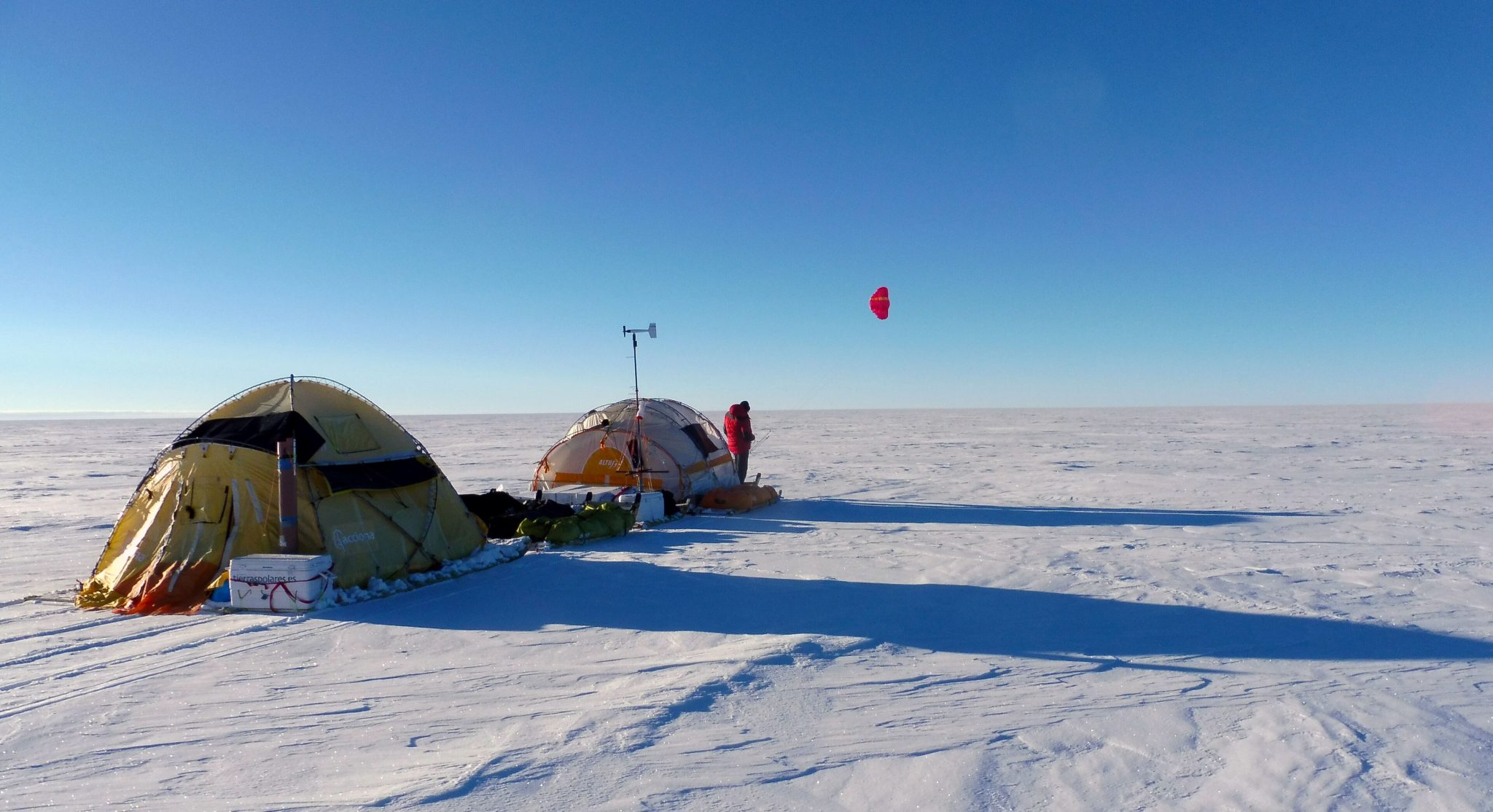
Spanish polar explorer Ramón Larramendi is leading four people across 3,400 kilometers (about 2,100 miles) of Antarctic interior on a kite-powered platform he has been designing for 25 years, with 16 research projects running the entire way. The vehicle runs on wind and solar energy, meaning no combustion engine at all.
Twenty-five years of design, rooted in Inuit tradition
Larramendi has spent 25 years developing the Wind Sled and has logged more than 28,000 kilometers (about 17,400 miles) across ice on earlier expeditions while refining it. The platform is built on Inuit sled-building techniques, which is an unusual starting point for a cutting-edge scientific research vehicle, and Larramendi doesn’t try to make it sound otherwise.
“The wind sled is something completely unique in the world,” he says. “This sled combines Inuit techniques, which can look like old-fashioned and slightly strange bits of technology. That makes it a very, very unusual mix, but hugely efficient.”
The sled is 15 meters (about 49 feet) long across four modules, capable of carrying up to 2,100 kilograms (about 4,600 pounds). This expedition is running lighter, around 250 kilograms (about 550 pounds) of instruments. The crew has 20 kites ranging from five to 150 square meters (about 54 to 1,615 square feet) in sail area, swapped out as conditions change. The sled can hit 80 kilometers per hour (about 50 miles per hour) in a strong wind; average cruising speed is around 25 (about 15 miles per hour).
Sixteen research projects in terrain that rarely gets visited
The route goes from Russia’s Novolazarevskaya base in Queen Maud Land, through the Pole of Inaccessibility and near the Pole of Cold, finishing at the Concordia research station at Dome C. Five scientific stations will be established along the way. The 16 projects were selected by Spain’s polar research committee, with collaborators including NASA’s Ames Research Center, six Spanish universities, and several national research bodies.
One of the NASA projects is asking whether salt rocks sitting on Antarctica’s surface could harbor microbial life. Sensors embedded in the rocks will measure temperature, humidity, and electrical conductivity to determine whether liquid water could form inside them despite conditions that make that seem impossible. It’s the kind of question that sounds like astrobiology because it basically is.
The Dinglac project will use ground-penetrating radar to map the top 10 meters (about 33 feet) of snow to track how ice layers accumulate and shift. The campaign will also sample for microplastics and chemical pollutants, test for microorganisms and viruses, and run assessments of the European Galileo navigation system.
The location makes all of it harder to get any other way. Satellites and permanent stations have limited reach into this interior. “It is taking place in an area for which there are practically no data,” Larramendi says.
The crew are their own experiment
All four team members are Antarctic veterans: Larramendi; Hilo Moreno, a polar guide and mountain technician; Mariusz Potocki, a researcher at the University of Maine; and Javier Selva, a documentary filmmaker who crossed Antarctica with Larramendi in 2011-2012.
They’re also research subjects. The WindSled Mind project, led by Gabriel G. de la Torre of the University of Cádiz, will monitor the team’s psychological responses, sleep, and social dynamics across the 85 days. The data is meant to inform planning for long-duration space missions, where small crews face confinement and extreme isolation from Earth, conditions the interior of Antarctica replicates about as well as anywhere.
“We are the experiment ourselves,” Larramendi says. “Four people isolated for 85 days in the interior of the Antarctic continent.”
A route designed to be repeated
The point isn’t just to complete this crossing. Each return trip lets researchers compare data across seasons to track real changes in ice, climate, and polar ecosystems over time. “Repeated data collection is absolutely key to tracking variations,” Larramendi says.
When the team arrives at Concordia, they’ll fly out and leave the sled dismantled at the station, ready for the return journey. The fuel comparison says most of what needs saying: the last comparable crossing burned through about 45,000 gallons. This one runs on kites and a design that’s been in development since the 1990s, and when it’s done, the plan is to come back.
Did this solution stand out? Share it with a friend or support our mission by becoming an Emissary.