BY THE OPTIMIST DAILY EDITORIAL TEAM
Every fall, something happens in the body before it happens in the mind. The smell of wood smoke drifting through a cracked window, the particular weight of October light slanting across the floor, and suddenly you’re somewhere else entirely, back in a kitchen you haven’t thought about in years, or feeling fourteen again for no apparent reason. Then you reach for the show you always watch this time of year, or the book with the cracked spine, and the evening softens.
If that pull toward the familiar feels like something you should probably resist, it isn’t. Mental health professionals describe what happens each autumn as a predictable response to something real: the season changing registers in your nervous system as a small form of loss. The nostalgia that follows isn’t a distraction from fall; rather, it’s a part of how you move through it.
Seasonal transitions are a form of small loss
“Transitions mean something is changing, and change inherently means something is being lost,” says Janna Sayfie, L.M.S.W., co-founder and psychotherapist at Urban Mind Psychotherapy. “These ‘endings,’ however small, register to us as a form of loss. Looking back at something familiar anchors us to a sense of continuity and stability that we try to find when it feels like the ground is shifting beneath us.”
That sense of loss takes different shapes for different people. For a lot of adults, the end of summer is the end of a looser way of moving through the week, a rhythm that’s harder to hold onto once September arrives. For parents, back-to-school season carries a weight that’s difficult to articulate, the passage of time made suddenly visible. And even without children in the picture, fall tends to settle in with a certain pressure attached: fresh starts implied, intentions expected, a vague sense that you should be doing more with the season than you are. Matt Sosnowsky, L.C.S.W., founder and psychotherapist at Philadelphia Talk Therapy, compares it to New Year’s, with all the same weight and none of the festivities.
Your body recognizes fall before your brain does
Part of why autumn nostalgia can feel so sudden and strange is that it often bypasses the thinking mind entirely. Sarah Haugh, L.M.H.C., founder of North Shore Professional Therapy, describes these as somatic memories: body-based recall that surfaces through sensory cues before any conscious recognition has kicked in.
“Even before we know what these triggers remind us of, we’re swept away into visceral or nervous system memory,” Haugh says. She explains that this kind of implicit memory, a felt sense rather than a story you can retrieve, is the same part of the memory system that holds experiences from before we had language.
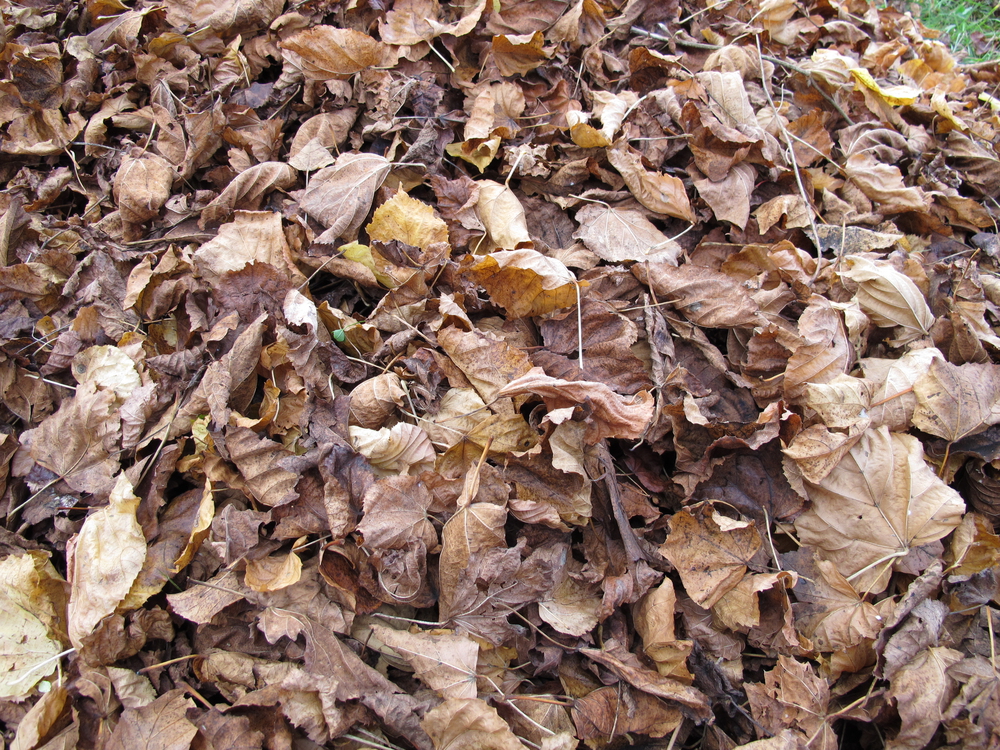
Fall is unusually thick with these triggers. Wood smoke through a cracked window. The low angle of October light that somehow reads as different from September even when the temperature hasn’t shifted. Damp leaves, a candle you only bring out once a year, the sound of a school bus on a Tuesday morning. Any of these can pull a decade-old feeling into your chest before you’ve had a chance to ask where it came from.
Why reruns feel better than something new
Once the nervous system has registered the season as a kind of ending, it tends to steer toward the known. Sayfie puts it plainly: “Our brains tend to favor the predictable over the unpredictable.” We associate the unknown with risk, and when things are shifting, even in the small seasonal way they do every year, the familiar offers something new experiences can’t: you already know how it ends.
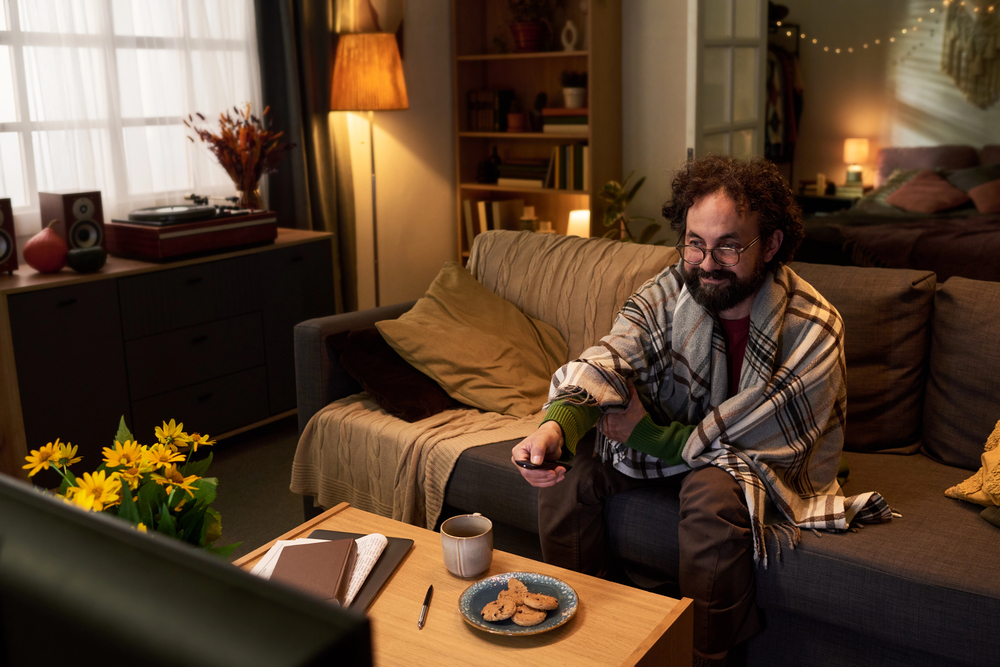
Revisiting a favorite show or book is one way of meeting that need without quite naming it. The characters feel like company you trust. There’s no uncertainty about whether it will be good. Sosnowsky describes this as a form of safety-seeking, not a failure to engage with what’s ahead, but a way of steadying yourself so that you can.
Nostalgia as a tool, not just a feeling
Sosnowsky calls nostalgia “an engine for positive emotions,” pointing to research showing that wellbeing draws from three sources: anticipating the future, savoring the present, and looking back at the past. “Taking time to sink into a memory with gratitude and appreciation can help us elevate seminal experiences of joy, connection, and deep meaning,” he says. Nostalgia works that third channel. Don’t think of it as wallowing but as a return to something that still has something to give.
Sometimes it carries grief alongside the warmth, which is its own kind of usefulness. A young person packing for college while their mind keeps wandering back to high school. A parent watching a kid start middle school while some part of them is still at kindergarten drop-off. Someone moving through a first round of holidays without a person they love. Looking backward in these moments isn’t getting stuck; it’s how the past gets processed. “Looking back, though sometimes difficult, helps us to integrate our past and make meaning from life,” Sosnowsky says. “In this way, we benefit from the people, places, and experiences that helped shape our lives by recognizing what remains a part of us as we move forward.”
So when October settles in, and you find yourself scrolling down to the same playlist, reaching for the same worn-out novel, or clicking on the same show you’ve already seen more times than you can count, that pull isn’t something to override. It may be your nervous system holding onto who you are while the season changes around you. Remind yourself that you can gift yourself that return. At some point, when you’re ready, you can always put something new on.
Did this solution stand out? Share it with a friend or support our mission by becoming an Emissary.