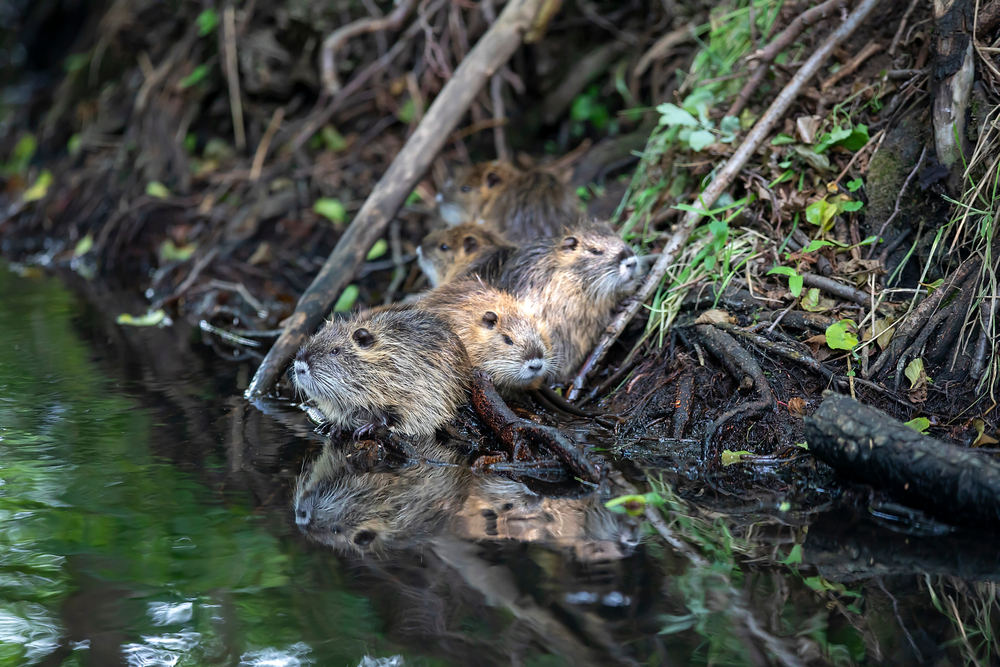
Bill Leikam, the president of the Urban Wildlife Research Project and fondly known as The Fox Guy, recently had a revelation while analyzing film from a wildlife camera along a Palo Alto creekbed. Amid the familiar wildlife, an unfamiliar creature darted across the screen. Leikam, a seasoned observer of local animals, was perplexed by this secretive creature’s movements.
“I have enough experience with the wildlife out there to be able to identify every one of them just by their movement — this one had me baffled,” he exclaimed. After careful examination, he made a groundbreaking discovery – a baby beaver. This observation, confirmed by local wildlife experts, represents a watershed moment in the region’s ecology.
Beaver renaissance in California
Decades, if not centuries, have gone by since a beaver colony settled in the area south of San Francisco Bay. The North American beaver, which was nearly hunted to extinction during the fur trade era, is now poised for a dramatic rebirth in California. Leikam’s camera trap photographs provide tangible evidence that the re-population initiative was successful.
Emily Fairfax, a former University of California beaver researcher who now works at the University of Minnesota, sees this accomplishment as a “stamp of approval.” For many years, beavers were considered a nuisance species, prompting mitigation and removal measures. However, attitudes have altered, and these species are now recognized for the potential benefits they may provide.
Beavers: Nature’s engineers
Beavers, scientifically known as Castor canadensis, provide numerous benefits. They are critical in natural water management, preventing drought and wildfires. They are considered keystone species because they promote biodiversity and repair environments through ecosystem engineering. They have the unique ability to build wetlands in a variety of environments, operating as a “free workforce” that California has yet to fully harness.
According to Valerie Cook, manager of the California Department of Fish and Wildlife’s Beaver Restoration Program, the state is preparing beavers to play a vital role in tackling crises such as droughts, floods, and wildfires. Their objective includes relocating beavers to areas with a low beaver population and fostering human-beaver cohabitation.
A free workforce against wildfires
Beavers excel at water conservation and retention, minimizing dry stream beds during droughts and increasing summer baseflows. This supports a variety of wildlife species, including river otters, mink, and birds. Beaver dam ponds provide a safe haven for juvenile trout and salmon while simultaneously functioning as a barrier against wildfires, reducing the flammability of neighboring flora.
“They can create wetlands in basically any ecosystem,” explained Fairfax, who sees beavers as a free workforce that Californians could make use of. “The fires are catastrophic and the droughts are widespread and unrelenting — it feels like we have to exhaust all options.”
The Institute for Historical Ecology’s Rick Lanman highlights the importance of beaver ponds during wildfires, referring to them as “wildfire refugia.” These ponds offer fuel moisture, restrict severe burning, and act as a firebreak. Furthermore, they provide water to firemen in isolated regions.
Although no specific population estimates for California beavers exist, scientists such as Emily Fairfax urge for their increased presence in the state. In recent years, Western states such as Colorado and Utah have been proactive in sustaining beaver populations, and it is hoped that California will follow suit.
The newest beaver family represents a potential transition in the local ecosystem, according to Bill Leikam, whose decade-long monitoring efforts have witnessed the return of beavers to Palo Alto Baylands. Despite the fact that he has yet to see evidence of dam-building, he is optimistic about the family’s survival and reproduction. Their existence provides hope for a diverse spectrum of creatures, making their reappearance extremely noteworthy.