BY THE OPTIMIST DAILY EDITORIAL TEAM
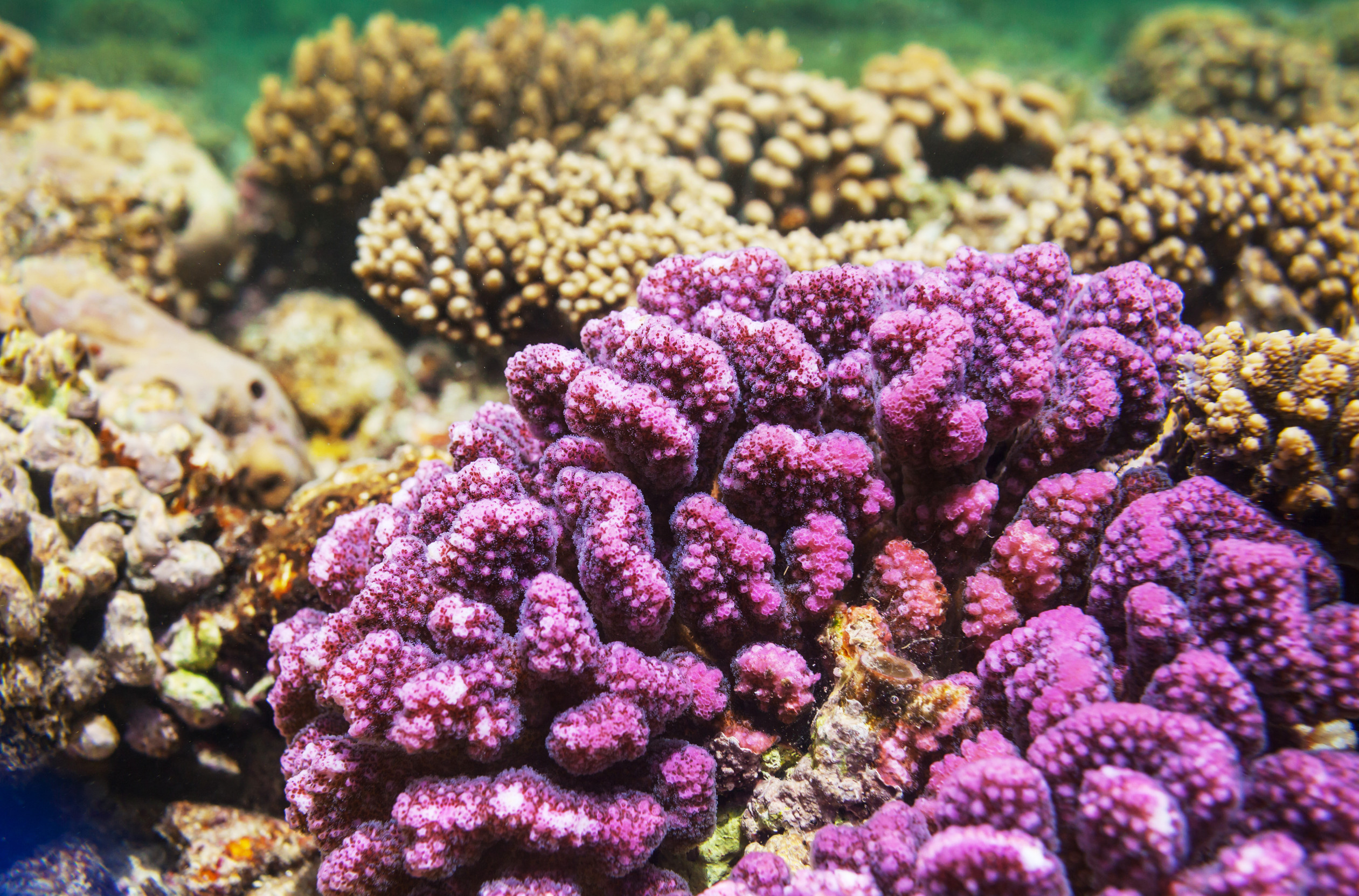
When the ocean gets too warm, coral reefs bleach, weaken, and sometimes die. And right now, they’re in serious trouble. Over 80 percent of the world’s reef area has experienced heat stress since early 2023, leading to what researchers are calling the worst global coral bleaching event since the 1990s.
But scientists are working on a new way to fight back. In a study published in Trends in Biotechnology, a team from the Scripps Institution of Oceanography unveiled a tiny but powerful tool to help restore coral reefs: a light-activated, reef-scented gel that encourages coral larvae to settle and grow.
Why coral larvae need guidance
Coral babies are not aimless drifters. These microscopic larvae use tiny hairs to swim, but where they choose to settle depends heavily on the chemical cues in their environment. Some of the most attractive signals come from crustose coralline algae, which help glue reef rubble together and signal a healthy place to grow.
However, as reefs degrade, the chemical landscape changes. “These essential chemical signals start to lack, and the larva is not able to settle,” explains Daniel Wangpraseurt, an interdisciplinary marine biologist at Scripps and senior author of the new study.
Enter SNAP-X: science in a squirt
To solve that, Wangpraseurt and materials scientist Samapti Kundu created SNAP-X, a nanoparticle gel that mimics the natural reef scent. The secret? Tiny silica capsules, each smaller than 70 nanometers, are filled with compounds released by crustose coralline algae. These capsules are suspended in a light-activated, biodegradable liquid that turns into a jelly when exposed to light.
The result is a thin film that can be applied underwater and stays in place, slowly releasing its reefy aroma for over a month. “Imagine you are able to bottle healthy reef scent,” Wangpraseurt says, “and then you could spray it onto any kind of substrate.”
How well does it work?
To test SNAP-X, the team placed rice coral (Montipora capitata) larvae in small tanks with artificial calcium carbonate substrates. When the gel was applied, larvae were six times more likely to settle than in tanks without it. In more realistic, flow-through water settings, the effect was even stronger; up to 20 times more settlement, especially at higher concentrations. “They are really actively navigating towards it,” says Wangpraseurt.
More diversity, fewer clones
Most current reef restoration involves coral cloning which requires cutting off bits of living coral and planting them elsewhere. While helpful, this limits genetic diversity, which can leave restored reefs vulnerable to disease and warming seas.
By encouraging natural settlement, SNAP-X could bring new genetic combinations to reefs. “This product is an important step,” says Chris Langdon, a marine ecologist at the University of Miami. He wasn’t involved in the study but notes its potential to improve resilience.
Not a silver bullet, but a promising piece
Scaling the technology won’t be easy. Right now, the active compounds must be harvested from live algae, and researchers still don’t know exactly which molecules do the job. As Langdon puts it: “They would need to first determine what molecule is the active one, and then—which is even more difficult—find a way to synthesize that in a laboratory.”
Still, Wangpraseurt is hopeful. The team is seeking a patent and planning reef-based trials, hoping to adapt SNAP-X for other coral species and environments. He sees it as one part of a broader toolkit for coral recovery. “There’s not only one technique that will solve our problems,” he says. “We have to think about different life stages, different approaches, and put them all together.”
If successful, this squirt of reef perfume could help coral reefs make a comeback… one jelly-coated rock at a time.