BY THE OPTIMIST DAILY EDITORIAL TEAM
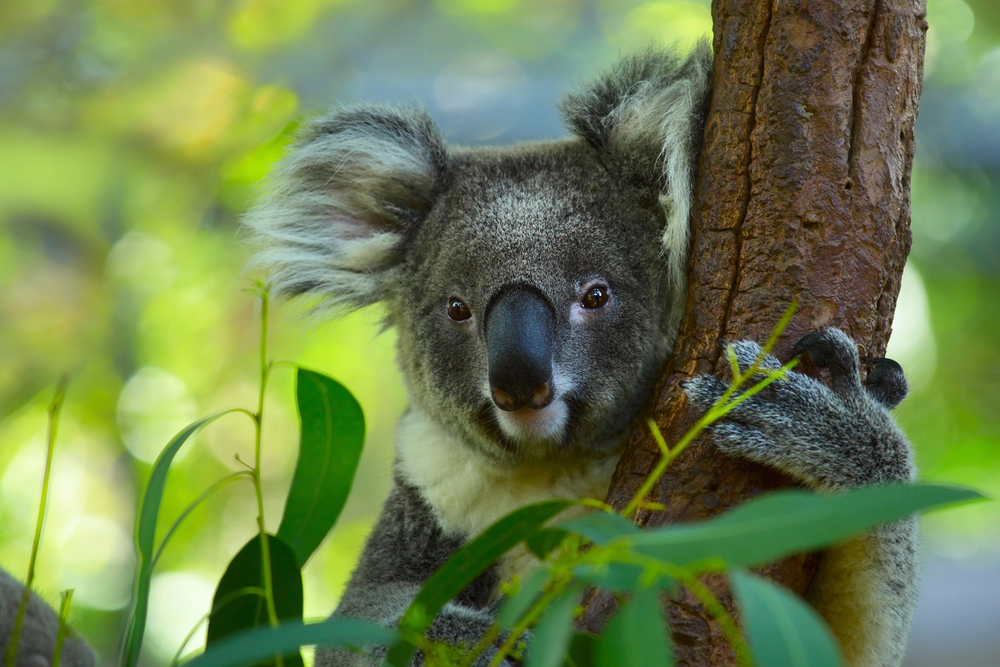
Koalas, one of Australia’s most beloved and vulnerable species, are getting a much-needed lifeline. In a remarkable one-two punch for conservation, two major developments have brought renewed hope for the marsupial’s survival: the official creation of the Great Koala National Park in New South Wales and the approval of a new vaccine to combat the chlamydia epidemic devastating koala populations.
Protecting habitat on a historic scale
After more than a decade of campaigning by conservationists, the New South Wales government has formally confirmed plans to create the Great Koala National Park. Spanning 476,000 hectares, including 176,000 hectares of newly protected state forest, the park will become one of the largest in the state and is expected to protect over 12,000 koalas.
Logging has been immediately halted within the proposed park boundaries, with a moratorium in place until legislation is passed to formally establish the protected area. The new park, located inland of Coffs Harbour and extending toward Kempsey and Grafton, will also safeguard more than 100 threatened species, including 36,000 greater gliders. The area includes some of the world’s richest biodiversity hotspots and vital water catchments.
“Koalas are at risk of extinction in the wild in NSW – that’s unthinkable. The Great Koala National Park is about turning that around,” said Premier Chris Minns.
To support the economic transition, the government has announced a comprehensive support package for affected timber mill workers and businesses. This includes jobkeeper-style payments to cover wages, business assistance, retraining opportunities, and access to mental health and legal counseling services. Six timber mills and around 300 jobs are expected to be affected.
The park also represents a significant investment in eco-tourism. An additional $60 million (AUD) will go toward establishing the park, on top of $80 million (AUD) already allocated, with $6 (AUD) million earmarked for boosting tourism and business development in the surrounding region. The government estimates the park could generate an additional $163 million (AUD) in economic activity.
Tackling disease with a groundbreaking vaccine
Meanwhile, a second major breakthrough for koala conservation was announced: federal regulators have approved a single-dose vaccine designed to curb the chlamydia epidemic decimating wild koala populations. The vaccine, developed over more than a decade by scientists at the University of the Sunshine Coast (UniSC), is the first of its kind and could significantly reduce disease-related deaths.
Chlamydia affects as much as 70 percent of some koala colonies, causing blindness, infertility, urinary tract infections, and often death. Traditional treatment with antibiotics can be fatal for koalas, as it destroys the gut bacteria they rely on to digest eucalyptus leaves.
“This study found [the vaccine] reduced the likelihood of koalas developing symptoms of chlamydia during breeding age and decreased mortality from the disease in wild populations by at least 65 percent,” said UniSC’s Sam Phillips.
The vaccine’s approval is based on results from what UniSC describes as the largest and longest study ever conducted on wild koalas. Scientists hope to distribute the vaccine for free to wildlife hospitals and at-risk populations as early as next year. However, the rollout remains dependent on funding to cover the high costs of locating, capturing, and vaccinating wild animals.
“To get funding now, so that we can do this next phase where the vaccine actually becomes a reality—not just a trial—would be a pretty amazing thing,” said Dr. Peter Timms, the microbiologist leading the research.
A future still at risk
While both developments mark huge progress, experts stress that the battle to save koalas is far from over. Habitat loss from land clearing, urbanization, bushfires, and climate change remains the most pressing threat.
“Habitat loss is the most important thing; if you haven’t got a tree, nothing much else matters,” said Timms.
Environment Minister Murray Watt echoed this, noting that the government is focused not only on vaccine distribution but also on monitoring species and restoring critical habitats.
Still, with the Great Koala National Park finally in motion and a scientifically validated vaccine ready for deployment, conservationists have cause for cautious optimism. As Penny Sharpe, NSW Environment Minister, put it: “This park has been a dream for more than a decade. It will ensure koalas survive into the future so our grandchildren will still be able to see them in the wild.”