BY THE OPTIMIST DAILY EDITORIAL TEAM
Before any vaccine can protect a child, someone has to reach them. Around 12.3 million of the children covered by the Big Catch-Up had never received a single dose of anything: not measles, not polio, not diphtheria. They are known as zero-dose children, and the reasons they go unvaccinated are rarely simple. They live in conflict zones, remote areas, or communities where health systems have never been reliable, or where vaccination services collapsed during the COVID-19 pandemic and were never rebuilt.
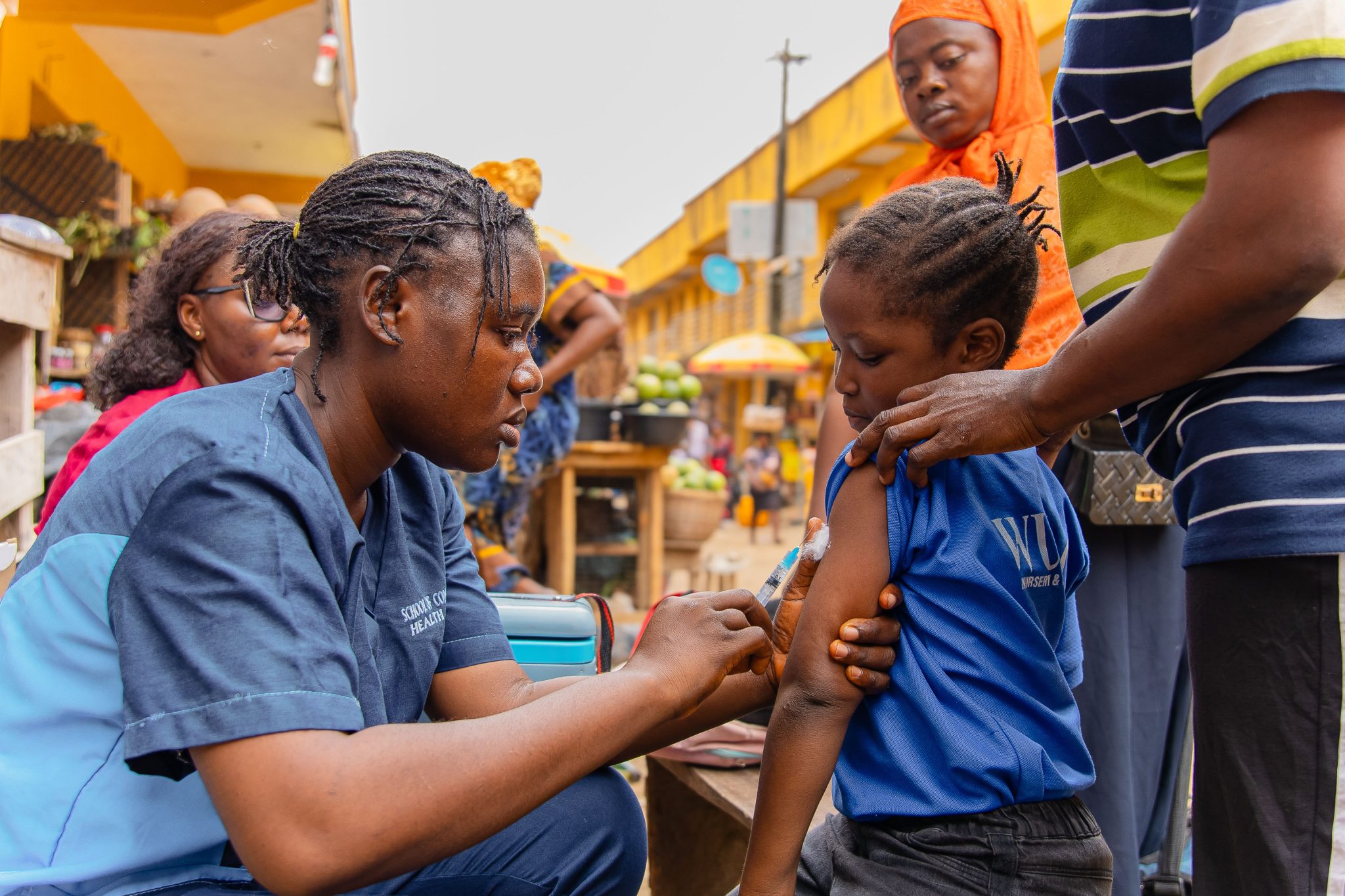
The Big Catch-Up, a multi-year initiative backed by UNICEF, Gavi, and the World Health Organization, concluded program implementation at the end of March 2026, delivering over 100 million doses to an estimated 18.3 million children in 36 countries, primarily low and lower-middle-income nations across Africa and Asia. About 15 million of those children had never previously received a measles vaccine. The initiative is on track to meet its target of reaching at least 21 million children by the time final data is compiled.
What the pandemic left behind
The campaign launched in 2023 to address a specific problem. The COVID-19 pandemic overwhelmed health facilities and halted or disrupted routine immunization services across much of the world. The number of zero-dose children grew by millions during that period. Children who should have received vaccines before their first birthday did not, and in most cases, they were never caught up as they grew older.
Fourteen of the 36 participating countries are classified by Gavi as conflict-affected, including Afghanistan, Myanmar, Somalia, Sudan, Syria, and Yemen. In those settings, health workers reached children through mobile services, working around population displacement and destroyed infrastructure.
The figures from individual countries show the scale of what was required. In Ethiopia, more than 2.5 million previously zero-dose children received their first diphtheria, tetanus, and pertussis vaccine; the country also delivered nearly five million doses of inactivated polio vaccine and over four million doses of measles vaccine to unvaccinated children. In Nigeria, two million previously zero-dose children received their first DTP dose alongside 3.4 million doses of polio vaccine.
Why the work is not done
Even with those gains, over 14 million infants still miss essential vaccines every year. Measles cases have risen in every region of the world: around 11 million were recorded in 2024, and the number of countries facing large outbreaks has tripled since 2021. That rise is driven by persistent gaps in routine immunization, compounded by declining vaccine confidence in some communities that previously had high coverage.
“We’ve caught up with some of the children who missed routine vaccinations during the pandemic, but many more remain out of reach,” said UNICEF Executive Director Catherine Russell. “The gains made through the Big Catch-Up must be sustained through investment in strong, reliable immunization systems, especially at a time where measles is resurging.”
The distinction the agencies are drawing is between a catch-up effort, resource-intensive and temporary by design, and the routine immunization systems that should make catch-ups unnecessary. “We need to shift from recovery to sustainability, from fragility to resilience,” said Dr. Ephrem T. Lemango, UNICEF’s global chief of immunization.
In conflict-affected regions, sustainability means mobile services capable of following displaced populations. Elsewhere, it means rebuilding the infrastructure and community trust that routine programs depend on. Twelve countries in the campaign, including Ethiopia, Kenya, and Somalia, reached over 60 percent of all zero-dose children under five, a result the agencies are pointing to as evidence of what consistent effort in difficult settings can achieve. Building on that consistency, rather than cycling through emergency catch-ups, is the stated goal going forward.
Did this solution stand out? Share it with a friend or support our mission by becoming an Emissary.