BY THE OPTIMIST DAILY EDITORIAL TEAM
Every fall there’s a pull to tidy things up. Cut back the perennials, rake the leaves, clear the beds, put the garden to rest. It feels satisfying, honestly, and spring does seem to start from a cleaner place. The thing is, all that leaf litter, those hollow stems, those patches of scraggly dead plant matter? That’s where the bees are.
Over 3,600 bee species are native to the United States, and most of them are not honey bees. It’s the native wild bees, including mason bees, leafcutters, mining bees, long-horned bees, bumble bees, and hundreds of others, that are in steep decline. Most are solitary: each female builds her own nest, lays her eggs, stocks them with food, seals them up, and dies. As Matthew Shepherd, Director of Outreach and Education at the Xerces Society for Invertebrate Conservation, explains, the offspring “complete most of their life stages in the cell, remaining there until the following year, when they emerge at the same season their mother was active.” That nest is almost certainly somewhere in your garden.
Sam Droege, Wildlife Biologist at the USGS, says wild bees are nesting above ground and in the ground somewhere nearby no matter where you live. Ecological landscape designer Kim Eierman puts it plainly: “You may have hundreds or even thousands of individual bees using your landscape. The good news is that you don’t have to do much to give them a place to live.”
Most of what they need is already there, and the beauty of this solution is that all you have to do is less.
What to do with the fallen leaves
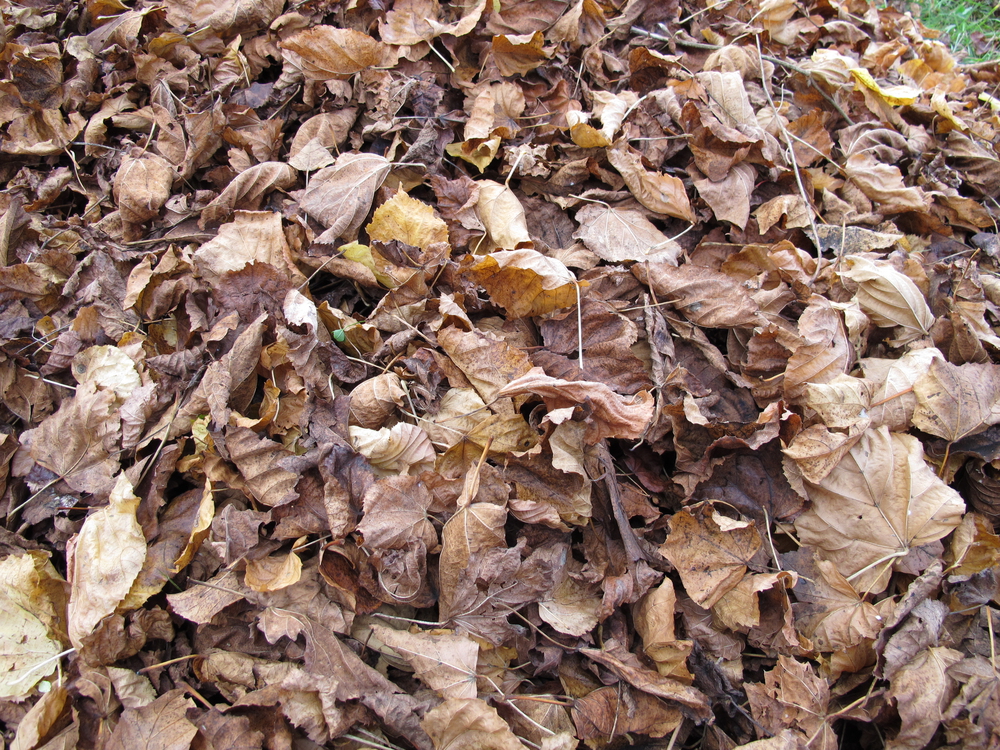
Move them rather than bag them. Bumble bee queens hibernate by digging a few inches underground or into leaf mulch, so piling leaves onto flower beds or into a back corner of the yard makes them a winter home. Leaf piles also give fireflies and other small garden creatures a place to wait out the cold. Shepherd’s guidance: remove leaves from anywhere they’re a slip hazard or blocking a drain, but keep them on flower borders, along the base of a hedge, or tucked into a back corner. A rake or broom does the job without the disturbance a leaf blower causes.
Think twice before cutting everything back
Pruning everything to the ground in fall can cost wild bees their winter home. “Avoiding the typical fall cleanup on plants and keeping stems of perennials and annuals creates nesting opportunities for tunnel-nesting bees such as small carpenter bees and leafcutters,” Shepherd says. The birds appreciate it too; they’ll forage on the seedheads through winter.
If a tidy front yard matters to you, Droege has a workable compromise: cut back to about a foot tall instead of to the ground. “A plant needs to be damaged or dead for bees to be able to use it,” he says, so a shorter cut still creates usable nesting structure without looking neglected.
If you’re already mid-cleanup, don’t compost what you’ve cut. “If any bees are already nesting in the stems, composting them will cause the end of that cycle,” Droege says. A loose pile left on the ground or behind the shed keeps the cycle going. Eierman adds that pithy stems from elderberry, raspberry, hydrangea, and Joe Pye weed are especially useful to cavity-nesting bees and can be bundled and left in place through winter.
Leave brush piles, snags, and cane fruit stems
Pruned branches can go into a brush pile rather than the compost. Loose piles don’t do much; Eierman notes they need to be “fairly tight and dense, providing cavities that shelter bees from rain.”
Dead or dying trees are candidates for keeping if they’re well away from the house. These are called snags. They develop hollow passages over time as beetles tunnel through the dead wood, and cavity-nesting bees use those passages the following season. A snag that’s too tall to feel comfortable about can be cut back to a manageable height without losing what makes it useful.
For cane fruits like raspberries, blackberries, and boysenberries, Droege says the same logic applies. “Cane fruits only fruit in year two,” he says. “Instead of cutting them to the ground, trimming them to a foot tall provides the best nesting material for a whole series of native wild bees.”
Leave bare patches of soil undisturbed
Most native bees nest in the ground and need bare, uncompacted soil to excavate their nests. “Don’t try to repair all the bare ground — leave the open areas, as bees like to nest there,” says Droege. Sandy or loamy soil in a sunny spot is ideal, but even a few square feet counts. If a bare patch feels too sparse, Eierman says planting very sparsely may still leave enough exposed soil between plants; just skip the mulch or landscape fabric, as both block bees from getting in. Treat it as wild habitat rather than an incomplete garden bed: no tilling, no cleaning up, not even in spring.
Keep some flowers going through fall
Most bees have wrapped up their nesting cycle by the time temperatures drop, but sweat bees and mining bees are still out foraging late in the season. Goldenrod and asters are the flowers they’re looking for. Having something in bloom through fall, and building toward a range of bloom times from spring through the end of the season, gives different species something to work with at different points in the year. “Expanding your garden for next spring and reducing your lawn is the biggest thing you can do for wild bees,” Droege says.
Eierman says it best: “You may have hundreds or even thousands of individual bees using your landscape. The good news is that you don’t have to do much to give them a place to live.” Leave the leaves. Don’t compost the stems. Keep a corner wild. That’s most of it.
Did this solution stand out? Share it with a friend or support our mission by becoming an Emissary.