BY THE OPTIMIST DAILY EDITORIAL TEAM
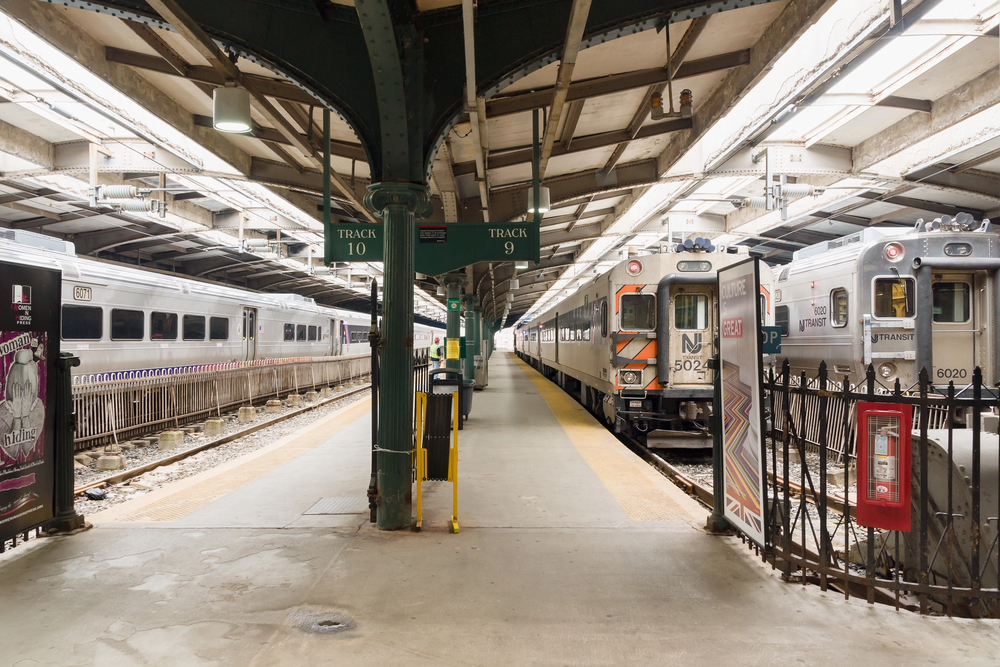
Most people moving through a train station aren’t really paying attention. They’re somewhere between where they left and where they’re going, phone out, eyes on the platform. Putting art there is an interesting bet; you’re trying to get someone to stop and look at something that might surprise and delight them, and that they had no intention of seeking out.
NJ Transit has been doing this since 2019, when it launched the TRANSITional Art Project as a pilot at Newark Penn Station. Working with the New Jersey State Council on the Arts, it has since installed temporary exhibitions of murals and photography by New Jersey artists at seven more stations. The latest is now at Morris Plains Rail Station: a show called “Tracks Through Time: Movement, History and Human Connection.”
A show about the tracks themselves
The subject matter has good timing. The exhibition looks at 250 years of American history through the lens of railroads, in the very stations where people still depend on those rails to get to work. It includes photography by Beyti Barbaros, murals by Jonathan Yumi, and a three-panel mural installation by Catherine Thurston.
“Railroads helped to build this nation,” said NJ Transit President and CEO Kris Kolluri, “and as we mark 250 years of our shared history, there’s no better place to tell that story than in the very stations where the past and daily life intersect.”
Art you don’t have to go looking for
Nobody goes to a train station specifically to see art, but that might be at the heart of the reasoning for this whole project. Most people at a gallery already decided they wanted to be there. The commuter who glances up at a mural while waiting for the 8:14 didn’t, and that’s a different kind of encounter.
Danielle Bursk, the New Jersey State Arts Council Director of Community Partnerships & Artist Services, put it this way: “Public art has the power to transform the places we move through every day into places where we can pause, connect, and see our communities in new ways.”
The program also pays the artists. Some participants receive stipends toward the cost of developing a project in a transit space, which matters given how rarely public art comes with any budget at all.
The program has now reached eight stations: Newark, Camden, Atlantic City, Trenton, New Brunswick, Summit, Rahway, and Morris Plains.
Did this solution stand out? Share it with a friend or support our mission by becoming an Emissary.