BY THE OPTIMIST DAILY EDITORIAL TEAM
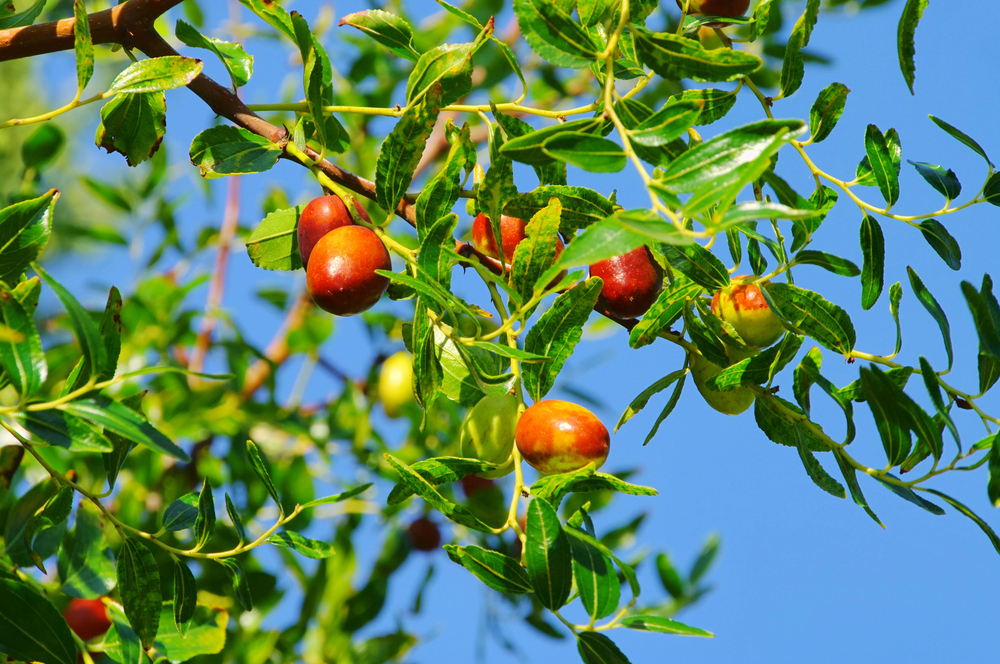
It is harvest time in Kansas City, and at Kansas City Academy, students are stepping outside during lunch to pick jujubes straight off the trees. “I feel like a fairy tale princess every lunch,” said Nova Henry, a senior, “because I get to go out and just feast on little treats.”
The trees are free for anyone to take from. That is the whole premise of the Giving Grove, a Kansas City organization 14 years into planting fruit orchards on vacant land and asking nothing in return. It now has 14,000 trees in 847 orchards across 17 cities, and more than a million people live within walking distance of one.
The Giving Grove’s origin story
The Giving Grove began with a small stand of trees planted 13 years ago on the corner of a shuttered public school in the Waldo neighborhood. The school has since reopened and is expanding, so the original orchard is currently behind a construction fence, but it is still there. “This little orchard we’re standing in here started a national movement,” said Giving Grove Marketing Director Sarah Sikich. “I think it’s one of Kansas City’s best-kept secrets.”
From that corner, the organization partnered with Kansas City Community Gardens to spread orchards across unused plots throughout the metro, from a few trees on a school parking lot to plots with over a hundred. Kansas City now has 248 free orchards with nearly 4,600 fruit, nut, and berry trees. “I joke that Kansas City should be the city of orchards, not the city of fountains,” Sikich said. “No other city in the United States has as many orchards as we do.”
Built on shared knowledge
More than four out of five Giving Grove orchards remain in production. The reason, according to founder Kevin Birzer, is that the organization never just plants trees and walks away. “It’s stuff people can learn, but it takes a long time, and it’s not really efficient for one group to do that,” he said. “So our thought from day one was we would provide that expertise, the knowledge of how to grow the trees, how to select the trees.”
About 1,700 “orchard stewards” across the country maintain that relationship. The Giving Grove offers training, workshops, help finding grants, soil improvements, pruning support, and succession planning for when stewards move on or burn out. Janet Porter, a science teacher who tends the orchard at Kansas City Academy, has found the same to be true. “They do training. They do workshops. If I ever have any questions, they’re just a phone call away.”
It is not just fruit, either. The trees attract insects, which attract songbirds, which attract predators like hawks. At least one Kansas City student turned pruning experience into a job at a tree nursery.
A model spreading city by city
Nine years ago, a community gardening group in St. Louis asked for help, and the Giving Grove said yes. Now the organization is in cities across the country, with conversations underway about San Francisco, Minneapolis, and New York City.
Different communities want different trees, and growing in Brooklyn is not the same as growing in Utah, especially without chemical pesticides or herbicides. “Some environments are more challenging,” Birzer said. “Creating something really cool for the neighborhood, that part’s universal.”
The Giving Grove runs on just over $1 million a year. Most of it comes from 1% for the Planet, a network that channels one percent of member businesses’ annual revenue toward environmental causes; corporations sometimes add volunteer labor, and individual donors fill in the rest. The organization only enters communities that invite it, and right now it is working through a backlog of those invitations.
“I think people have an easy time falling in love with what we’re doing,” Sikich said. “Planting fruit trees is something everyone can agree with.”
Did this solution stand out? Share it with a friend or support our mission by becoming an Emissary.