You’re probably very aware at this point that it’s healthy for you to spend more time outside. While we’ve certainly written about it a great deal, scientists keep unveiling new findings about the relationship between lower stress and nature.
For instance, new research from the University of Oregon shows that it is actually fractal patterns that attract us to nature and make us feel more at ease and calmer in a natural environment than, say, in a city.
What are fractal patterns?
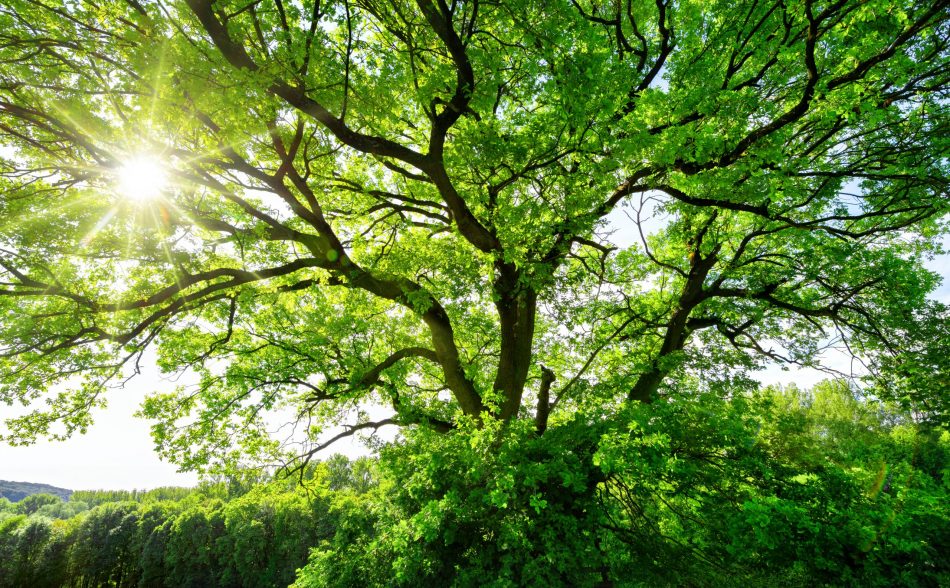
Going for a walk in a park is better for you than a walk in a city. Don’t get us wrong, walking is always good for you. The benefit of doing it in a natural setting like in a park or on a hiking trail, though, is that you get to lay your eyes on fractals. Fractals are essentially self-repeating patterns of different scales. Think of the repeating patterns of veins on a leaf, then the different repeating patterns on a tree’s bark, and then look at the next level of repeating patterns watching all those trees pass by in a forest.
These differing levels of repeating patterns are something that our human eyes and minds grew very used to evolving in nature, and it’s no surprise that we feel calmer in nature because of this. It’s like we’re looking at our natural home. These patterns are, unfortunately, less common in cities.
The University of Oregon study showed that it only takes the human brain 50 milliseconds to detect fractals. The team also measured a positive mental response in their subjects, showing up to a 60 percent reduction in stress and mental fatigue. Healing can even be improved in humans observing natural fractals, such as a hospital patient who mends more quickly with a window facing trees.
Bringing fractals to us
“Humans do not like looking at boxes,” says Richard Taylor of the University of Oregon. “We need to reclaim our urban environment and put nature back into it.”
To give humans back their natural and relaxing fractals, Richard Taylor is teaming up with psychologist Margaret Sereno and architect Ihab Elzeyadi to design moveable surfaces with fractal patterns on them that could be put in offices, classrooms, labs, and other artificial environments where their inhabitants could benefit from some natural patterns.