While many of us look forward to the warmth spring brings each year, there’s another aspect of the hotter seasons that is not so exciting—pesky mosquitoes! This is especially true for those individuals out there whom mosquitoes find the tastiest (you know who you are) and always end up with hundreds of bites even though the person sitting right beside them seems to get away relatively unscathed.
Well, according to experiments, part of the reason mosquitos may be attracted to some people more than others might actually be the color of their clothes. This handy information could be used to design new traps or repellents.
Prior studies discovered that mosquitoes like the odor of carbon dioxide from our breath. Once these pests get a whiff of this tantalizing scent, they’re primed to start looking for food.
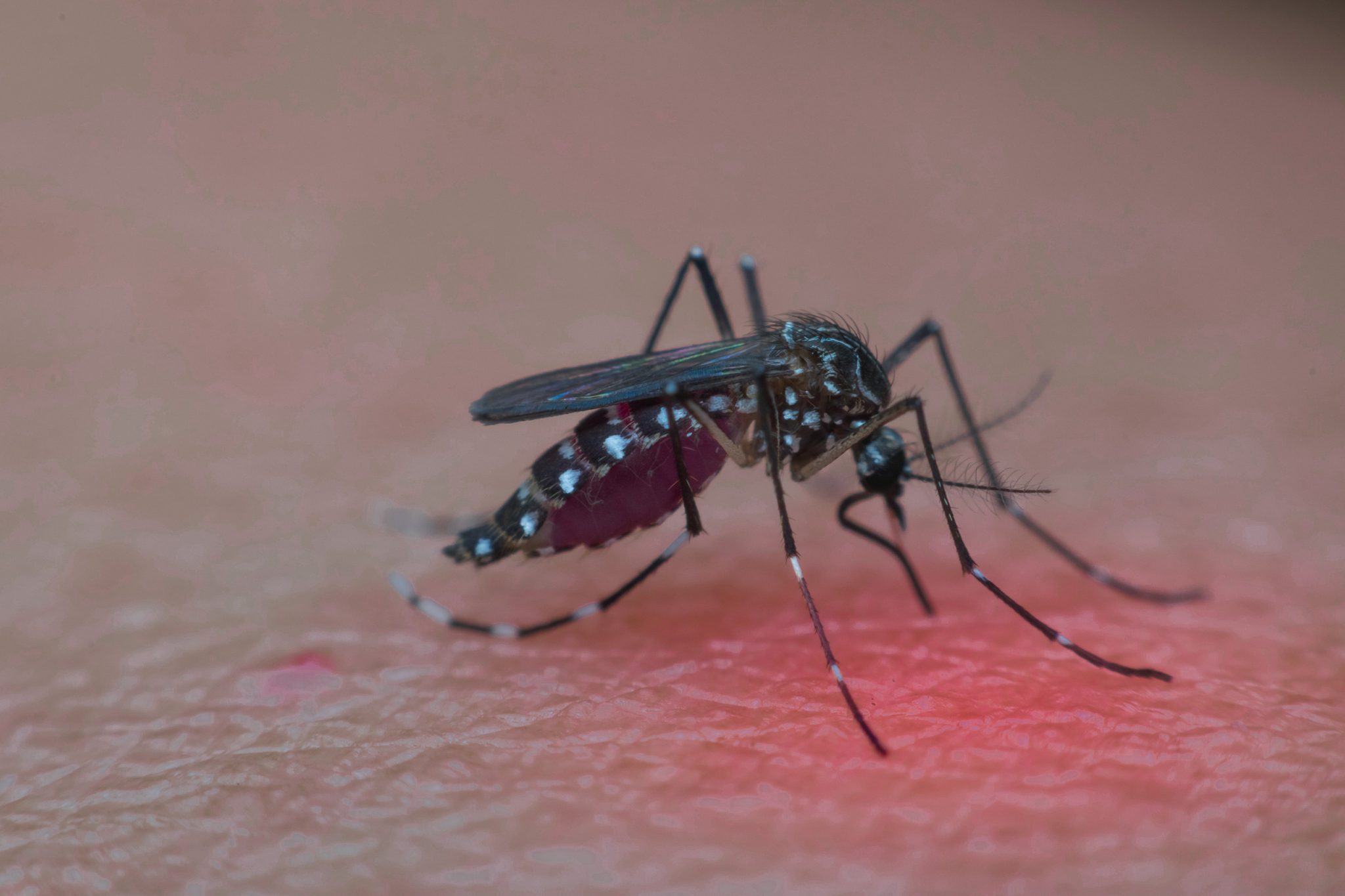
For the study, led by researchers at the University of Washington, female mosquitos of the common species Aedes aegypti were examined. The team tracked their responses to visual and olfactory cues in a test chamber by testing out how the bugs responded to dots of different colors on the bottom of the chamber with or without a spray of CO2.
The team discovered that, if they were first exposed to the tantalizing scent of CO2, the mosquitoes would fly toward a dot it was red, orange, black, or cyan (a color between green and blue). Without the gas, the bugs ignored the dots no matter what color they were. But interestingly, even after smelling CO2 in the air, the mosquitoes continued ignoring the dots that were green, blue, white, or purple in color.
“Mosquitoes appear to use odors to help them distinguish what is nearby, like a host to bite,” says senior author of the study Jeffrey Riffell. “When they smell specific compounds, like CO2 from our breath, that scent stimulates the eyes to scan for specific colors and other visual patterns, which are associated with a potential host, and head to them.”
Why do mosquitoes love reds and oranges specifically?
According to the team, human skin, regardless of shade or pigmentation, gives off a strong red-orange signal to mosquitoes’ eyes. In another test, the team displayed cards of different human skin colors, or a bare hand, and again, the bugs would fly toward them only if they smelled CO2 first. If the hand had a green glove on, the insects started ignoring them again, even with a spritz of CO2.
As a final step, the team conducted the same experiments on mosquitoes that had been genetically modified so that the genes responsible for smelling CO2 or seeing long wavelength colors were edited. In this case, the bugs didn’t respond to the visual stimulus, showing that both senses are required to signal to the mosquitoes that it was time to feast.
The team wishes to work on future studies that will explore other cues (like skin secretions) that might help guide a mosquito to a potential host. For now, the team’s discoveries can help inform new ways to control mosquitoes and prevent bites.
Source study: Nature Communications – The olfactory gating of visual preferences to human skin and visible spectra in mosquitoes
This story was part of our Best of 2022 series highlighting our top solutions from the year. Today we’re featuring solutions in science and technology.