BY THE OPTIMIST DAILY EDITORIAL TEAM
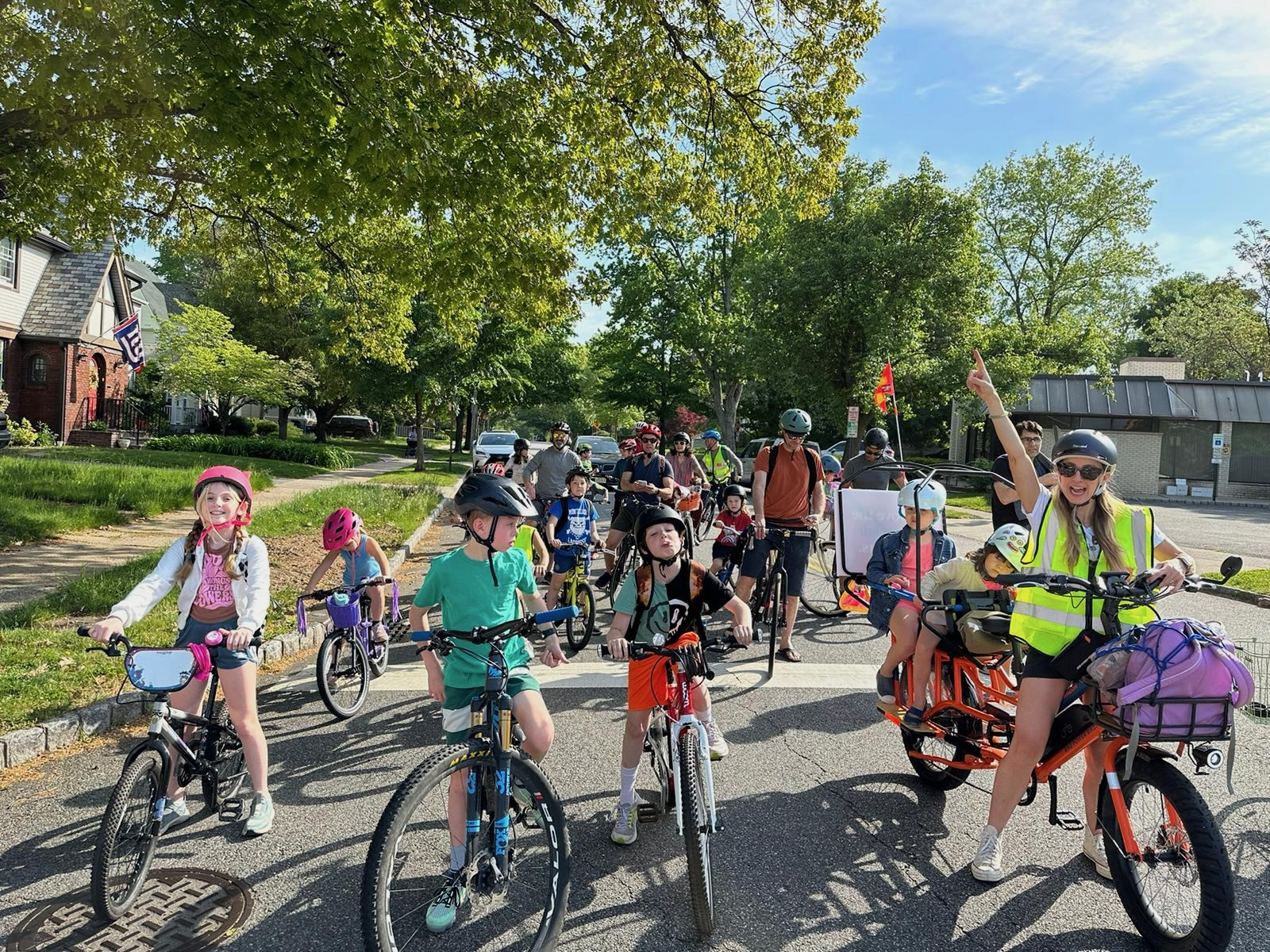
By the time the first bell rings on Fridays in Montclair, New Jersey, something remarkable has already unfolded across town. Children burst out of their houses balancing backpacks and helmets, neighbors wave from porches, and parents gather on sidewalks as clusters of families pedal toward shared meeting points. It’s not a parade, exactly, but it certainly feels like one.
What began three years ago as a modest experiment among five families has steadily transformed into a joyful ritual drawing hundreds. “It really started because a small group of us… just felt like it wasn’t safe,” said organizer Jessica Tillyer. Riding solo with her kids felt isolating, too, so the idea of traveling together felt both protective and comforting. Today, she says, “we can have up to 400 people riding together to school.”
Second grader Gigi Drucker summed up the appeal more simply. “The best way to get to school is by bike,” she said, because it means more exercise and because “it’s healthier for the Earth.”
The movement rolling far beyond Montclair
The magic of the bike bus isn’t limited to this New Jersey town. Hundreds of similar routes now exist across the United States and around the world, from Europe to Australia to India. According to Bike Bus World, which tracks and supports these initiatives, the appetite for these rolling school commutes has soared.
Co-founder Sam Balto, who launched Portland, Oregon’s well-known bike bus, has watched interest skyrocket. He estimates that more than 400 routes operate globally, fueled by the simple insight that “children and families are craving community and physical activity and being outdoors.” When the alternative is a long car line, he added, families “naturally gravitate to something that’s super joyful and community-driven.”
What makes a bike bus work
Starting a bike bus doesn’t require much. All it takes is a few families and a willingness to try. However, sustaining one over time takes thoughtful planning and a lot of heart. Montclair’s organizers say they learned through trial, error, and plenty of pedaling.
Build a route families can trust
Before the first big group ride, organizers spent time testing different streets to find a safe path with manageable traffic. “It took us a while to come up with a route we were happy with,” said organizer Andrew Hawkins. Even now, they adjust when new families move in or traffic patterns change.
Communication helped, too. Early word spread through social media and PTA groups, eventually evolving into a dedicated chat that shares weekly updates, reminders, and photos. Along the way, families discovered an unexpected perk: kids leap out of bed faster on bike bus days. As parent Gene Gykoff put it, his child is “more excited to get out of bed for the bike bus than for the regular bus,” making it a lot easier to get him ready for school.
Start with the youngest riders
Montclair’s routes cover every elementary and middle school in town, with emphasis on the grades that benefit most from early biking habits. Most younger students can comfortably manage three to five miles at the group’s pace, which is about six miles per hour.
That speed is intentional. “There’s no racing on the bike bus,” Hawkins emphasized, though they sometimes split the group so older kids can stretch their legs without leaving younger riders behind.
Show up in every season
The real test of a bike bus comes in winter. Rain, cold, and dark mornings require preparation and commitment. Leaders monitor forecasts, cancel only when conditions are unsafe, and remind families to bundle up with gloves, warm jackets, and neck warmers.
Sponsors helped Montclair secure reflective vests and bike lights for winter rides, and leaders carry tools like pumps for quick fixes. Balto notes that children adjust faster than adults. “Kids want to be outside with their friends,” he said. “If you’re going to do this in all weather, just do it consistently.”
Begin small and watch it grow
Despite all the organization involved, the most universal advice from seasoned leaders is simply to begin. “If you’re consistent — once a week, once a month, once a season — it will grow,” Balto said.
Tillyer gives newcomers the same encouragement she once needed herself: “Don’t ask for permission. Don’t worry about what it’s going to take. Find a small group of people, get on your bikes, and ride to school.” The magic, she says, happens once families experience the energy of riding together.
A different kind of school morning
What Montclair families have created isn’t just a tweak to the mundane commute to school. It’s a weekly reminder that community can shape daily life in beautiful ways. Children arrive at school a little more awake, parents feel a little more connected, and the streets are filled with the quiet hum of wheels instead of idling cars.
And every Friday, across town and across continents, more bike buses form, proving that the simplest ideas often travel the farthest.