BY THE OPTIMIST DAILY EDITORIAL TEAM
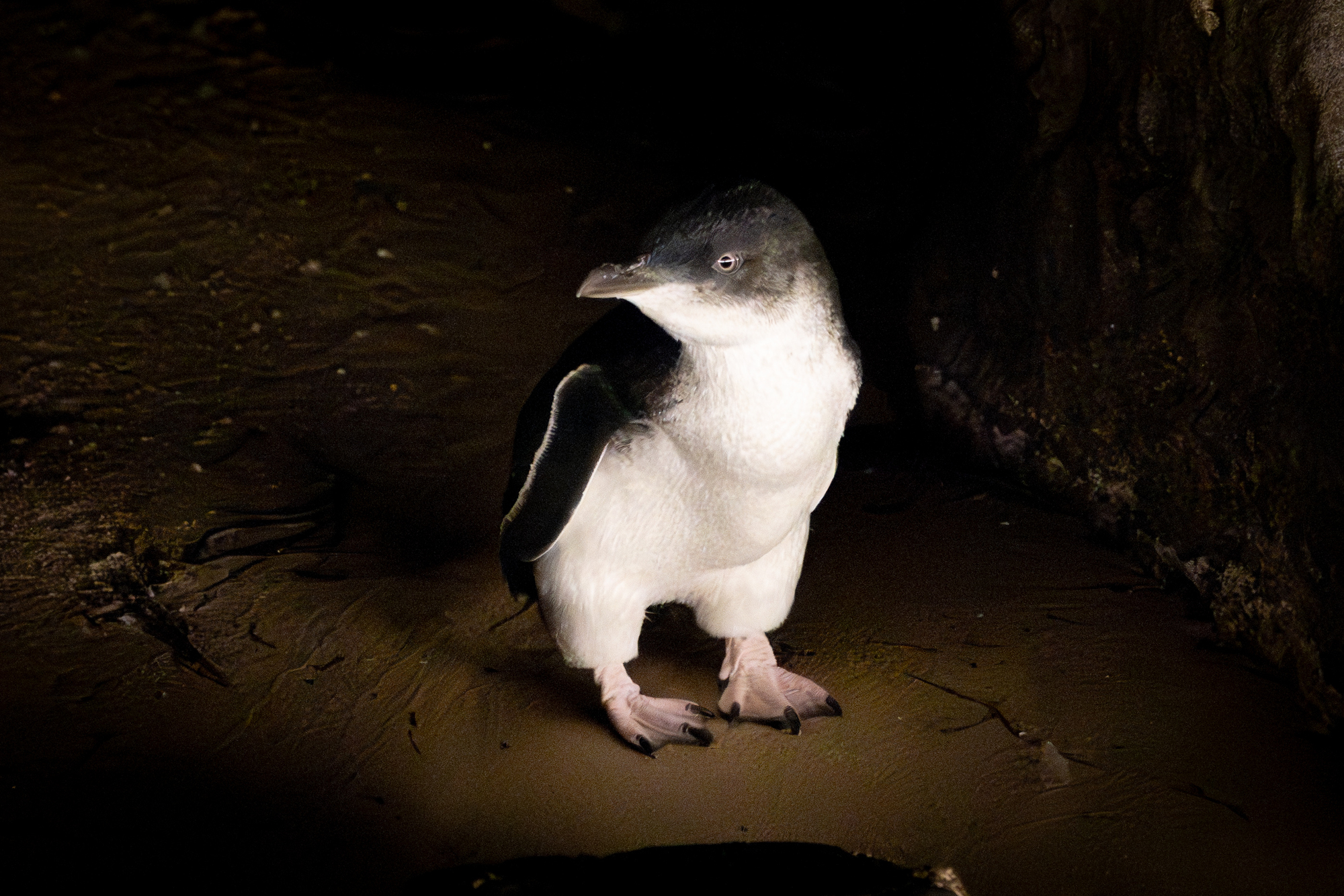
Little penguins are the world’s smallest species of penguin, standing about the height of a ruler, found only in southern Australia and New Zealand. Every night on Phillip Island in Victoria, tens of thousands of them come in from the sea and return to the same burrows they left that morning. That predictable homecoming is also what made the world’s largest wild bird vaccination program possible.
Over the past two weeks, teams have been waiting on the beach. As penguins come ashore, they’re guided into small pens, weighed, measured, and microchipped before receiving their first dose of H5N1 bird flu vaccine. More than 1,000 birds have been vaccinated so far. The target is about 5,000 across Phillip Island and the St Kilda colony, each bird getting a second dose three weeks after the first.
“This is the first time anyone around the world has attempted something like this at this scale,” said Catherine Basterfield, chief executive of Phillip Island Nature Parks. “It is really tricky and penguins are difficult to handle, but we have very well trained people.”
Why the urgency
Bird flu, specifically H5N1, has been moving through seabird populations globally for several years. Little penguins are rated at “very high risk” in Australia’s national risk assessment, even though they’re not listed as threatened under federal environmental law. That gap matters: it means the species can be in serious trouble before any formal protection kicks in.
H5N1 cases have already turned up on Phillip Island, including in a little penguin. A case was confirmed in a little penguin on South Australia’s Kangaroo Island. On King Island in Tasmania, 51 penguins died after one tested positive, with bird flu the presumed cause.
An Arthur Rylah Institute report spelled out the timing problem: it takes 10 weeks for penguins to reach peak immunity after vaccination. If the virus arrives in force before that window closes, vaccination may come too late. In a worst-case scenario, up to 16,000 little penguins could die.
What makes this colony worth protecting
The Phillip Island population is about 40,000 birds. Their nightly march up from the sea draws around 700,000 visitors a year and contributes roughly $500 million to Victoria’s economy. That’s a real consideration, but it’s not the only one.
Little penguins are already dealing with climate change: worse storms, rising seas, food that’s harder to find. Bird flu is a new pressure stacked on top of existing ones. As John Cockrem, an emeritus professor at Massey University who researches little penguins, put it: “Avian flu is a threat that has arisen and comes on top of other threats that the little penguins are facing, and will increasingly face in coming years.”
What the vaccine can and can’t do
Officials have been careful not to oversell it. “It does not replace effective biosecurity, which remains critical,” a federal agriculture spokesperson said.
James Todd, Victoria’s chief biodiversity officer, noted that little penguins are a species you can actually run a program like this for: they’re colonial nesters that return to the same spots each night, which means the same birds can be found, caught, and vaccinated on a schedule. Most of the hundreds of other wild species at risk from H5N1 don’t offer that. Getting to them once is hard enough. Getting to them twice, three weeks apart, is something else entirely.
“In the case of little penguins,” he said, “we know they are at risk from H5, they’re a colonial species that nest together. They are a seabird that will come in contact with other seabirds that carry the virus. And we also know that they’re an iconic species that have high value to Victorians.”
Did this solution stand out? Share it with a friend or support our mission by becoming an Emissary.