BY THE OPTIMIST DAILY EDITORIAL TEAM
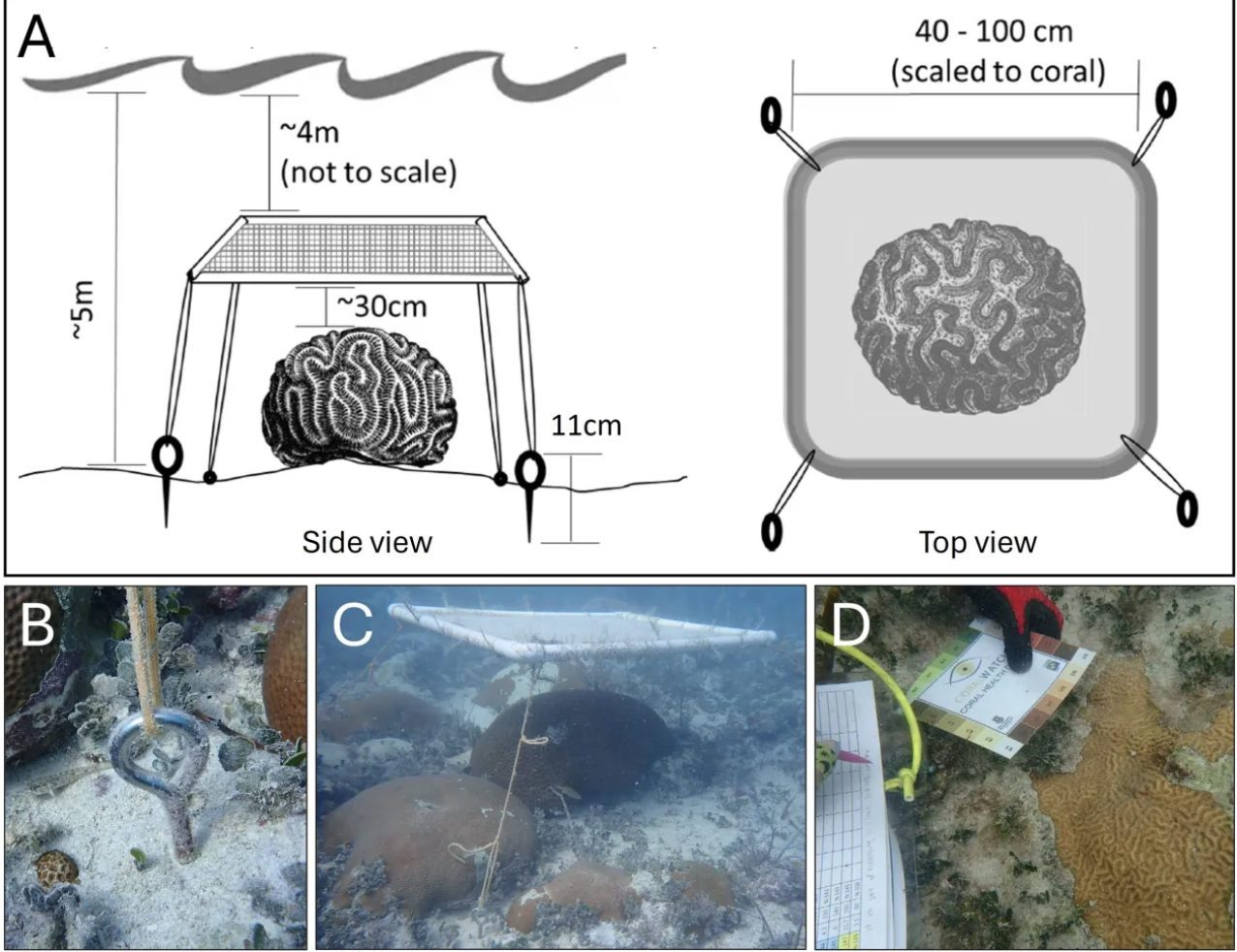
When divers installed floating shade structures over 20 colonies of brain coral in the lower Florida Keys in August 2024, the corals underneath began recovering their color. The 20 colonies left unprotected grew paler through the hottest stretch of the season. That was during 2024’s second-highest heat stress year on record at the site since 1985. The results appear in Frontiers in Marine Science.
The shades were made from PVC frames and nylon mesh, suspended roughly 12 inches (30 centimeters) above the coral. They weren’t cooling the water. They were blocking the intense sunlight and ultraviolet radiation that amplifies heat-related bleaching.
Why Florida’s 2023 heatwave made this study necessary
In the summer of 2023, a record marine heatwave hit the Florida Keys. At most monitored sites, every kind of coral bleached. Branching corals, including the staghorn and elkhorn species, were nearly wiped out. At one inshore location, more than half of the corals researchers were tracking lost some or all their living tissue.
Karen Neely of Nova Southeastern University, the study’s lead author, described the umbrella project as a direct response. “This study stemmed directly from that event: we wanted to provide proof of concept for tools to save targeted corals in similar future events,” she said. “Heat-related coral bleaching is probably the biggest threat to reefs worldwide. Solutions like shading can offer temporary protection on small scales.”
The scale of the global bleaching crisis
Scale is where the Florida experiment runs into its limits. On August 22, the average global sea surface temperature outside the polar regions hit 21.1 degrees Celsius (70 degrees Fahrenheit), the highest daily reading on record. Between 2023 and 2024, global hard coral cover fell by 8.9 percent, the largest single-year decline ever measured. By March 2025, 84 percent of the world’s reefs had experienced temperatures high enough to cause bleaching, and parts of Australia’s Great Barrier Reef had just recorded their worst annual losses of living coral in nearly 40 years of monitoring.
Bleaching events are also arriving more frequently. The Global Coral Reef Monitoring Network reported in August that they now occur roughly every five to six years, compared with about once a decade in the past. Corals can recover between events if temperatures drop in time. The problem is that time is getting shorter.
The limits of shading as a strategy
The researchers are direct about what these results don’t mean. Covering entire reefs with shade structures isn’t practical, and the study monitored individual colonies rather than reef systems. “Scaling is the big limitation of this study,” Neely said. “Shading is not a cure-all.”
What the intervention does is buy time. During extreme heat events, targeted shading can protect specific corals, species that take decades to grow back and anchor the ecosystems around them. But reef survival at any meaningful scale requires slowing ocean warming, and that means emissions reductions well beyond what shade structures can address. Coral reefs cover less than 0.2 percent of the ocean floor but shelter at least a quarter of all marine species and buffer coastlines from erosion and storm surge. The Florida study is useful for protecting the most important specimens while a crisis is happening. It doesn’t change the frequency at which those crises arrive.
Did this solution stand out? Share it with a friend or support our mission by becoming an Emissary.